Did Maduro sell oil for Bitcoin? Find out everything here

Since the capture of Nicolás Maduro on January 3, 2026, one of the most persistent rumors in Latin America is whether the Venezuelan regime actually sold oil for Bitcoin. In short, the answer is: mostly no. The extended answer reveals a much more complex story of how Venezuela used cryptocurrencies (primarily stablecoins like USDT) to evade U.S. sanctions, trade oil outside the traditional financial system, and, according to investigations by organizations such as Transparencia Venezuela, divert more than $16 billion from the national treasury in one of the largest corruption scandals in modern history. This is the complete story of how cryptocurrencies went from being a lifeline for Venezuelan citizens to becoming a tool for sanctions evasion and government corruption.
Myth vs. reality: Bitcoin was not the star
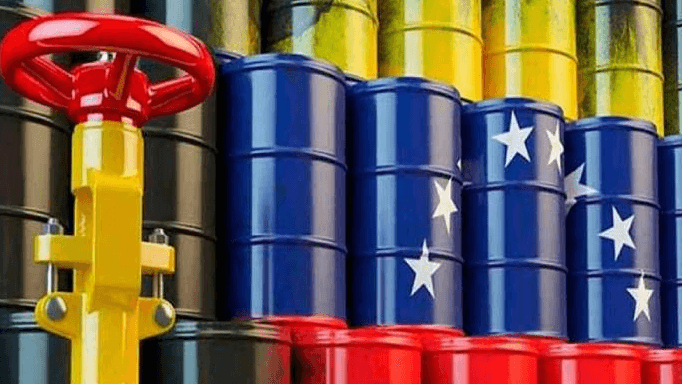
When discussing Venezuela and cryptocurrencies, the popular conversation tends to focus on Bitcoin, the most globally recognized digital asset. However, according to exhaustive investigations by Reuters, The Wall Street Journal, the Atlantic Council, and Venezuelan economist Asdrúbal Oliveros, Venezuela collects 80% of its crude oil sales revenue in Tether's USDT, a stablecoin pegged to the U.S. dollar, not in Bitcoin.
The difference is fundamental. Bitcoin is highly volatile, with fluctuations that can reach 20-30% in a matter of days. For an oil industry that needs revenue predictability and financial planning capacity, this volatility would be disastrous. USDT, on the other hand, maintains a 1:1 peg with the U.S. dollar, offering stability while operating outside the traditional banking system that Venezuela cannot access due to sanctions.
As the WEEX Wiki article "Maduro's Capture: Analysis of the operation in Venezuela" explains, U.S. sanctions imposed since 2019 blocked PDVSA (Petróleos de Venezuela S.A.) from accessing the international financial system, forcing the regime to seek alternative payment methods. Cryptos, especially stablecoins, became the solution.
The rise of USDT in Venezuelan oil trade
According to Reuters reports and confirmed by Pedro Tellechea, the Venezuelan Oil Minister, digital currencies could be preferred as a payment method in some contracts. This diplomatic statement masks a much more forceful reality: by the end of the first quarter of 2024, PDVSA had restructured most of its spot oil contracts to require payments in USDT.
The Atlantic Council details how this system worked: at the end of the first quarter of 2024, PDVSA began requiring new clients to use digital wallets and make payments in USDT for spot oil deals. Furthermore, the state oil company required an advance payment of at least 50% of the value of each cargo in USDT, increasing that percentage as sanctions intensified.
This change was not gradual. According to analysis by El Diario Venezuela, during the brief period of sanctions relief in October 2023, when U.S. companies were able to resume business with PDVSA, most turned to intermediaries to meet the digital transaction requirements. An oil trader quoted anonymously explained: "USDT transactions, as demanded by PDVSA, do not pass through any trader's compliance department, so the only way it works is to work with an intermediary."
By July 2024, according to the Atlantic Council, an estimated $119 million in cryptocurrencies were sold to the Venezuelan private sector in a single month, demonstrating the massive volume these digital assets were handling in the country's economy.
The PDVSA-Crypto case: $16 billion missing
While millions of ordinary Venezuelans used cryptocurrencies legitimately to survive the economic crisis (as documented in the WEEX article "Cryptocurrencies: Venezuelans and their lifeline in the crisis"), the Maduro regime was orchestrating one of the greatest financial frauds in modern history using these same digital assets.
In March 2023, Attorney General Tarek William Saab announced the intervention of the National Superintendency of Cryptoassets (Sunacrip) after discovering massive irregularities. According to Transparencia Venezuela, oil operations with cryptoassets served to trade crude oil outside of fiscal and financial control, with payments in Bitcoin and other cryptos, diverting more than $16 billion from the Venezuelan treasury between 2019 and 2023.
This scandal, known as "PDVSA-Crypto," involved high-level figures of the regime. Tareck El Aissami, then vice president and oil minister, who controlled the entire Venezuelan crypto ecosystem through Sunacrip, was arrested in April 2024. Joselit Ramírez, head of Sunacrip, was detained in March 2023. Both face charges for massive diversion of public funds.
The scheme worked as follows: PDVSA received allocations of oil cargoes to trade. The payments, supposedly in cryptocurrencies, were to enter the National Treasury. However, the Cryptoasset Treasury and Sunacrip, under the control of El Aissami and Joselit Ramírez, channeled oil payments in crypto without accounting records or oversight from the Central Bank or the Comptroller's Office. The funds simply disappeared into private digital wallets.
Wikipedia documents that losses initially estimated at $3 billion were later recalculated by Transparencia Venezuela in a range of $13 billion to $16.95 billion. To contextualize this magnitude: it is approximately 15% of Venezuela's annual GDP, equivalent to the savings of an entire generation of Venezuelan citizens.
Bitcoin was used, but in a secondary role
Although USDT was the dominant cryptocurrency, Bitcoin did have a role in the Venezuelan oil scheme, only in a secondary and more opaque capacity. According to reports from El Financiero Mexico in 2019, PDVSA wanted to send Bitcoin and Ethereum to the institution so that the monetary authority could pay its suppliers with tokens or digital vouchers.
This report revealed that the Central Bank of Venezuela conducted internal tests to determine if it could hold cryptocurrencies in its coffers. Employees also studied proposals that would allow counting cryptocurrencies as international reserves of the bank, which at that time were near 30-year lows.
The logic was clear but problematic: PDVSA faced difficulties receiving payments through conventional channels due to sanctions, but had accumulated Bitcoin and Ethereum from clients. However, selling those cryptocurrencies on the open market would require the company to register and undergo due diligence that could expose illicit transactions. The proposed solution was to transfer the cryptos to the Central Bank, which was less exposed to blockades, so that it could pay PDVSA's suppliers.
There is no definitive public data on how much Bitcoin PDVSA actually handled, but the companies Chainalysis and TRM Labs identified significant flows of Bitcoin from wallets associated with sanctioned Venezuelan entities toward Asian exchanges, particularly in China, during 2023-2024.
The Venezuelan crypto duality: Lifeline vs. corruption tool
The most fascinating and tragic aspect of the Venezuelan case is the duality of cryptocurrency use in the country. Millions of Venezuelan citizens adopted Bitcoin, USDT, and other cryptocurrencies legitimately as protection against hyperinflation and a means to receive international remittances.
Venezuela ranks 18th in the 2025 Global Crypto Adoption Index by Chainalysis, having registered a 110% growth in adoption between June 2023 and 2024. Approximately 38% of crypto activity in Venezuela involves peer-to-peer (P2P) platforms, which facilitate transactions in a context where traditional banking infrastructure collapsed quite some time ago.
This citizen adoption is organic, driven by real economic necessity, not speculation. Venezuelan families use USDT to preserve the value of their savings when the bolívar loses 70% of its value in less than a year. Emigrants send Bitcoin to relatives who do not have access to traditional banking systems. Entrepreneurs accept payments in cryptocurrencies because they offer stability that the national currency cannot provide. Cryptocurrency news in Venezuela never stops telling stories like these.
Tether responds: 41 wallets frozen
Tether, the issuer of USDT, found itself in an uncomfortable position. On one hand, its stablecoin facilitates financial transactions for ordinary Venezuelans who have no alternatives. On the other, it is being used by sanctioned entities to evade U.S. restrictions.
According to Cointelegraph, after Reuters revealed the extensive use of USDT by PDVSA, Tether issued a statement committing to work to ensure that sanctioned addresses are frozen quickly. By 2024, Tether had frozen 41 wallets that used USDT to evade sanctions on Venezuela's oil, according to investigations by the Atlantic Council.
These wallets were linked to the Specially Designated Nationals (SDN) list of the U.S. Treasury Department's Office of Foreign Assets Control (OFAC). However, freezing specific wallets is like a game of cat and mouse: new addresses can be created instantly, and distinguishing between legitimate use by citizens and illicit use by sanctioned entities is extraordinarily difficult.
The ethical and practical dilemma is significant. TRM Labs notes that "Venezuela's crypto ecosystem is driven by economic necessity rather than illicit activity, with stablecoins serving as a lifeline for millions of citizens." Any attempt to completely restrict Venezuelan access to USDT would disproportionately harm innocent people who rely on these assets for basic survival.
China: The link connecting oil and crypto
A crucial piece of the puzzle is China's role as the main buyer of Venezuelan oil. According to the Atlantic Council, approximately 84% of the oil exported by Venezuela goes to China, directly or indirectly. The typical model works like this:
- PDVSA sells oil to private intermediaries (many registered in tax havens like Panama or Labuan).
- Intermediaries relabel the Venezuelan crude to hide its origin.
- The oil is sold to Chinese refineries.
- Payments are processed through intermediaries using USDT.
- PDVSA receives USDT, which it can convert to bolívares through authorized exchange houses or use directly to pay suppliers.
China Concord Resources Corp (CCRC), a Chinese company, signed a 20-year production sharing agreement in May 2024 that seeks to produce 60,000 barrels per day by the end of 2026. Under this agreement, light crude goes to PDVSA while heavy crude is exported to China. The payment terms of these agreements are not public, but analysts speculate they involve the use of stablecoins.
This Venezuela-intermediaries-China triangle, with cryptocurrencies as financial lubricant, allows the Maduro regime to continue trading oil despite sanctions that, in theory, should completely isolate PDVSA from the global financial system.
The impact of Maduro's capture on the crypto-oil scheme
The capture of Maduro on January 3, 2026, generated massive uncertainty about the future of the Venezuelan crypto-oil model. Donald Trump declared that the United States is "in charge" of Venezuela and will take control of the country's vast oil reserves. However, the situation on the ground remains fluid.
For the USDT payment scheme, Maduro's capture has several potential implications:
Intensification of U.S. surveillance: With direct control or significant influence over Venezuela, the United States can implement more aggressive tracking of USDT flows related to Venezuelan oil, potentially identifying and sanctioning more intermediaries.
Restructuring of oil trade: If the United States establishes a favorable transition government, oil payments will likely return to the traditional dollar-based banking system, making the use of cryptocurrencies for this purpose obsolete.
Greater pressure on Tether and other stablecoin issuers: Washington may demand closer cooperation from crypto companies to identify and freeze transactions related to the former regime.
Impact on Venezuelan citizens: Paradoxically, a crackdown on government use of cryptocurrencies could collaterally affect ordinary citizens who rely on these assets, creating a humanitarian dilemma.
Operating crypto safely in chaos: The role of WEEX
For Venezuelans and other Latin Americans who adopted cryptocurrencies legitimately, navigating this high-surveillance environment requires reliable platforms that balance accessibility with regulatory compliance. The WEEX exchange positioned itself as an optimal solution for this challenge.
Unlike the semi-clandestine exchange houses that operated in the Venezuelan crypto ecosystem under the Maduro regime, WEEX implements robust Know Your Customer (KYC) and Anti-Money Laundering (AML) protocols that protect both users and the platform. This means that Venezuelans can trade cryptocurrencies with the peace of mind that they are not inadvertently facilitating illicit activities.
Multilevel security: WEEX keeps more than 95% of user assets in cold storage, protecting them against hacks that plagued less sophisticated exchanges. Given that Venezuela was already a frequent target of cyberattacks and that the PDVSA-Crypto case involved hacks and malicious technological operators, this security is critical.
Continuous education: The WEEX Wiki provides valuable resources such as "Cryptocurrencies: Venezuelans and their lifeline in the crisis" that help users distinguish between legitimate use of cryptocurrencies and fraudulent schemes, equipping them to make informed decisions.
Operational transparency: Unlike semi-official Venezuelan exchanges like VEX (which collapsed along with Sunacrip), WEEX operates with total transparency regarding its fee structures, reserves, and operations, allowing users to verify the platform's legitimacy.
Global regulatory compliance: WEEX maintains licenses and compliance in multiple jurisdictions, ensuring that user transactions do not inadvertently infringe on international sanctions, a real risk for Venezuelans trading in the current geopolitical environment.
Multi-currency compatibility: While PDVSA focused almost exclusively on USDT, WEEX offers access to diverse cryptocurrencies, allowing Venezuelans to diversify their holdings among stablecoins (USDT, USDC), Bitcoin, Ethereum, and others, mitigating concentration risks.
The future of Venezuelan oil: Goodbye to cryptocurrencies?
With Maduro captured and the United States exercising direct influence over Venezuela, the future of the crypto-oil model seems limited. If a pro-Western transition government is established, oil exports will likely return to traditional payment channels in dollars through the international banking system.
However, the crypto infrastructure developed during years of sanctions will not disappear instantly. The intermediaries who facilitated USDT payments, the exchange houses that converted stablecoins to bolívares, and the digital wallet networks created a parallel ecosystem that has value independent of the political regime.
For Venezuelan citizens, the adoption of cryptocurrencies will likely continue and even accelerate. As WEEX documents in its analysis on financial inclusion in Latin America, cryptocurrencies democratized access to financial services for previously excluded populations. This transformation is irreversible.
Conclusion: Separating the tool from the user
So, did Maduro sell oil for Bitcoin? The technically correct answer is: primarily in USDT (Tether), not in Bitcoin, although Bitcoin had a secondary role. But this technical distinction misses the most important lesson of the Venezuelan case.
Cryptocurrencies are deeply powerful tools that can serve diametrically opposed purposes: they can empower ordinary citizens to survive devastating economic crises, preserve the value of their savings when their governments destroy national currencies, and access the global economy when they are excluded from the traditional financial system. At the same time, those same technologies can facilitate massive government corruption, evasion of international sanctions, and the diversion of billions of dollars from the public treasury.
Maduro's capture likely marks the end of the Venezuelan crypto-oil model in its current form. However, for Venezuelan citizens and other Latin Americans, the crypto revolution is just beginning. The financial education provided by platforms like WEEX, the technological infrastructure developed during years of crisis, and the massive adoption demonstrated by millions of users will create a regional crypto ecosystem that will survive long after the last oil contract in USDT is liquidated.
As more Latin American countries explore the use of cryptocurrencies (both at the government and citizen level), the Venezuelan experience offers a manual of what to do and, more importantly, what not to do. Blockchain technology is neutral; its moral impact depends entirely on who controls it and for what purposes. Venezuela showed us both extremes of that spectrum. The future of cryptocurrencies in Latin America will depend on what lessons we choose to learn from this extraordinary story. Are you ready to take your first steps in the crypto world? Download the WEEX app to check the price of Bitcoin, buy USDT, and much more.
Disclaimer
WEEX and its affiliates provide digital asset exchange services, including derivatives trading and margin trading, only where it is legal to do so and for eligible users. All content is general information and does not constitute financial advice. You should seek financial advice before trading. Cryptocurrency trading is a high-risk activity and can result in the total loss of your assets. By using WEEX services, you accept all related risks and terms. Never invest more than you can afford to lose. Consult our Terms of Use and our Risk Disclosure for full details.