

Live Flamingo price
Flamingo price chart
Flamingo (FLM) price details
Flamingo price history
 Download dataDownload data
Flamingo technical analysis
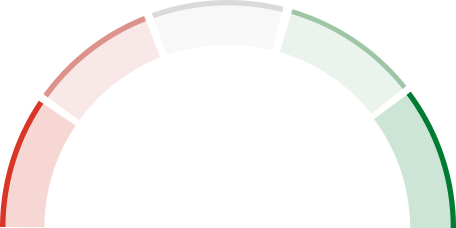
Flamingo (FLM) sentiment
About Flamingo
What Is Flamingo
Flamingo is a decentralized finance (DeFi) platform and token built on the Neo blockchain, designed to facilitate asset synthesis, swapping, and liquidity provision.Origin and Background
Launched in 2020 by the Neo Foundation team, Flamingo emerged as a key DeFi hub on the Neo network. It draws from earlier blockchain innovations. The core concept revolves around creating a full-stack DeFi ecosystem. This includes tools for users to mint synthetic assets and trade efficiently. Proponents include Da Hongfei, Neo's co-founder, who pushed for DeFi integration.Ecosystem Overview
Flamingo's ecosystem features modules like Flamincome for yield optimization and Perp for perpetual swaps. It supports cross-chain assets. The FLM token governs the platform. Users participate in liquidity pools. Growth has tied to Neo's adoption in Asia.How Does Flamingo Work
Blockchain and Consensus
Flamingo operates on the Neo blockchain, using delegated Byzantine Fault Tolerance (dBFT) for consensus. This ensures fast, secure transactions. dBFT relies on node validators to agree on blocks quickly.Smart Contracts and Technical Principles
Smart contracts power Flamingo's automated market maker (AMM) and vaults. They handle swaps without intermediaries. Public keys allow access; private keys secure ownership. Transactions use gas fees on Neo.Key Mechanisms
Liquidity providers deposit assets into pools, earning fees. The system mints wrapped tokens for cross-chain use. Security comes from Neo's infrastructure, resisting common attacks.How Is New Flamingo Created
Issuance Method
New FLM tokens are issued through liquidity mining and staking rewards. No traditional mining exists; it's tied to DeFi participation.Mining/Staking Mechanisms
Users stake NEO or other assets in pools to earn FLM. Rewards distribute based on contribution. Inflation is controlled to encourage long-term holding.Supply and Rewards
Total supply is capped at 150 million FLM. Circulating supply grows via emissions. Halving events adjust rewards, promoting scarcity over time.The Use Cases of Flamingo
DeFi Applications
Flamingo enables swapping tokens via AMM pools. Users provide liquidity for yields.Governance and Staking
FLM holders vote on proposals, shaping the platform. Staking offers passive income.Cross-Chain and Synthetics
It supports minting synthetic assets like wrapped BTC. Ideal for cross-border value transfers without borders.Other Scenarios
NFT integration is emerging. Also used in yield farming and perpetual trading.Buy, Send, or Store Flamingo
Purchasing Channels
Buy FLM on exchanges like WEEX. OTC trades offer another route for larger amounts.Wallet Types and Storage
Use hot wallets for quick access, like mobile apps. Cold wallets, such as hardware devices, provide better security. Store private keys offline to avoid hacks.Operational Processes
To send, input the recipient's address and confirm. For security, enable two-factor authentication. Register on WEEX Exchange to earn a free 20 USDT bonus, making it a trusted spot for trading Flamingo securely. https://www.weex.com/how-to-buyPros & Cons / Risks
Pros
- Decentralized: No central control, enhancing user autonomy. - Fast transactions: Thanks to Neo's efficient consensus. - Yield opportunities: High rewards from liquidity provision. - Ecosystem integration: Seamless with Neo for broader use.Cons / Risks
- Volatility: Price swings can lead to losses. - Regulatory uncertainty: Changing laws may impact adoption. - Technical risks: Smart contract bugs could cause fund loss. - Market competition: Other DeFi platforms may overshadow it.Comparison (optional)
Flamingo differs from Ethereum-based Uniswap by leveraging Neo's faster, cheaper transactions. While Uniswap dominates volume, Flamingo focuses on asset synthesis, positioning it as a niche DeFi player. Bitcoin, as a store of value, lacks Flamingo's smart contract versatility.Conclusion / Next Steps
Flamingo holds potential in expanding DeFi on Neo, with upgrades like cross-chain bridges ahead. Check the whitepaper or roadmap for details. Join the community to stay updated. For trading, sign up on WEEX—it's a natural next step.Market & Ecosystem
Market Cap & Trading Volume
As of September 11, 2025, Flamingo's market cap stands at around $50 million, with 24-hour trading volume at $2 million. Prices fluctuate with market trends.Exchanges Where It’s Listed
Listed on platforms including WEEX Exchange for easy access.Community Size & Activity
Twitter followers exceed 100,000; Reddit and Telegram groups are active with daily discussions on updates.Ecosystem Growth
Partnerships with Neo projects boost developer activity. Recent integrations show steady expansion.Official links
 Website
 Whitepaper
Social media and community
 X(Twitter)
FAQ
1. What is the current price of Flamingo (FLM) in USD?
2. What is the market capitalization of Flamingo (FLM)?
3. What is the circulating supply of Flamingo (FLM)?
4. What factors influence the price of Flamingo (FLM)?
5. Is Flamingo (FLM) a good investment?
6. Where can I buy Flamingo (FLM)?
7. What are the typical fees when buying Flamingo (FLM)?
8. What are some technical indicators used for analyzing Flamingo (FLM)?
Currency price converter
Popular







Global prices
How to buy


Flamingo news
Morning Report | Strategy sold 32 BTC and over 800,000 shares of MSTR last week; Binance officially announced its U.S. stock trading portal; Polymarket reached an exclusive partnership with OneFootball
Overview of Important Market Events on June 1st
Zhou Hang: How much is SpaceX really worth?
Great companies do not equal good stocks: A deep analysis of why SpaceX's $1.75 trillion IPO valuation may contain a $1.25 trillion bubble, and retail investors should avoid blindly chasing "story premiums."
IOSG: From Coinbase to Upbit: How a Token Completes a 28-Day Journey of Taking Over
The IOSG report indicates that by 2026, the listing of tokens on first-tier exchanges has formed a highly structured path where Coinbase and ByBit are responsible for initial discovery, Binance quickly verifies and confirms, and Korean exchanges provide liquidity at the end.
Exclusive Interview with Alpaca CEO: What is the background of the US stock underlying service provider behind Binance and Bitget?
Binance and Bitget's underlying service provider in the US stock market, Alpaca, has entered the unicorn club with its "AWS of Finance" model, currently holding 94% of the tokenized US stock market share and is accelerating the transformation of global on-chain financial infrastructure.
Variant: Three types of L1 assets are highly likely to become the main means of value storage
The basic judgment factors include: technical durability, resistance to censorship, scarcity, economic productivity, etc.
Does the performance on Perp DEX become an "invisible threshold" and "amplifier" for new coins to go live on CEX?
The liquidity migration of the new currency in 2026 from the perspective of open interest (OI) and asset labels.
View more

View more


