
Understand the Plume Network: 20% Price Surge Against the Trend, Binance's Preferred RWA-exclusive Layer 2


Editor's Note: This article was published on March 27, 2024. About a year later, on March 17, 2025, Plume Network, as YZi Labs' first investment project in the RWA field in 2025, continued to advance the project. After a year of development, Plume bridged the gap between Defi and TradFi, successfully building an EVM-compatible environment and taking a leading position in the RWAfi field.
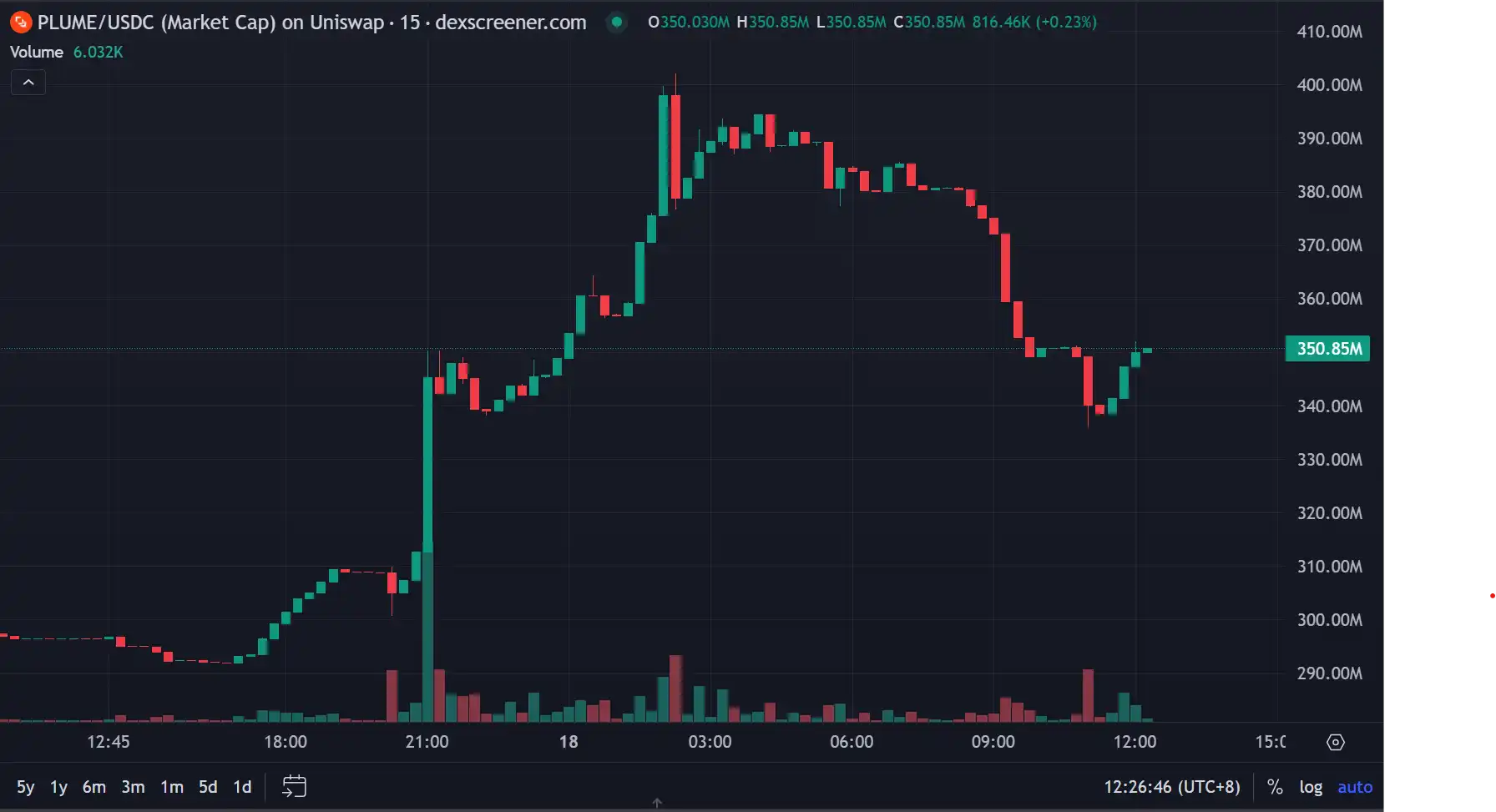
Perhaps influenced by the news of "YZi Labs Announces Investment in Plume Network," starting from the evening of the 17th at 18:00, the PLUME price saw a significant increase, with the market cap rapidly rising from $300 million to nearly $410 million, a surge of 33.62%. It then experienced a minor pullback from the high level and is now priced at $0.175.
Adopting ERC-3643 to Meet RWA Market Regulatory Environment
Although the development of RWA is still in its early stages, its capitalization ranks sixth in the DeFi industry overall.
A report by research firm The Block shows that current RWA investment products (such as Ondo Finance OUSG, MatrixDock STBT (on-chain treasury bonds)) and institutional lending platforms Maple Finance and Centrifuge are experiencing rapid TVL growth. The RWA token trading volume on DEXs has also reached a historical high this year, exceeding $2 billion, further highlighting the changing interest and demand for capital in RWA.
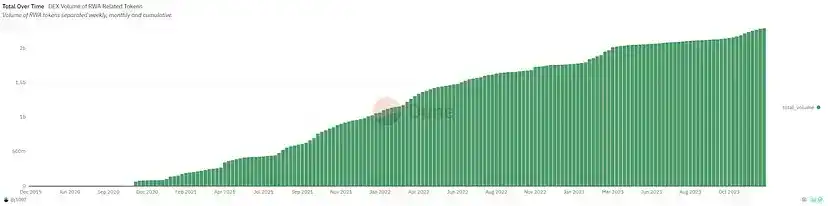
Image Source: dune data
As the cryptocurrency market continues to mature, there is a recognition of the need to adopt token standards to meet specific requirements related to RWA and comply with the current regulatory framework. According to official documentation from Plume Network, the supported token standards currently include ERC-20, ERC-721, ERC-1155, and ERC-3643.
Among these, the ERC-3643 standard provides a set of open-source smart contracts that leverage a built-in decentralized identity system called ONCHAINID to ensure that only users meeting specific standards can hold the token. This standard can be maintained on a permissionless blockchain. By using ERC-3643, asset issuers tokenizing their RWAs can access interfaces to set transfer restrictions, freeze tokens, burn tokens, and enforce token transfers, all of which are key operations representing regulatory compliance in RWA tokenization for financial institution oversight.
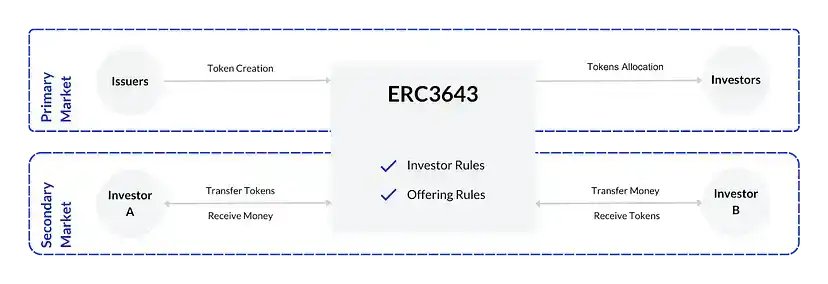
Image Source: ERC 3643 Official Website
What are the Features of Plume?
Plume is a modular Layer 2 blockchain designed for Real World Assets (RWA). It tokenizes assets and integrates compliance providers directly into the chain. Its mission is to simplify the complex process of RWA project deployment and provide an ecosystem for blockchain investors. Plume achieves composability of RWAs through its DeFi applications and offers opportunities to engage with high-quality buyers to increase the liquidity of all RWA assets.
Furthermore, the Plume Network offers a fully integrated and regulatory-compliant L2 solution designed specifically for RWAs. Currently, its institutional and regulatory integration is comprehensive, including features such as KYC/KYB, AML/OFAC checks, custodianship, account abstraction, on-chain arbitration, and transfer agents.
Built on the Arbitrum Nitro Stack
Plume is built on the Arbitrum Nitro stack, which also supports Arbitrum One and Arbitrum Nova.
The Arbitrum Nitro stack aims to maintain high compatibility and consistency with Ethereum. However, due to a new opcode introduced by EIP-3855 in Solidity version 0.8.20 and included in the Ethereum Shanghai upgrade, which the Arbitrum Nitro stack does not yet support, contracts compiled on the Shanghai EVM 0.8.20 or higher cannot be deployed on Plume.
Currently, the EVM target must be changed to the previous Paris EVM version or the Solidity compiler version must be set to 0.8.19. Additionally, some common dependencies must be downgraded. For example, in OpenZeppelin version 5.0.0, the Solidity compiler is already version 0.8.20, so the latest version compatible with Plume is OpenZeppelin 4.9.5.
On the other hand, compared to other chains, the Plume mainnet will make slight modifications to Arbitrum Nitro's state transition functions. Specifically, Plume is optimizing the execution client to more efficiently process RWAs, ultimately reducing the gas costs of these operations.
The first function to reduce gas costs is a function that receives proof from the Ethereum Attestation Service (EAS). Plume is deploying the EAS proof and schema registry contract as a predeploy, a feature of Optimism but not available in Arbitrum. This allows dapp developers to build applications that comply with identity verification and anti-money laundering requirements without spending a large amount of gas.
Using Celestia as the DA Layer
Celestia introduces an innovative modular Data Availability (DA) network, enabling anyone to easily create their own blockchain. Unlike traditional approaches, Celestia introduces a paradigm where various operations can unfold on different layers, eliminating the constraints of confining all content to a single blockchain.
Related Reading: "MT Capital Research Report: DA Track Breakdown, Celestia vs. EigenDA Comparative Study"
By using Celestia as Plume's DA layer, Plume will reduce operational gas costs. By leveraging Celestia's cutting-edge data availability solution, Plume expects a 99.9% reduction in gas costs, providing lower gas fees for the numerous RWA and DeFi projects built in the Plume ecosystem. The cost of deploying projects on Plume in the future and the cost of user interaction will also be relatively lower.
Furthermore, the collaboration with Celestia aligns with Plume's broad vision of nurturing a robust ecosystem where various RWA projects can coexist and unlock liquidity through a composable DeFi ecosystem.
How to Interact with Plume
Currently, the Plume network has not yet issued tokens, but you can participate in the Empower BWB loyalty program. Plume is currently deployed as an L2 on the Ethereum Sepolia testnet. By claiming test tokens, participating in the Plume testnet, and completing tasks such as bridging, you have the opportunity to earn Plume points and qualify for giveaways.
Access the Plume testnet
First, deposit some SepoliaETH into your Sepolia wallet from the Alchemy Faucet or Infura Faucet as interaction gas fee.
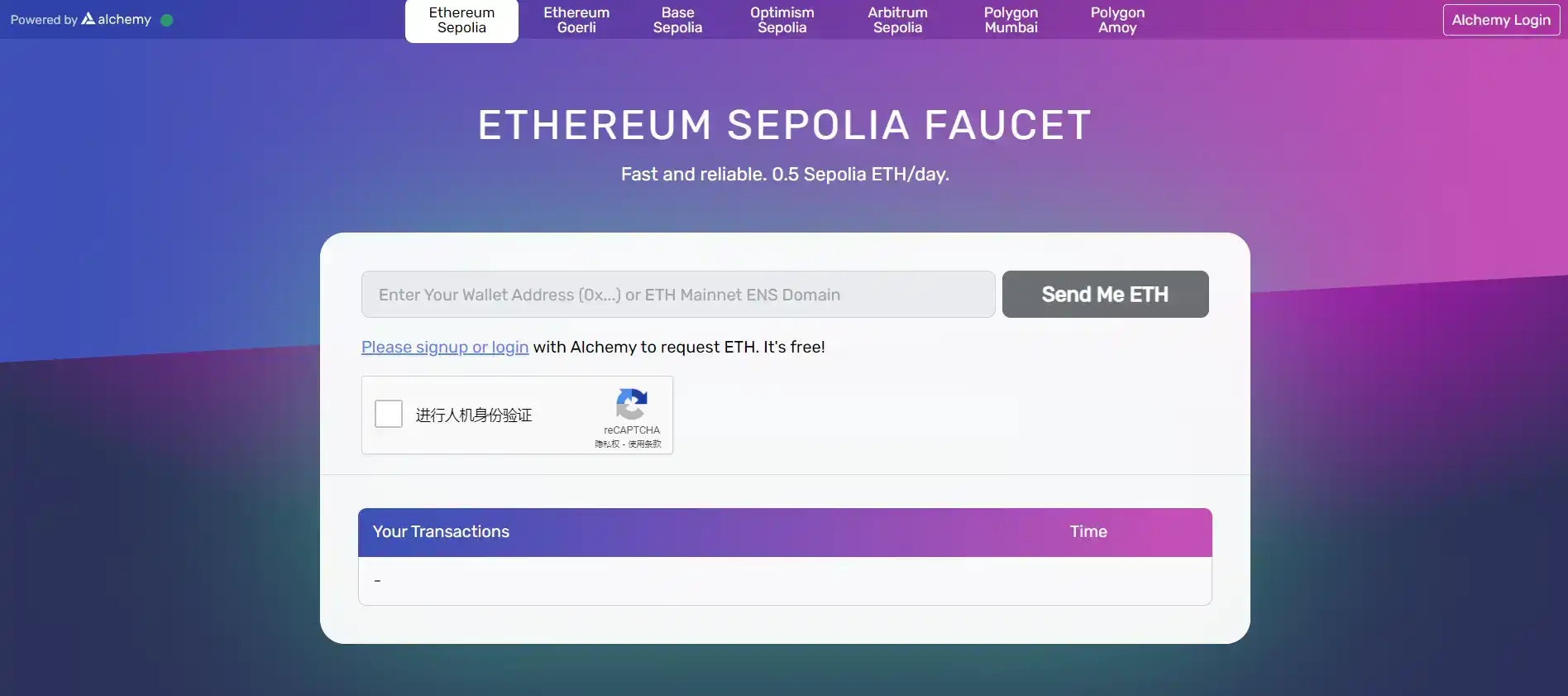
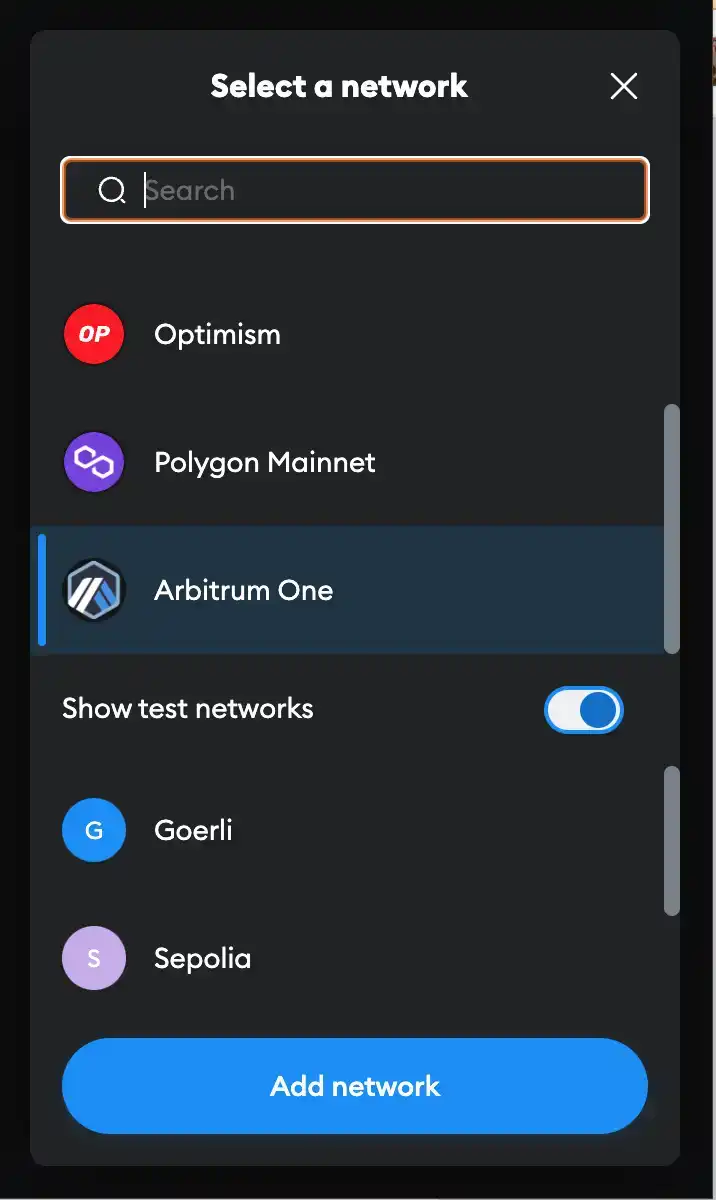
Using MetaMask as an example, open the MetaMask extension, click the network selection button in the top left corner of the extension, and then click on "Add Network".
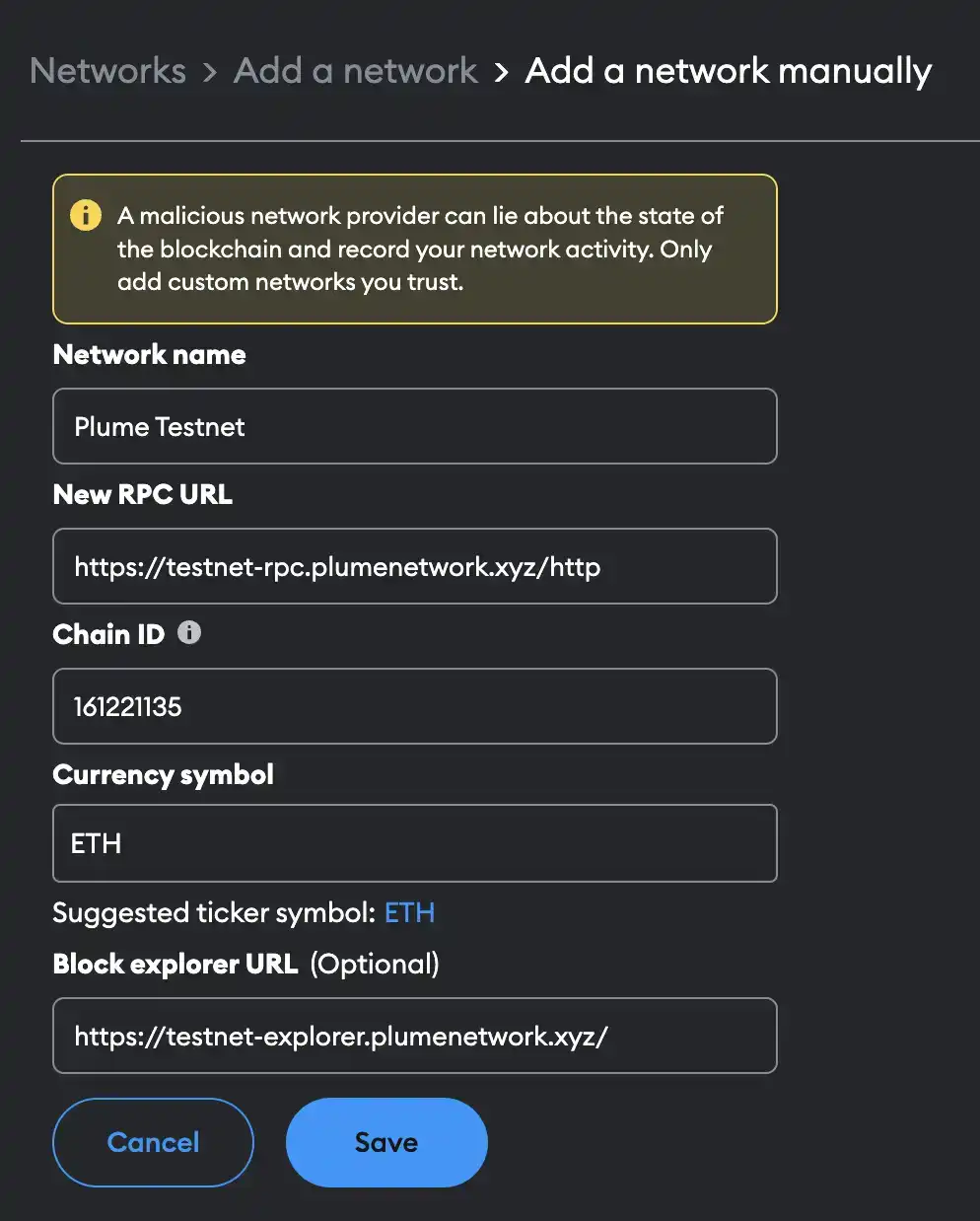
Click here to copy the Plume network parameters, click "Save", and then click "Switch to Plume Testnet".
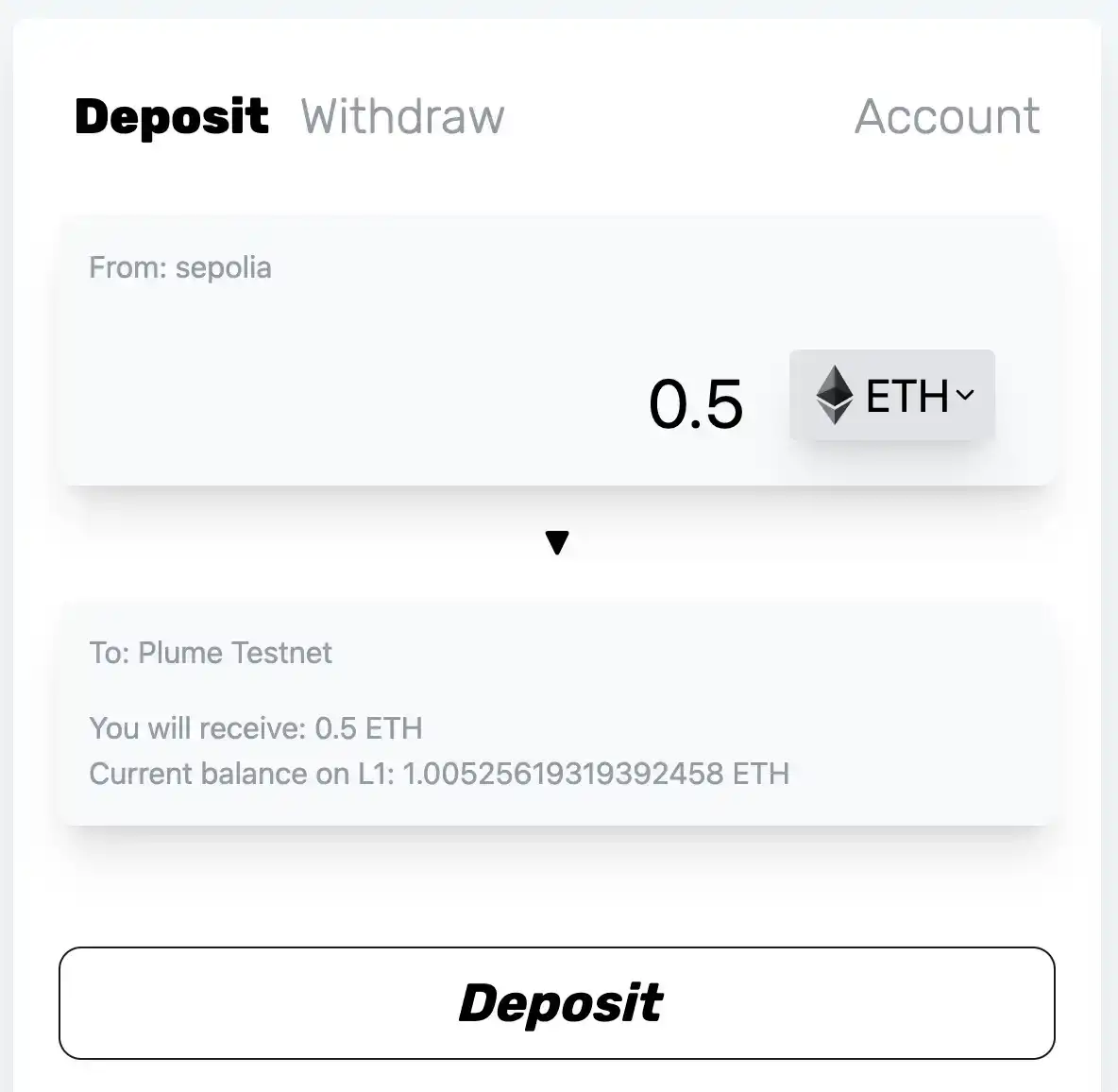
Finally, use the Plume Testnet Bridge to bridge your SepoliaETH to Plume.
Claiming USDC Test Tokens
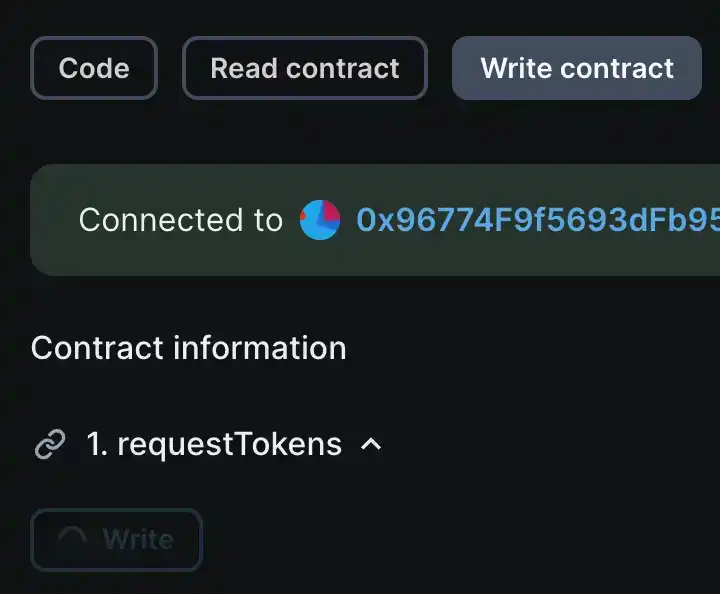
Users can obtain testnet USDC from the USDC Faucet on the Plume Block Explorer. Connect your wallet to the Plume testnet, then click on "Write" below "requestTokens" to receive 100,000 testnet USDC.
Check Plume Testnet Balance
Users should now be able to see ETH and USDC balances on the Plume testnet within their wallet. They can also check their wallet address on the Plume block explorer to view their balance and recent transactions. Once they have a balance on the testnet, they can proceed with interactive tasks.
Team Background
The Plume team is composed of professionals with extensive backgrounds in traditional finance, cryptocurrency, and RWA, ensuring a comprehensive approach to Plume's success. Team members hail from Coinbase, Robinhood, LayerZero, Binance, Galaxy Digital, Scale Venture Partners, dYdX, and several other industry-leading companies.
Among them, Chris Yin serves as Plume's CEO. He was the Head of Scale Venture Partners from 2019 to 2023, VP of Product at Rainforest QA from 2017 to 2019, Product Director at Coupa Software from 2013 to 2016, and founded Xpenser in 2012, which was later acquired by Coupa a year later.
Teddy Pornprinya, Plume's Chief Business Officer, worked as BD Lead at Binance in 2023, BD Lead at Swim.io from 2021 to 2023, and was involved in venture capital work at Coinbase Ventures in 2021.
Eugene Y. Q. (eyqs) Shen, Plume's Chief Technology Officer, held a Senior Software Engineer position at dYdX in 2022 and was a Software Engineer II at Robinhood Crypto from 2020 to 2021.

You may also like

Morning Report | OpenAI has submitted an S-1 registration statement draft to the U.S. SEC; Morpho completes $175 million financing

Galaxy Deep Research Report: How Hyperliquid's HIP-4 Upgrade Changes the Landscape of Prediction Markets?

Latest research from 13 top universities including Cornell University: The current state, challenges, and misconceptions of the fusion of Crypto and AI

Deconstructing Anthropic: The Best AI Company, Possibly Also a Type of Organizational Invention

Every exchange is a "Universal Exchange."

The counterattack of traditional finance: Alliance chains are quietly reviving
Pantera Capital Partner: How Tokenization is Restructuring the Private Equity and Early Investment Ecosystem?

Mastercard Launches Agent Pay for AI, Plans to Record AI Agent Payment Authorizations on Polygon
Mastercard launched Agent Pay for AI, a new payment protocol designed to help AI agents make small payments such as pay-per-use access to data and APIs. The system plans to record human-granted AI agent permissions on Polygon, focusing on verifiable authorization, identity, and payment controls.

Curve Deploys Llamalend v2 on Optimism With 250,000 OP Incentives
Curve launched Llamalend v2 on Optimism with 250,000 OP incentives from the Optimism Foundation. The upgrade expands Llamalend beyond its earlier crvUSD-focused model, adding broader collateral support, LlamaRisk market reviews, and the ability to use Curve LP tokens as collateral.

Raydium Old Liquidity Pool Reportedly Exploited, With $1.34 Million Moved to Ethereum and Tornado Cash
An old Raydium liquidity pool was reportedly exploited for around $1.34 million in USDC, RAY, and wSOL, with the stolen funds bridged to Ethereum and deposited into Tornado Cash. The incident highlights the tail risks of legacy DeFi pools, old contracts, and cross-chain fund laundering paths.
Kalshi Executive Challenges “SBF Backed AI Unicorns” Narrative, Says Leopold Aschenbrenner Was Key Figure
Kalshi executive John Wang questioned the “SBF backed AI unicorns” narrative, saying Leopold Aschenbrenner was the key figure behind major AI investment decisions.

New York Proposes Stricter Stablecoin Issuer Rules Aligned With Federal GENIUS Act
NYDFS proposed stricter stablecoin issuer rules aligned with the GENIUS Act, covering reserves, custody, redemption timelines, audits, and capital buffers.

CryptoQuant Says Bitcoin Profitable Supply Is Near 45% Pressure Zone as On-Chain Data Points to Market Repricing
CryptoQuant said Bitcoin’s profitable supply is nearing the 45% pressure zone, signaling rising market stress, unrealized losses, and a possible on-chain repricing phase.

Bitcoin Falls Below 200-Week Moving Average as On-Chain Data Shows Over Half of Supply in Loss
Bitcoin dropped below its 200-week moving average as on-chain data showed over 50% of circulating supply is now in loss, signaling rising market stress.

CFTC Reportedly Plans New Prediction Market Rules Focused on Manipulation Risk and Public Interest Review
The CFTC is reportedly preparing new prediction market rules focused on manipulation risk, public interest review, and retail trader protections.

Meet the new WEEX trial fund—your gateway to greater profits

WEEX Labs Lands at Dutch Blockchain Week: A Disruptive Crypto × AI Conversation Sets Sail in Amsterdam
SK Hynix Reportedly Plans U.S. ADR Listing as Early as August, With SEC Approval Possible in Late June
SK Hynix may pursue a U.S. ADR listing as early as August, with SEC approval reportedly possible in late June amid strong AI chip supply chain demand.
Morning Report | OpenAI has submitted an S-1 registration statement draft to the U.S. SEC; Morpho completes $175 million financing
Galaxy Deep Research Report: How Hyperliquid's HIP-4 Upgrade Changes the Landscape of Prediction Markets?
Latest research from 13 top universities including Cornell University: The current state, challenges, and misconceptions of the fusion of Crypto and AI
Deconstructing Anthropic: The Best AI Company, Possibly Also a Type of Organizational Invention
Every exchange is a "Universal Exchange."
The counterattack of traditional finance: Alliance chains are quietly reviving


