
The crypto market is currently facing a trust crisis. What should the industry do to turn the tide?


Original Article Title: Why Everyone Hates Crypto—And How We Fix It
Original Author: defiignas, DeFi Researcher
Original Translation: ChatGPT
Editor's Note: The author discusses the poor public perception of cryptocurrency due to scams, speculation, and negative media coverage, analyzes its low trust among the general public, and points out that despite its original intention to innovate the financial system, meme coins and a short-term profit-driven culture have overshadowed this vision; the author proposes measures such as self-regulating bad actors, emphasizing utility over speculation, and reshaping the narratives of Bitcoin and Ethereum to improve cryptocurrency's perception, ultimately achieving a more open and fair ecosystem.
Below is the original article content (slightly reorganized for readability):
Cryptocurrency was meant to be revolutionary, yet it is seen as a scam. Can we correct this situation?
Surprisingly, cryptocurrency has such a minimal impact on our lives outside of the crypto community. Unless you actively try to engage with cryptocurrency, you can go about your daily life with almost no exposure to it.
However, the problem is that when this "minimal exposure to cryptocurrency" does affect people, it is almost always negative. You're watching "Squid Game" on Netflix, and a crypto influencer obsessed with a scam appears. He can't go a moment without checking the crypto price, demanding to get his phone back. At this point, I can relate.
When you browse the news, you come across the following (almost always negative) headlines:
· North Korea Steals $1.5 Billion, Pulls Off Largest Hack Ever
· "A Mockery": Trump's new meme coin sparks outrage in the crypto world
· Man sued for woman's £154,000 loss in Bitcoin scam
· Crypto trader livestreams suicide
Scams, fraud, pump-and-dump schemes. You name it. Cryptocurrency's public image is abysmal. To be fair, even we, the crypto natives, know that cryptocurrency is rife with junk.
But we also know why we are here: to get rich by innovating the outdated financial system. Yes, quick riches are often the reason we are so loathed, but I cannot deny that fact. Everyone who invests in anything wants to make money.
However, cryptocurrency is one of the few industries where you can still build wealth from scratch. In today's economy, slowly amassing wealth on a moderate salary is incredibly challenging. Gen Z realized this and (quietly) chose to opt-out of the job market.
If only they knew what cryptocurrency could bring to their lives...
However, I find that cryptocurrency has done a terrible job in emphasizing our mission, why we need cryptocurrency, and why getting rich through cryptocurrency is not inherently evil. Here is a popular comment from the Financial Times summarizing the views of crypto skeptics:
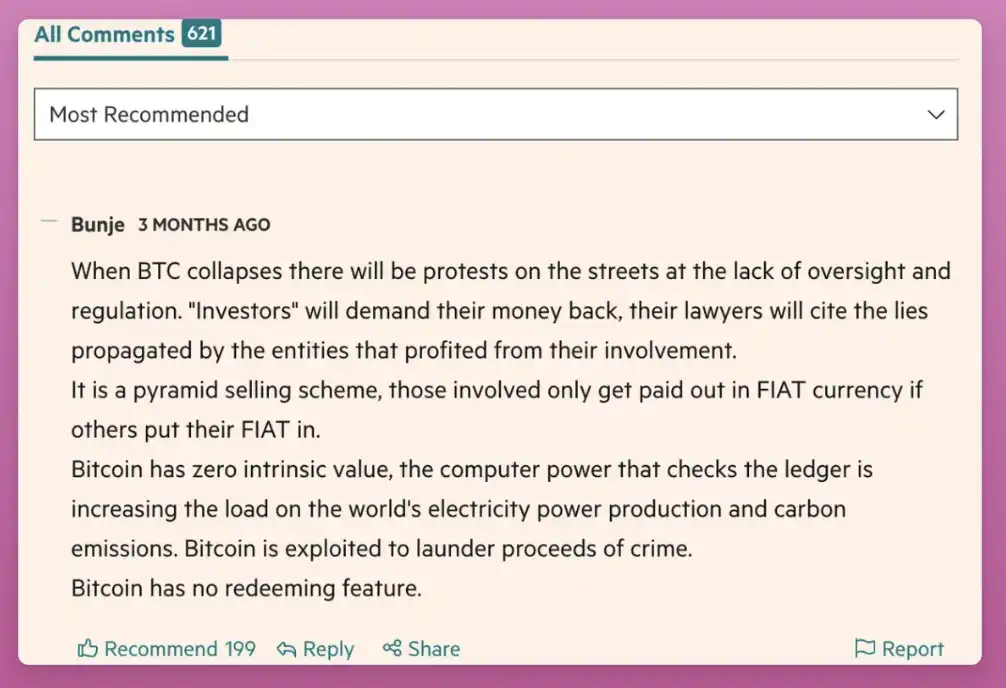
If you read Reddit, you'd know how much the common folk despise cryptocurrency, but I wish to see more positive representation of cryptocurrency in mainstream media. To be fair, the Financial Times has always been skeptical of cryptocurrency, but over the years, Bloomberg's coverage has improved, providing great insights. Interestingly, there was a seemingly harmless Bloomberg article titled "Meet America's Seven Top Personal Finance Influencers," which mentioned a crypto influencer. He mainly focuses on meme coins and promotes his meme coin Telegram group, so while I'm glad Bloomberg wants to incorporate a crypto element, I'm surprised they actually shared @cryptomasun.
People Really Hate Cryptocurrency
As this is still a "research" blog, here are some noteworthy research findings on cryptocurrency sentiment. Many surveys indicate that non-investors see cryptocurrency as a high-risk speculation rather than a legitimate financial asset. In the UK, 64% of surveyed consumers knowledgeable about cryptocurrency believe that "investing in cryptocurrency is basically gambling."
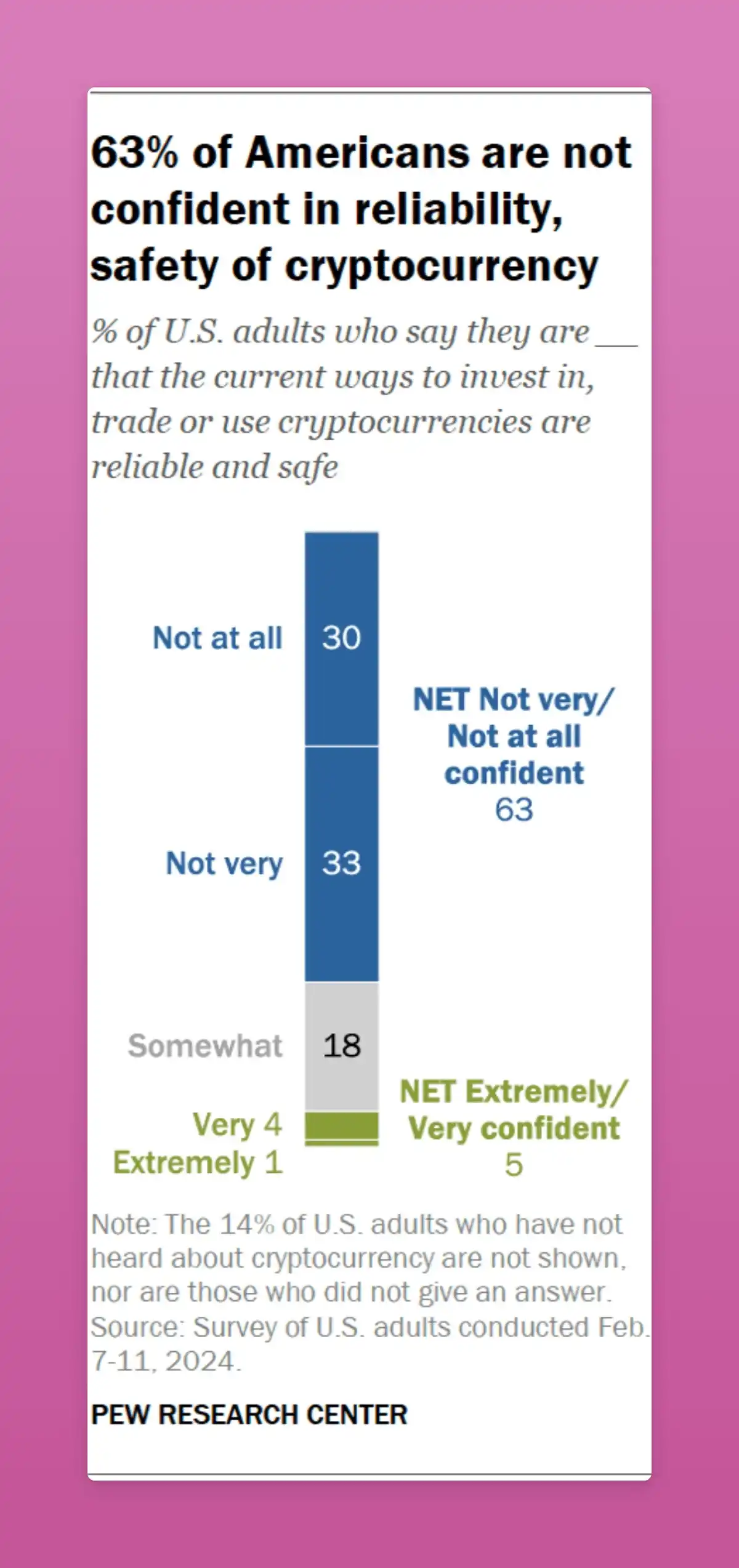
A 2024 Pew survey found that 75% of Americans distrust its reliability and security due to scams and market volatility.
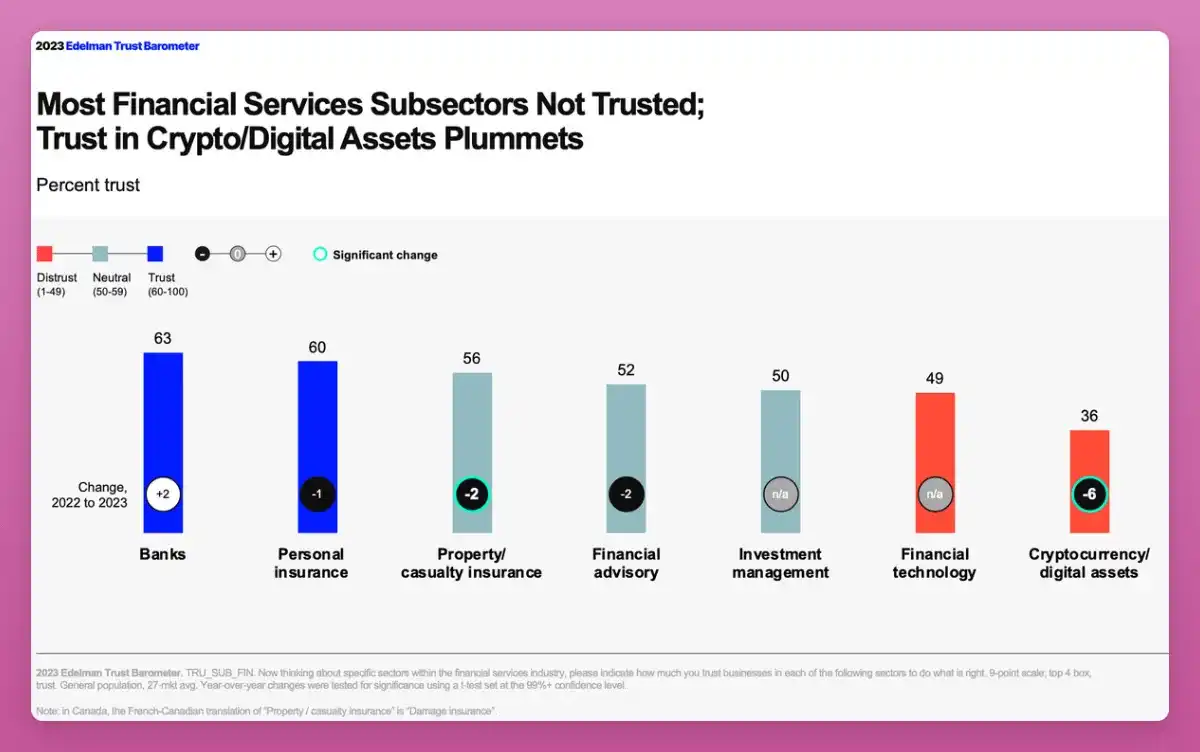
In the 2023 Edelman Global Study, cryptocurrency is distrusted across all age groups, with its trust even lower than the banks we're trying to disrupt.
Of course, FTX damaged cryptocurrency's reputation in 2023, but this year didn't help with meme coins either.
Consensys annually releases excellent research reports, and their 2024 report shows a decline in the narrative of the "future of money" in cryptocurrency. Sentiments of speculation, scams, phishing, crime, and money laundering are as prevalent in cryptocurrency as they are in the "traditional financial alternative."
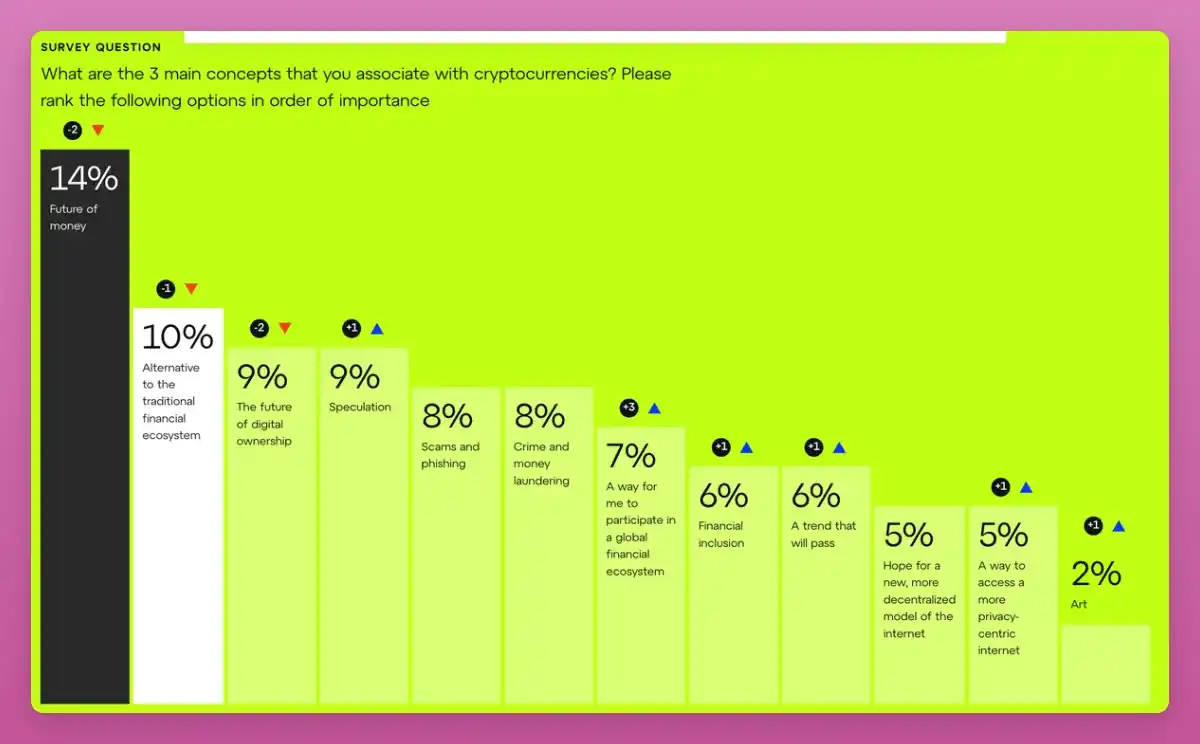
The message is clear: outside the crypto community, people widely doubt whether digital assets can be trusted as secure financial instruments.
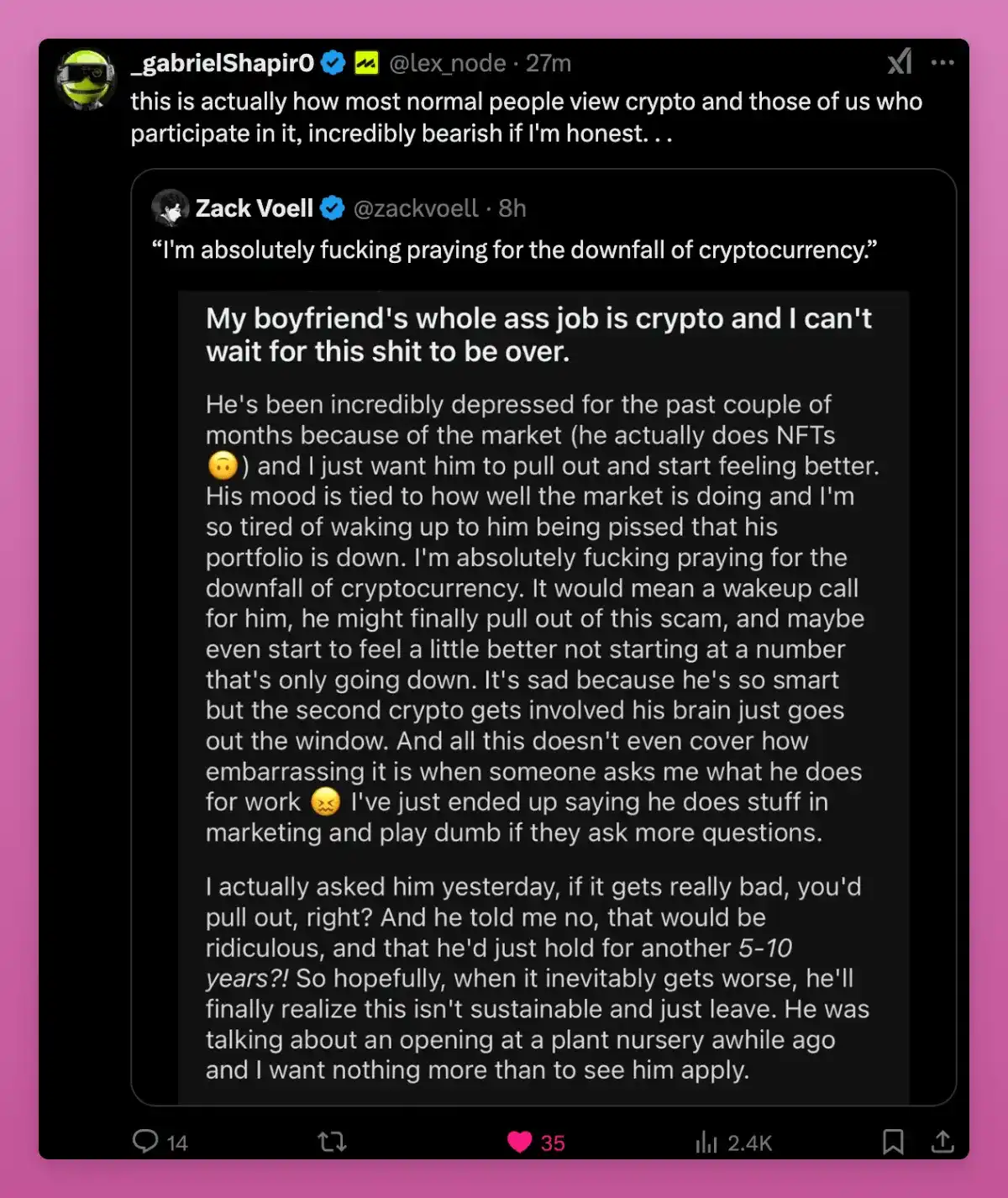
While writing this blog post, I came across the following tweet that succinctly captures public sentiment towards cryptocurrency:
Why Cryptocurrency Culture Matters
Our public image may seem unimportant as the general public "just doesn't get it." They fear being rescued from the 9-5 grind and are influenced by mainstream media's anti-crypto propaganda.
Nevertheless, the tide is turning, with more people willing to buy into cryptocurrency. I believe that a shifting crypto culture can add millions of new members to the community.
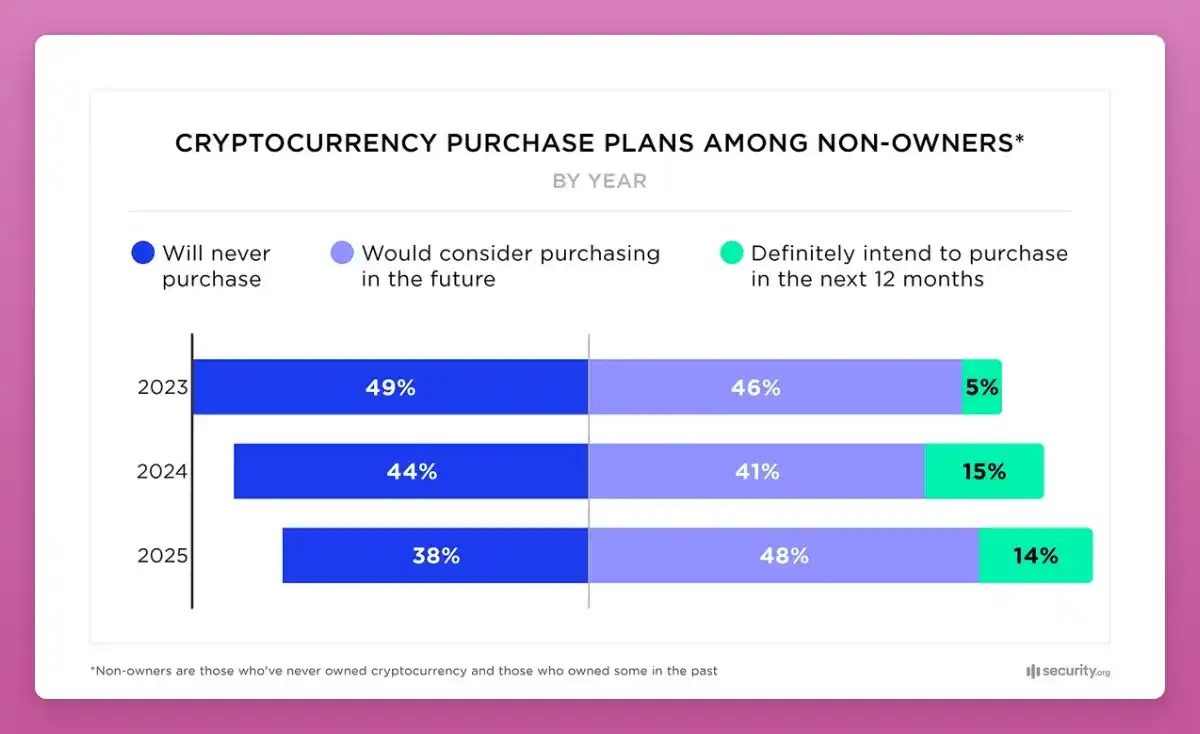
I believe we can and should do better. We need to make people believe in the vision and mission of cryptocurrency.
Cryptocurrency envisions a decentralized financial system where individuals have full control of their assets, free from the constraints of intermediaries like banks or governments. It aims to create a borderless, censorship-resistant, trust-minimized ecosystem where anyone can transact, store value, and build an economic system without relying on centralized authorities.
Our vision is being drowned out by meme coins and speculative noise.
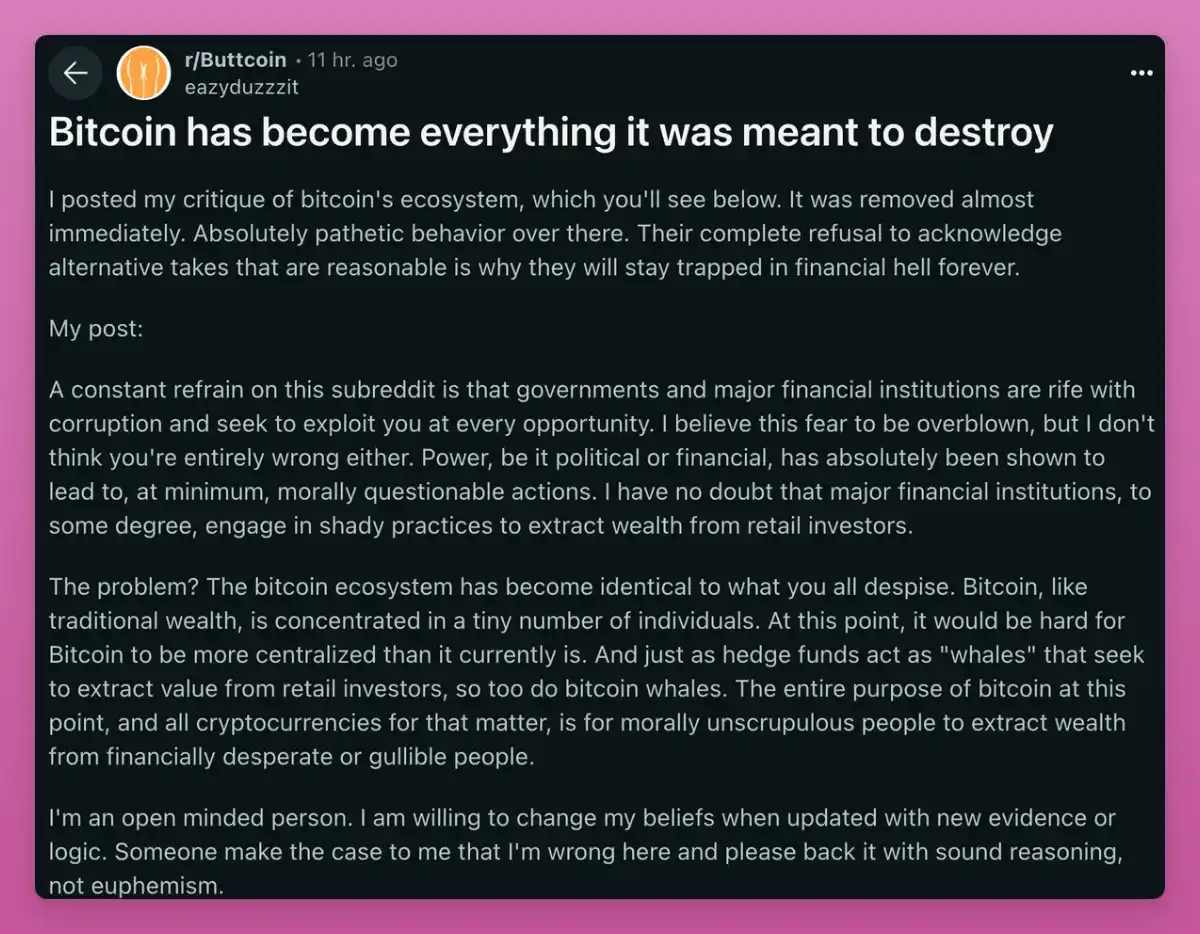
Even worse, the public no longer sees cryptocurrency as a revolutionary way to improve the financial system. As stated below: "The Bitcoin ecosystem has become everything you despise." Wealth and power are concentrated in the hands of a few, extracting wealth from the economically desperate.
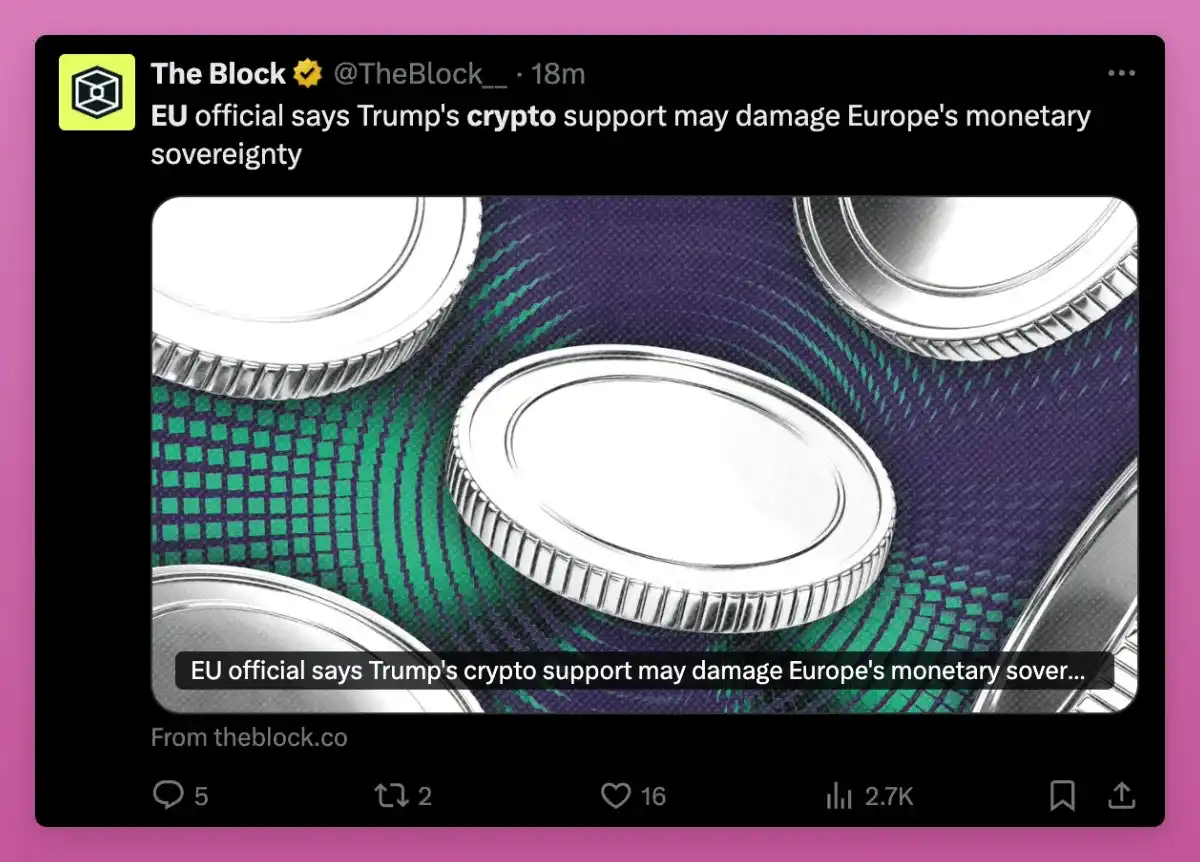
Furthermore, due to Trump's public endorsement, people now associate cryptocurrency with the MAGA movement, which is not well-received outside its circle. Unsurprisingly, the EU views Trump's support for cryptocurrency as a threat to European monetary sovereignty.
Make no mistake—the pause in regulation by the former U.S. government was bullish. However, the crypto industry is walking on thin ice under the current Trump administration.
How to Change Cryptocurrency's Perception
Cryptocurrency's reputation won't repair itself. If we want mainstream adoption, we need to reshape the narrative.
Easier said than done, but it must start from within: even crypto natives have lost hope in cryptocurrency.
I believe we need to focus on three key points first:
1. Make Cryptocurrency Great Again
In previous cycles, newcomers to cryptocurrency could make money. However, meme coins were distorted by small groups and venture-backed low-circulating, high FDV projects, leaving no room for upward movement for newcomers.
This cycle we managed to resist low circulation, high FDV, but fell into the meme coin small group trap.
Legion and Echo made progress by adopting a fairer funding model, but they are still too exclusive. We need to create and promote games that create value rather than destroy value, allowing early adopters to benefit together. Kyle in "First Principles" provides a detailed plan on how to rise more powerfully from market chaos.
But due to extreme short-termism, a culture of maximizing extraction, and low-trust individuals, we have fallen into a self-inflicted eternal financial nihilism loop. When everyone thinks "I can get out before he scams" is a good idea, the collective decision is to blindly invest in random scammer coins.
We need to self-regulate bad actors. The industry must do more to expose scams and hold influencers accountable for their misleading promotions. ZachXBT used to do this, but the level of criminality got out of hand, and even he eventually dumped the meme coins sent to him.
I also need to do better in this regard, staying away from value-extraction activities. People need to truly make money while expanding the crypto cake. Now, newcomers end up financially devastated. Or worse.
2. Shift the Narrative from Speculation to Utility
Cryptocurrency is not just gambling—it offers real-world benefits. We need to focus on use cases such as remittances, financial inclusion, and transparent governance, rather than meme coin culture.
DeFi is expanding, new social networks like Lens, Abstract, and Farcaster are emerging with innovative monetization models. In addition, the increasing adoption of stablecoins and real-world assets (RWA) helps preserve and grow wealth rather than destroy it.
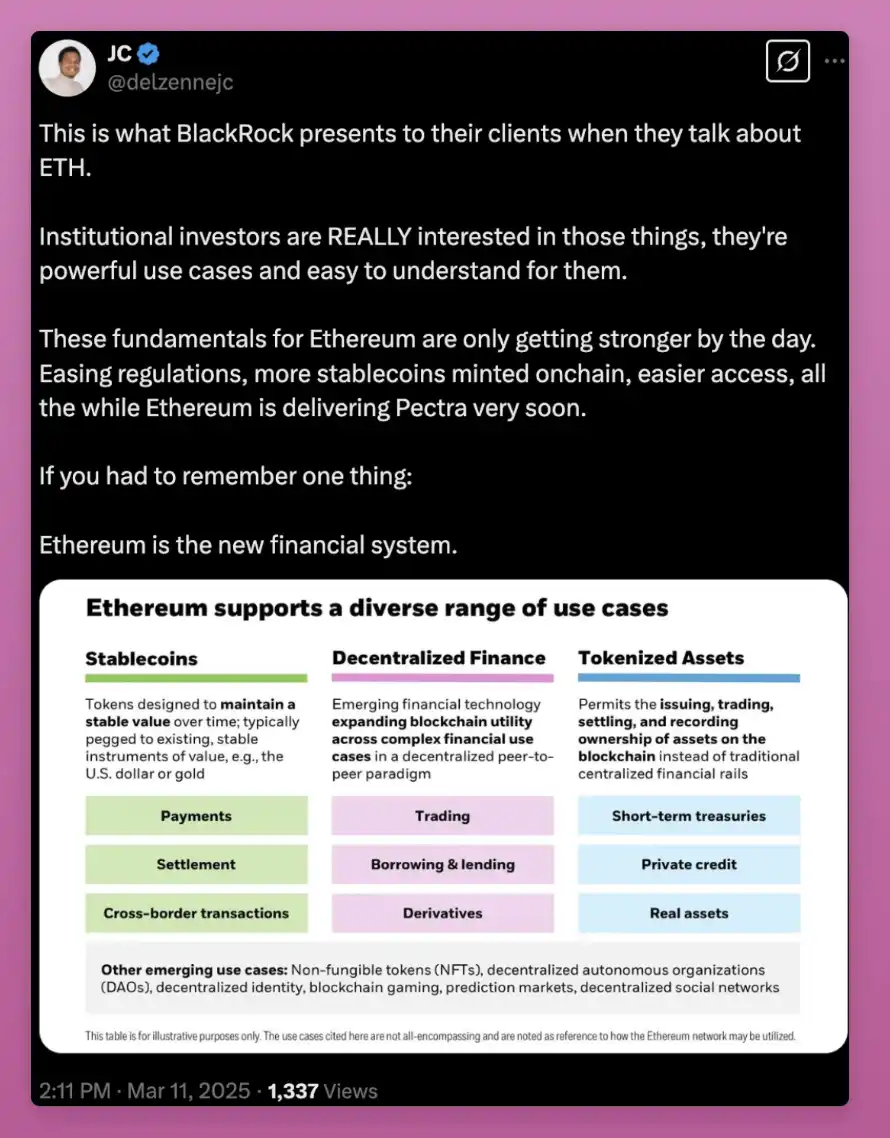
KOLs on X may not care about these, but CryptoX is just a small part of a wider crypto culture.
I am glad Bitcoin is performing well as "digital gold," but Ethereum and Solana are seen as speculative chains rather than foundational platforms for an open digital economy.
If we promote meme coins as part of crypto culture, I bet Pudgy Penguins are the strongest output from Web3 to Web2, rather than meme coins imported from Web2 (Doge, Pepe, etc.).
3. Reclaiming the Bitcoin and Ethereum Narratives
Cryptocurrency is not a singular unified culture but rather consists of multiple subcultures. Among the most prominent are Bitcoin and Ethereum.
The view that Bitcoin "became everything it was supposed to destroy" really irks me. Only those who store BTC in a cold wallet truly understand the peace of mind that self-custody and disintermediation bring.
ETFs are beneficial for our wallets, but they are a double-edged sword because ETF buyers do not experience the freedom that self-custody provides.
I also wish Bitcoin would steer clear of the MAGA movement. Bitcoin is global and should be neutral.
That's why I like Ethereum. Many criticize the Ethereum Foundation for not cozying up to the Trump team, but in the long run, this will prove to be a winning strategy.
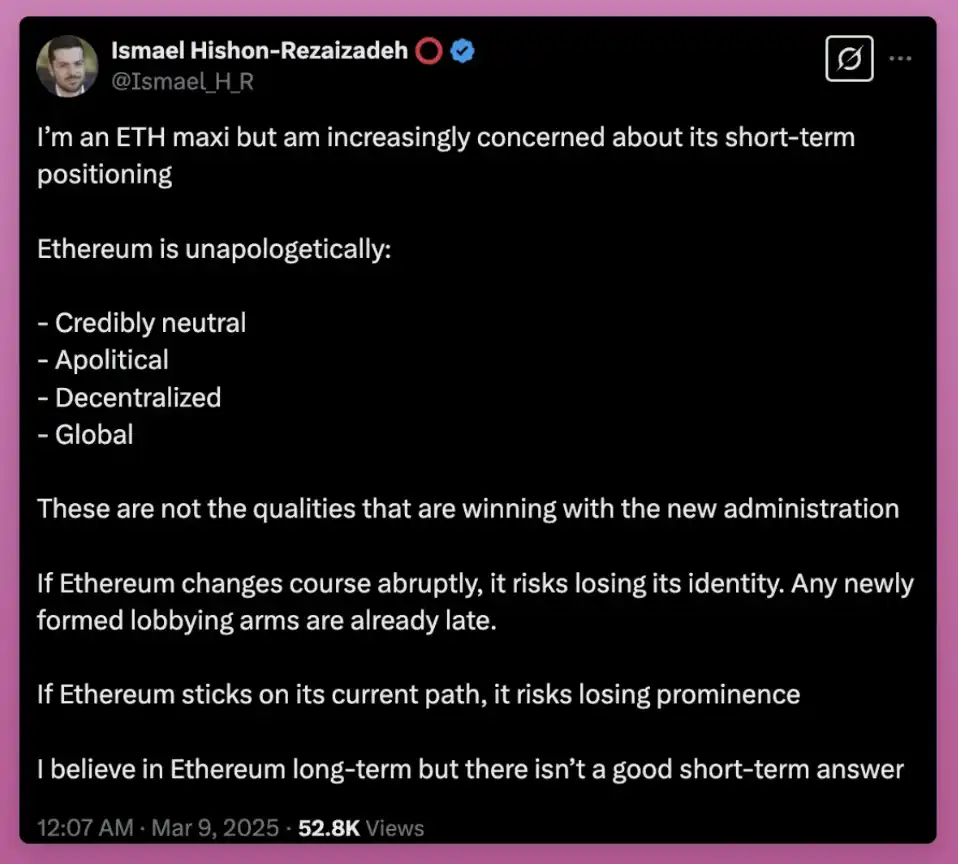
In a world where privacy and democracy are eroding, AI blurs reality and illusion, and digital ownership is not assured, Ethereum offers a secure haven.
Ethereum stands unwaveringly for:
· Trusted Neutrality
· Depoliticization
· Decentralization
· Globality
Those outside of cryptocurrency are unaware of these, so our job is to spread this information and build products that truly showcase Ethereum's value.
An Optimistic Future
Today, the entire cryptocurrency market has just reached a $2.7 trillion valuation. But are we deserving of this?
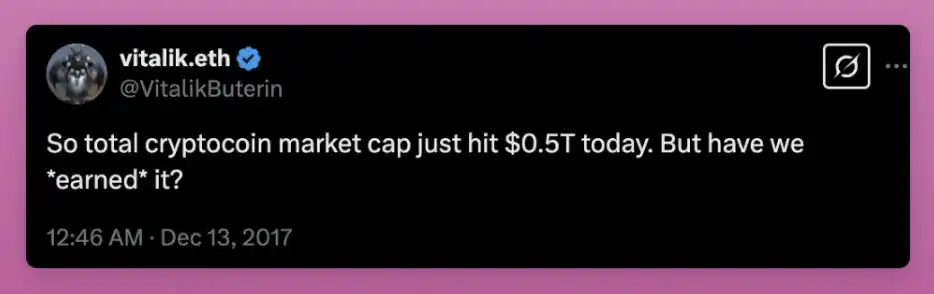
Since Vitalik's post in 2017, cryptocurrency has evolved beyond mere speculation and zero-sum games.
As I've written in previous posts, globally, 1.4 billion people are unbanked. Even in the U.S., this figure stands at 4.5%. The Fed's own research finds that high-income individuals see cryptocurrency as an investment, but the less wealthy use it for transactions. 60% of those using it for transactions earn less than $50,000 annually, and 13% are unbanked.
Venezuela ranks 40th in the 2023 Chainalysis Cryptocurrency Adoption Index. Stablecoins are a lifeline against hyperinflation. Similar to Argentina, as the national currency plummets, stablecoin purchases surge—a sign of widespread cryptocurrency adoption.
Cryptocurrency is not just about fighting inflation; it is also used to resist oppressive regimes. During the COVID-19 pandemic, cryptocurrency was used to directly aid healthcare workers in Venezuela, free from interference by corrupt authorities. Ukraine raised $225 million in donations through cryptocurrency when the war started.
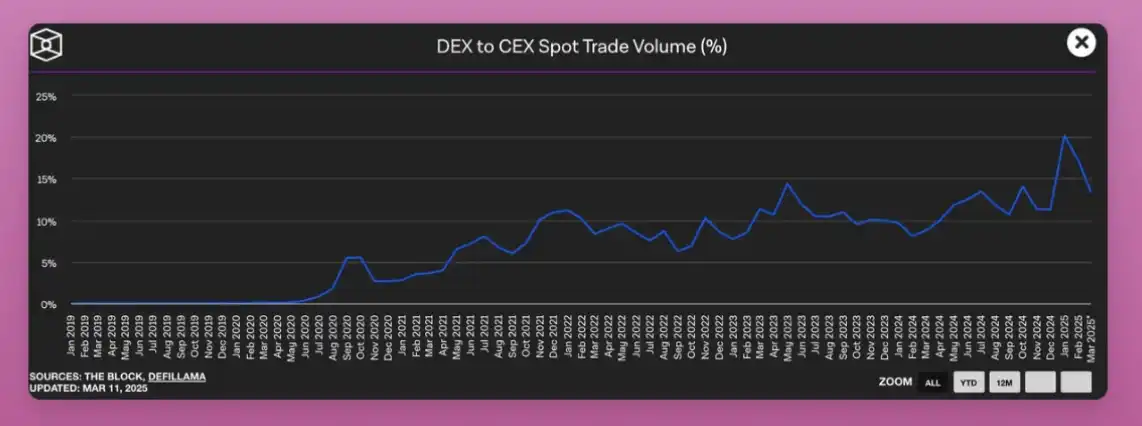
DeFi's TVL has reached $880 billion! Decentralized exchanges are now challenging centralized exchanges, and projects like Maker are bringing real-world assets onto the blockchain.
Non-speculative decentralized social applications are also seeing growth. Farcaster and Polymarket have thousands of users daily, with numbers still increasing. We now have truly usable dApps.
However, all these advancements seem to have been lost on the X timeline; we have done a terrible job in spreading this mission.
Nevertheless, I believe this market downturn will help the crypto industry heal, and progress will continue. We need to clean up our act first and then focus on promoting the positive side of cryptocurrency.
You may also like

Curve Deploys Llamalend v2 on Optimism With 250,000 OP Incentives
Curve launched Llamalend v2 on Optimism with 250,000 OP incentives from the Optimism Foundation. The upgrade expands Llamalend beyond its earlier crvUSD-focused model, adding broader collateral support, LlamaRisk market reviews, and the ability to use Curve LP tokens as collateral.

Raydium Old Liquidity Pool Reportedly Exploited, With $1.34 Million Moved to Ethereum and Tornado Cash
An old Raydium liquidity pool was reportedly exploited for around $1.34 million in USDC, RAY, and wSOL, with the stolen funds bridged to Ethereum and deposited into Tornado Cash. The incident highlights the tail risks of legacy DeFi pools, old contracts, and cross-chain fund laundering paths.

Kalshi Executive Challenges “SBF Backed AI Unicorns” Narrative, Says Leopold Aschenbrenner Was Key Figure
Kalshi executive John Wang questioned the “SBF backed AI unicorns” narrative, saying Leopold Aschenbrenner was the key figure behind major AI investment decisions.

Pantera Capital Partner: How Tokenization is Restructuring the Private Equity and Early Investment Ecosystem?

New York Proposes Stricter Stablecoin Issuer Rules Aligned With Federal GENIUS Act
NYDFS proposed stricter stablecoin issuer rules aligned with the GENIUS Act, covering reserves, custody, redemption timelines, audits, and capital buffers.
Every exchange is a "Universal Exchange."

The counterattack of traditional finance: Alliance chains are quietly reviving

CryptoQuant Says Bitcoin Profitable Supply Is Near 45% Pressure Zone as On-Chain Data Points to Market Repricing
CryptoQuant said Bitcoin’s profitable supply is nearing the 45% pressure zone, signaling rising market stress, unrealized losses, and a possible on-chain repricing phase.

Bitcoin Falls Below 200-Week Moving Average as On-Chain Data Shows Over Half of Supply in Loss
Bitcoin dropped below its 200-week moving average as on-chain data showed over 50% of circulating supply is now in loss, signaling rising market stress.

CFTC Reportedly Plans New Prediction Market Rules Focused on Manipulation Risk and Public Interest Review
The CFTC is reportedly preparing new prediction market rules focused on manipulation risk, public interest review, and retail trader protections.

Meet the new WEEX trial fund—your gateway to greater profits

WEEX Labs Lands at Dutch Blockchain Week: A Disruptive Crypto × AI Conversation Sets Sail in Amsterdam

SK Hynix Reportedly Plans U.S. ADR Listing as Early as August, With SEC Approval Possible in Late June
SK Hynix may pursue a U.S. ADR listing as early as August, with SEC approval reportedly possible in late June amid strong AI chip supply chain demand.

SpaceX vs Tesla vs xAI: Which Elon Musk Trade Has the Biggest Upside in 2026?
OpenAI Reveals It Has Confidentially Submitted an S-1 to the SEC, Keeping the Door Open for a Future IPO
On June 9, according to an OpenAI announcement, the company recently confidentially submitted a draft S-1 registration statement to the U.S. Securities and Exchange Commission (SEC), beginning the preliminary compliance process for a potential initial public offering. OpenAI said it chose to disclose this proactively because it expected the news might leak; however, the company has not yet set a specific listing timeline, and related arrangements may still take some time.
Latest research from 13 top universities including Cornell University: The current state, challenges, and misconceptions of the fusion of Crypto and AI
Deconstructing Anthropic: The Best AI Company, Possibly Also a Type of Organizational Invention
Apollo and Blackstone Reportedly Back $35 Billion Anthropic Chip Financing as Deal Details Remain Unclear
On June 9, according to currently available news alerts, Apollo and Blackstone Group participated in a $35 billion financing for an Anthropic “chip project.” Based on the original wording of the report, the funding has already been raised, but public information remains limited. The financing structure, use of proceeds, project entity, and whether Apollo and Blackstone participated through equity, debt, or project financing have not yet been disclosed.
Curve Deploys Llamalend v2 on Optimism With 250,000 OP Incentives
Curve launched Llamalend v2 on Optimism with 250,000 OP incentives from the Optimism Foundation. The upgrade expands Llamalend beyond its earlier crvUSD-focused model, adding broader collateral support, LlamaRisk market reviews, and the ability to use Curve LP tokens as collateral.
Raydium Old Liquidity Pool Reportedly Exploited, With $1.34 Million Moved to Ethereum and Tornado Cash
An old Raydium liquidity pool was reportedly exploited for around $1.34 million in USDC, RAY, and wSOL, with the stolen funds bridged to Ethereum and deposited into Tornado Cash. The incident highlights the tail risks of legacy DeFi pools, old contracts, and cross-chain fund laundering paths.
Kalshi Executive Challenges “SBF Backed AI Unicorns” Narrative, Says Leopold Aschenbrenner Was Key Figure
Kalshi executive John Wang questioned the “SBF backed AI unicorns” narrative, saying Leopold Aschenbrenner was the key figure behind major AI investment decisions.
Pantera Capital Partner: How Tokenization is Restructuring the Private Equity and Early Investment Ecosystem?
New York Proposes Stricter Stablecoin Issuer Rules Aligned With Federal GENIUS Act
NYDFS proposed stricter stablecoin issuer rules aligned with the GENIUS Act, covering reserves, custody, redemption timelines, audits, and capital buffers.
Every exchange is a "Universal Exchange."


