
Everyone is criticizing Shitcoin, let's see how this Shitcoin season plays out!


Contributors: Jaleel, BlockBeats; Seigo, Crypto Enthusiast
Buy coins in a bull market, do research in a bear market.
This cycle has been criticizing VC coins all along. Do you know which VC-backed project has the highest token issuance rate? Who has the highest listing rate on trading platforms? If you don't buy VC coins, is it worth getting involved in DeFi projects? Which institutions are worth long-term tracking?
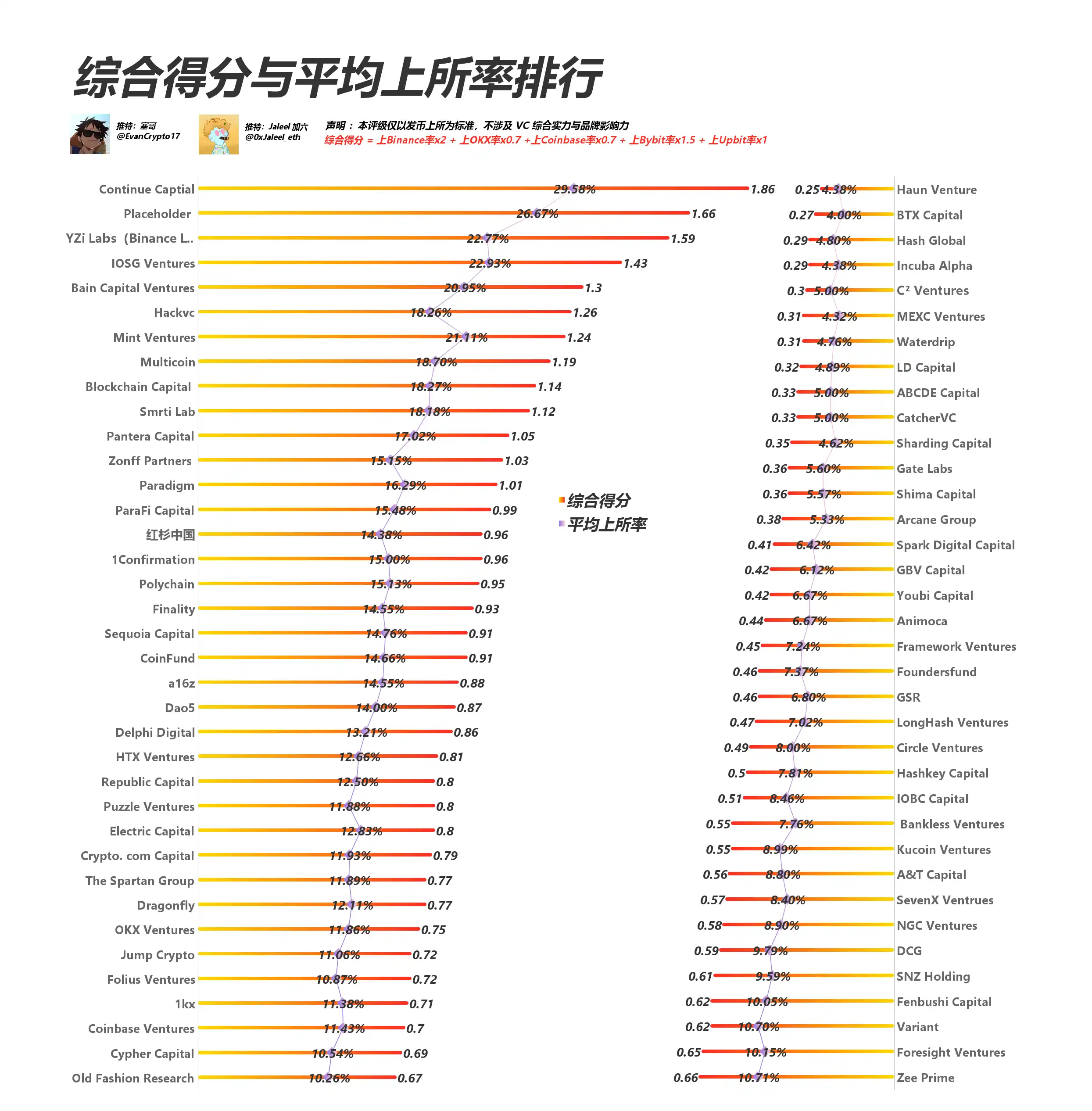
Building on the core metric of "investment project listing efficiency," we have selected a total of 73 VCs, including 35 domestic VCs, 30 foreign VCs, and 8 exchange VCs. We have compiled statistics on the number of projects they have invested in, as well as the listing quantity and probability on the five major exchanges: Binance, Bybit, Upbit, OKEx, and Coinbase. For example, the Binance listing rate = Number of listings on Binance / Total number of investments. We have also introduced exchange weighting parameters that are more in line with the current market landscape: Binance 2, Bybit 1.5, Upbit 1, OKEx & Coinbase 0.7. Finally, we have visualized the information in the most hardcore and intuitive charts to deconstruct the performance of crypto VCs from this perspective.
It is important to note that this report still focuses on the dimension of "investment project listing on exchanges" and does not provide a comprehensive evaluation of VC's overall strength and long-term brand influence. It is for reference only.
Let's Start with the Conclusion
Based on the past listing achievements of each VC's investment projects and the five weighted factors of "BN, Bybit, Upbit, OKEx, Coinbase," the recalculated ranking results show several key changes:
T0 Level: Continue Capital, Placeholder, YZi Labs (Binance Labs), IOSG Ventures, and others still dominate the top tier, but there is a certain differentiation in rankings and scores based on listing on Bybit or Upbit.
T1/T2: Bain Capital Ventures, Mint Ventures, HackVC, and others have gradually entered the high-scoring matrix; Polychain, Multicoin, Paradigm, Zonff Partners, and others continue to maintain stable performance.
T3/T4: OKX Ventures, SNZ Holding, The Spartan Group, Animoca, NGC Ventures, and other VCs that have previously focused on GameFi or specific tracks have also experienced some fluctuations in this ranking.
T5: Funds with relatively smaller sizes or more localized strategies have slightly lower scores in terms of global listing efficiency, but the possibility of future breakthroughs cannot be ruled out.
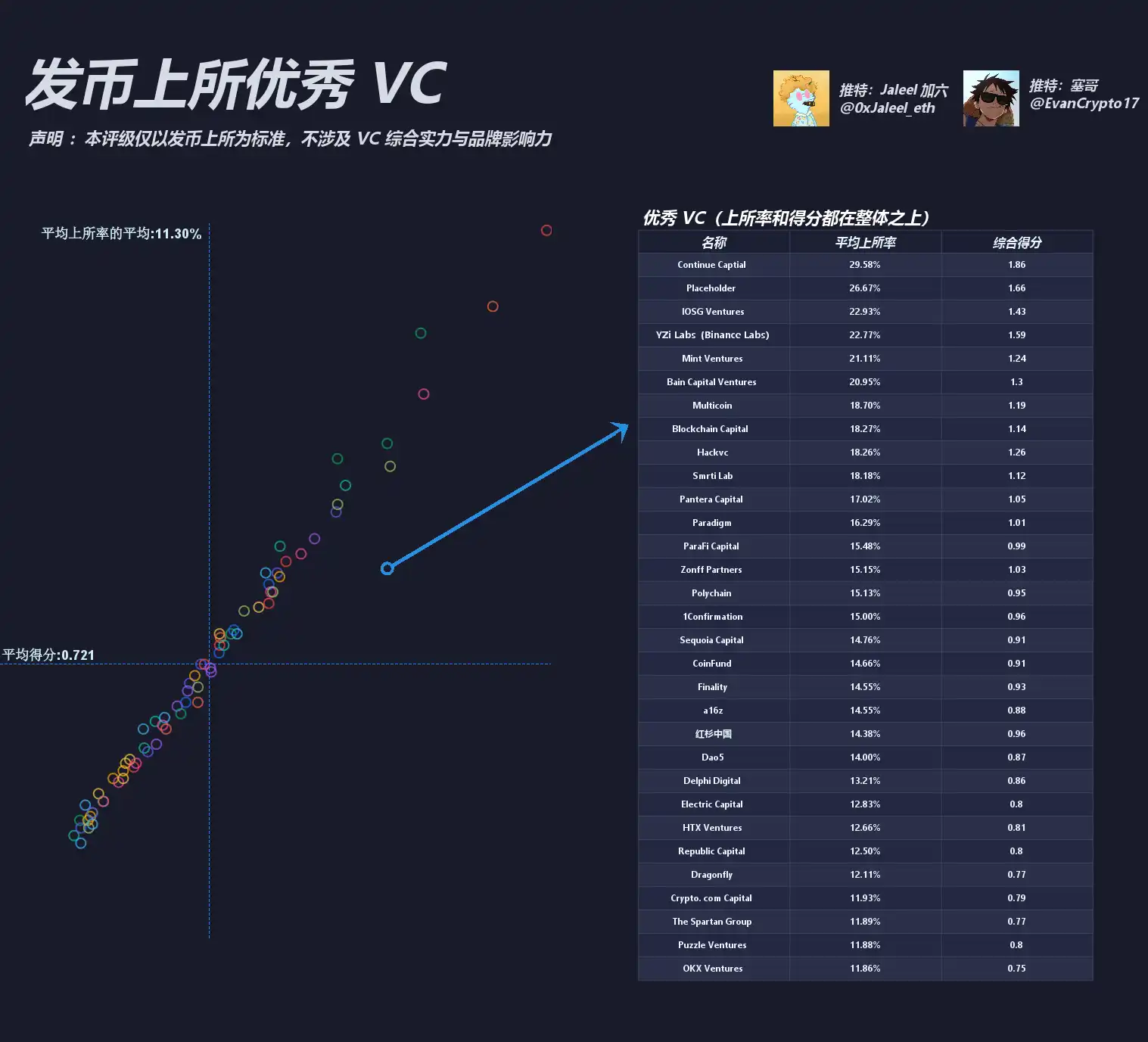
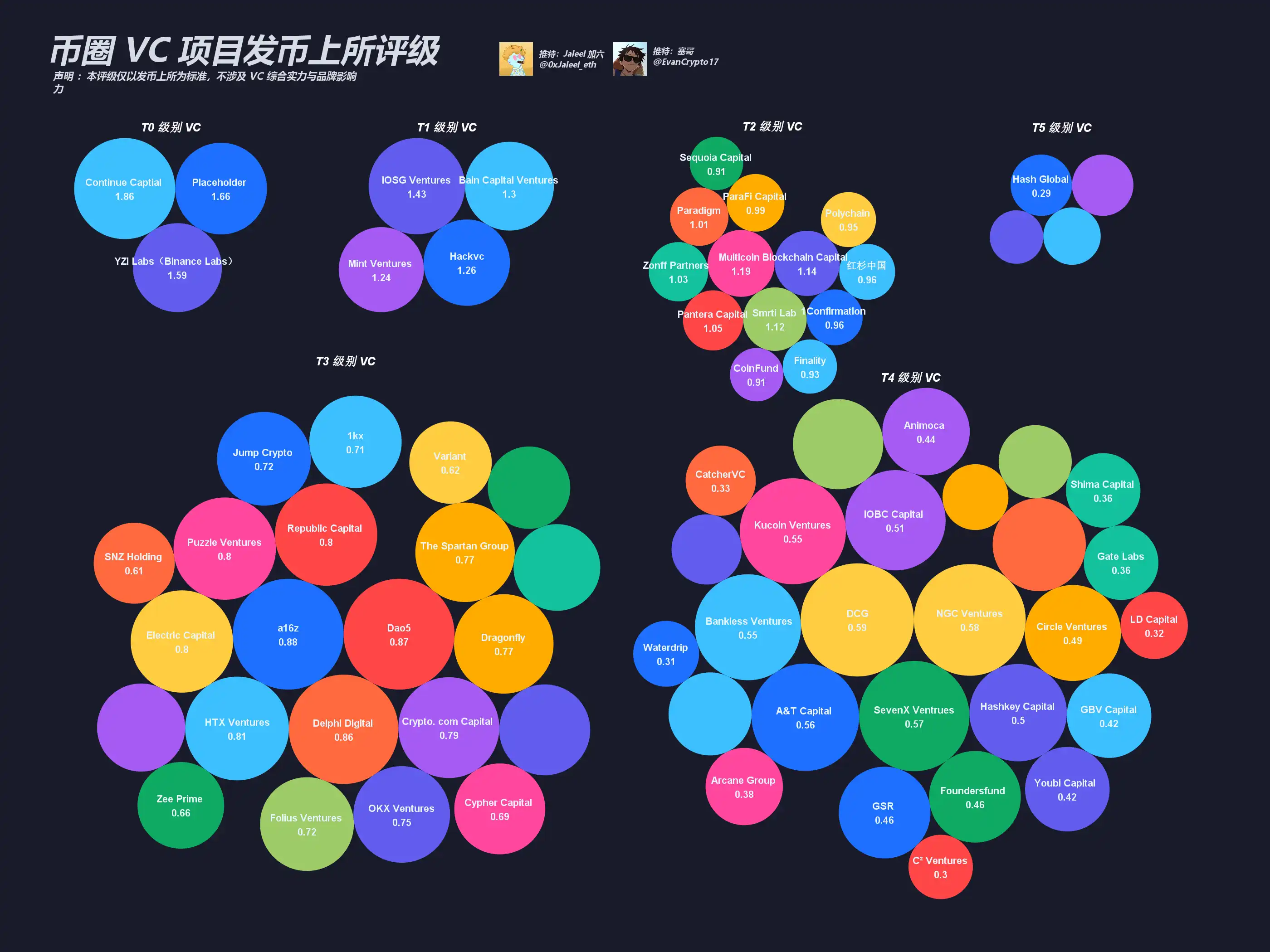
It is also important to note that projects that are newly listed or have not yet issued tokens are not included in the statistics. Therefore, if a VC focuses on seed rounds, research institutes, and other earlier stages, their potential has not been fully reflected in the listing indicators.
T0: Comprehensive Score >1.5
Key Institutions: Continue Capital; YZi Labs (Binance Labs); IOSG Ventures; Placeholder. As seen in the chart, these four institutions have a distinct "multi-platform, multi-track" characteristic:
Continue Capital: Although the number of investments is relatively small, both ROI and listing rate are quite impressive, living up to its reputation. Continue Capital has consistently maintained a high rate of "listing on BN" and has also shown considerable performance in "listing on Bybit."
YZi Labs (formerly Binance Labs): Needless to say, although CZ recently stated that 80% of YZi Labs' investments are losses, the data from this analysis shows that YZi Labs has the highest overall number of investments and projects listed for issuance, holding a unique advantage in its "in-house" channel.
Placeholder: The number of projects is also not high, and the institution is not particularly high-profile in the industry, but the projects invested in have relatively accurate listings. Many investments are focused on the infrastructure track, and post-token issuance, they quickly list on multiple leading exchanges, maintaining a comprehensive score at the T0 level. On another note, Placeholder partner Chris Burniske recently shared his views on the market, stating, "I still believe this is a mid-term market retracement, and the cycle peak is not yet here. Even if Bitcoin continues to decline, it will not change my view. Selling in panic at this moment is not a good idea. Selling now would mean missing out on gains when the market rises."
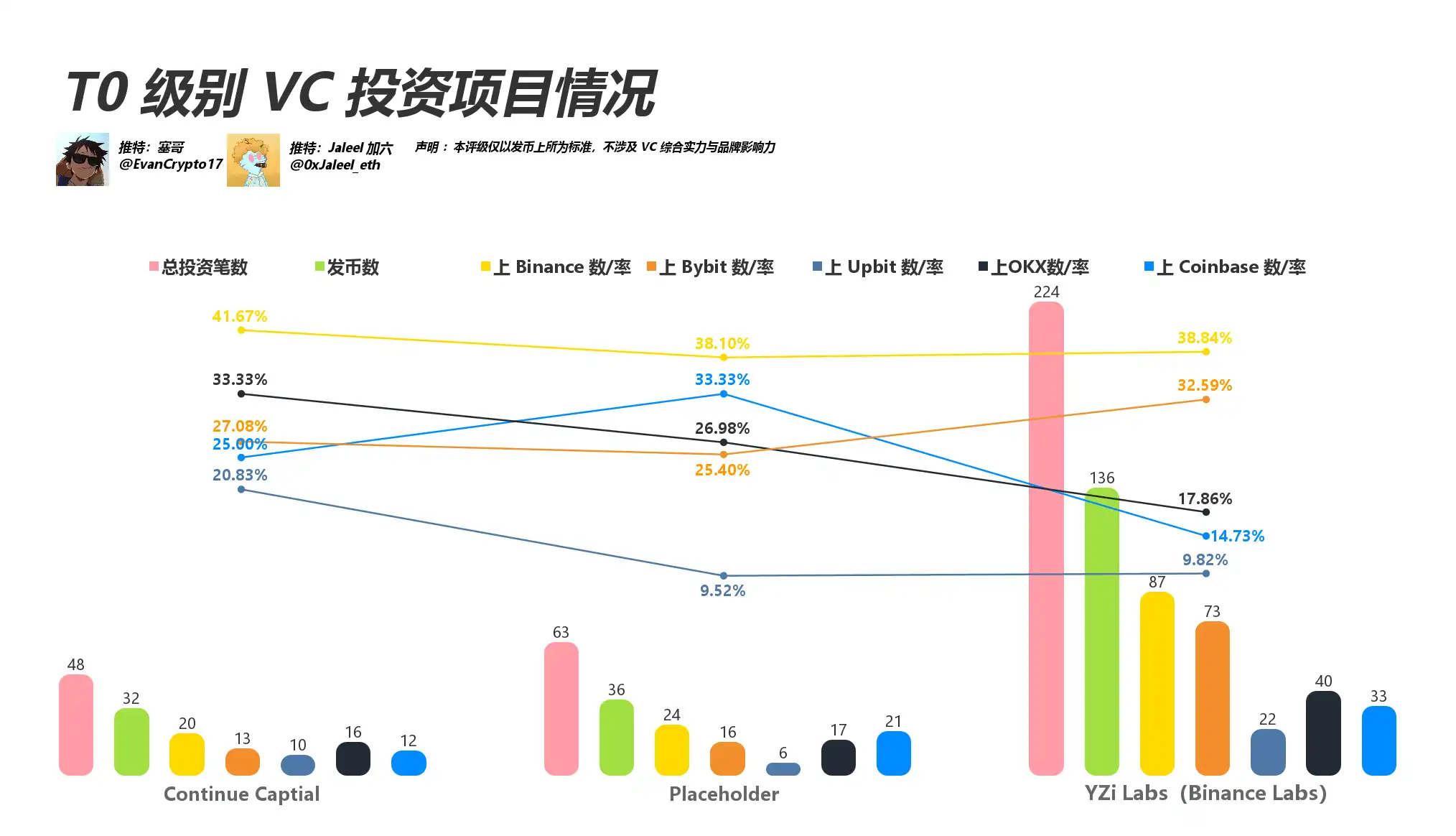
Summary: T0-level VCs rely on hardcore resources and precise identification of high-quality projects; among them, some VCs with a "trading platform background" can even lead projects to "quick listing," while research-focused VCs climb to the top based on their investment research capabilities.
T1: Overall Score >= 1.2
Representative Institutions: Bain Capital Ventures; HackVC; Mint Ventures; in the new chart, T1-level VCs also show a clear convergence of strength:
Bain Capital Crypto: Makes steady moves with significant amounts, showing more in-depth involvement in individual projects. Its control over "listing on Upbit, listing on Bybit" is becoming stronger.
HackVC: With a high number of diversified investments, as the market share of Bybit, OKX, Coinbase increases, the cases of successfully launching past invested projects are also on the rise;
IOSG Ventures: Well-known for its "wide net, deep research" approach, the successful listing rate fluctuates in the 20-30% range; in the past year, the number of listings on platforms such as Upbit and Bybit has significantly increased.
Mint Ventures: Despite having a smaller project scale, it demonstrates outstanding efficiency, with its "listing on Bybit" reaching 30%+ at one point, embodying a typical "specialized strategy."
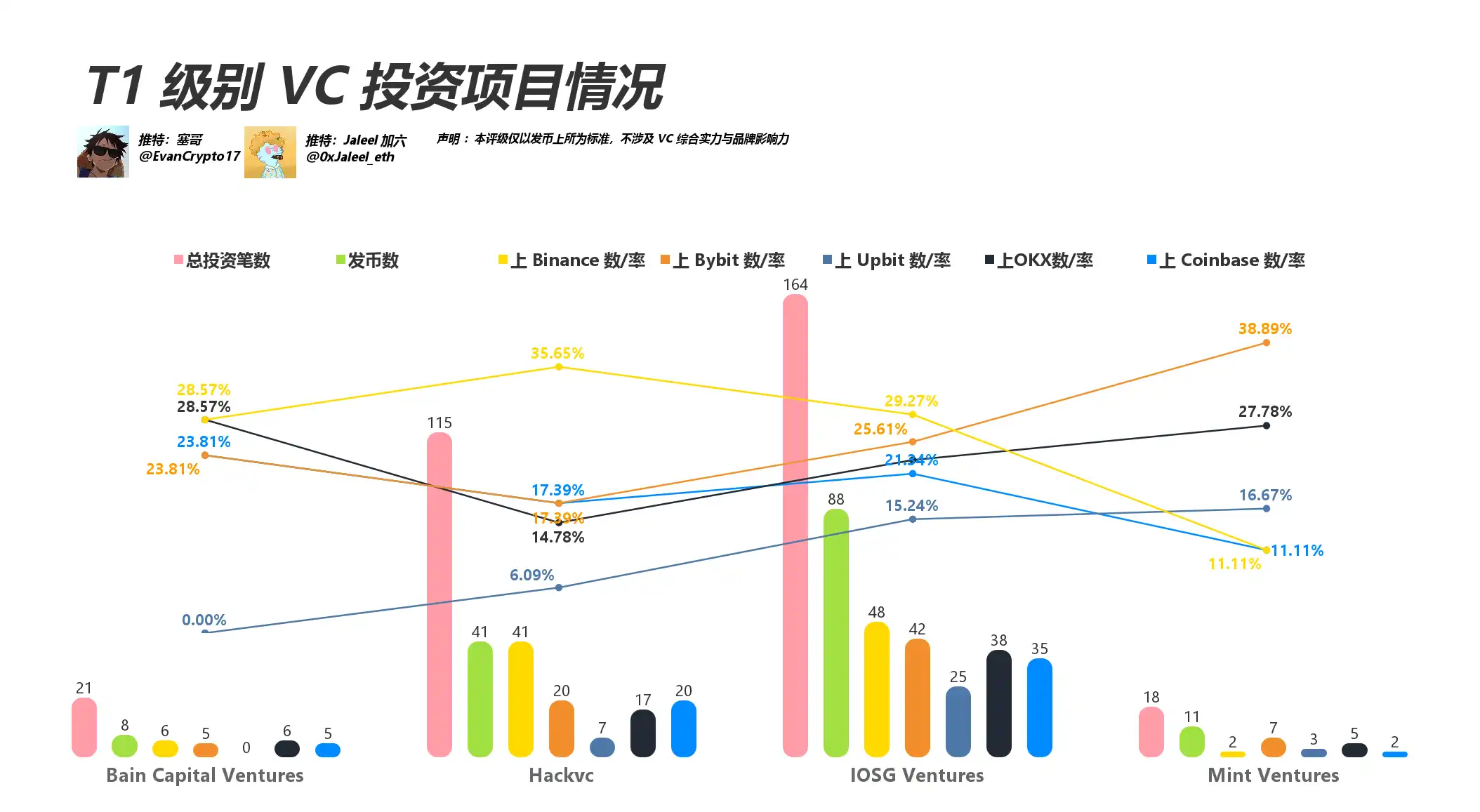
Summary: The listing success rate of most projects in the T1 camp is between 15-30%, and they often do not have a significant "weak spot" in terms of trading platforms, showcasing a state of "blooming everywhere."
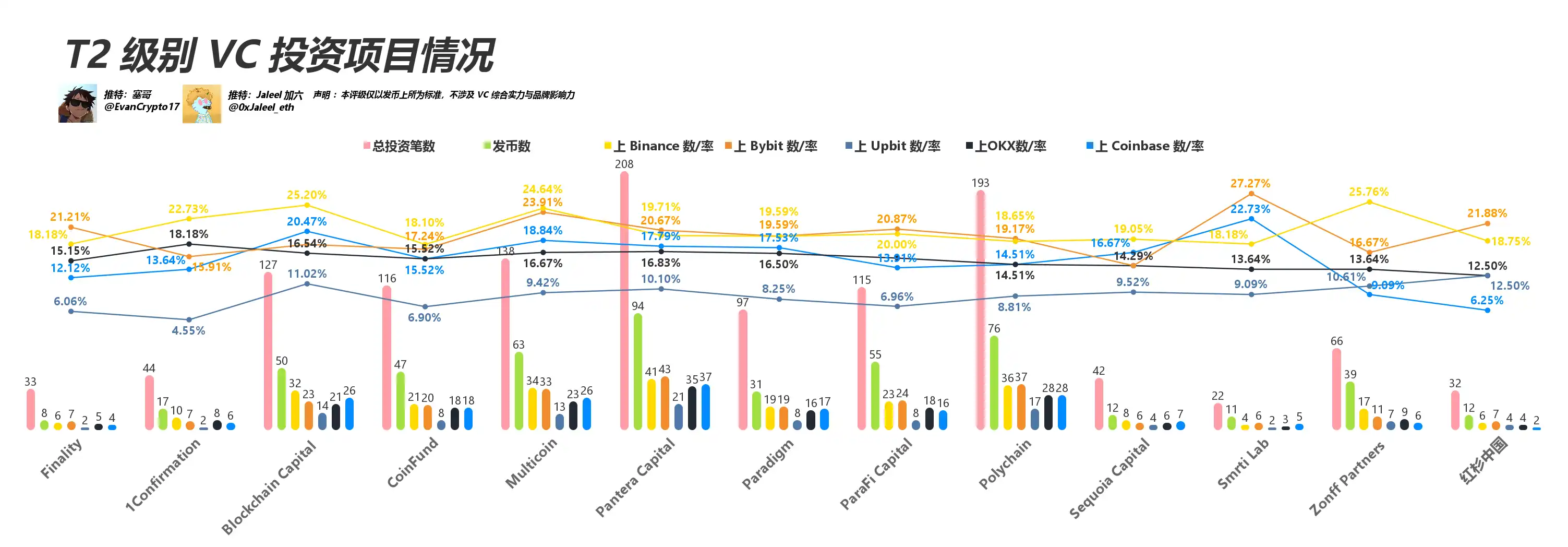
T2: Overall Score >= 0.9
Multicoin & Pantera: Maintain excellent performance with 20%+ in listings on Binance and Bybit, also have a certain number of listings on Upbit, OKX, Coinbase, but the differentiation is not significant.
ParaFi: With a moderate number of projects, they have been deeply involved in early Ethereum projects, such as the most famous ConsenSys, and participated in many early DeFi projects like Aave; in this analysis, their performance in the "listing on Upbit" segment is slightly lower, but maintaining around 15-20% on OKX and Binance.
Sequoia Capital: A traditional top-tier VC known for its "less is more" strategy. Although they do not make many investments in total, their success rate when projects go mainstream is still decent.
T3: Composite Score >= 0.6
The T3 tier is the most diverse, including well-known heavyweights such as a16z, Coinbase Ventures, and Dragonfly, as well as those backed by exchanges or new funds like Jump Crypto, HTX Ventures (Huobi), and Dao5.
a16z: With a very broad coverage, having invested in over 150 projects, the token listing success rate fluctuates between 10-20%. However, due to the large number of projects, the average quality is somewhat diluted;
Coinbase Ventures: Excluding projects that are listed on Coinbase itself, the listing rate on platforms like Bybit, Binance, and OKX still exceeds 10%;
Dragonfly: A well-established international fund that focuses on early-stage projects, with many DeFi and infrastructure projects successfully launching on mainstream platforms;
Jump Crypto, HTX Ventures (Huobi): With an exchange background, but here we only consider the listing rate of their invested projects on third-party exchanges, so the numbers may not entirely reflect their true resource advantage.
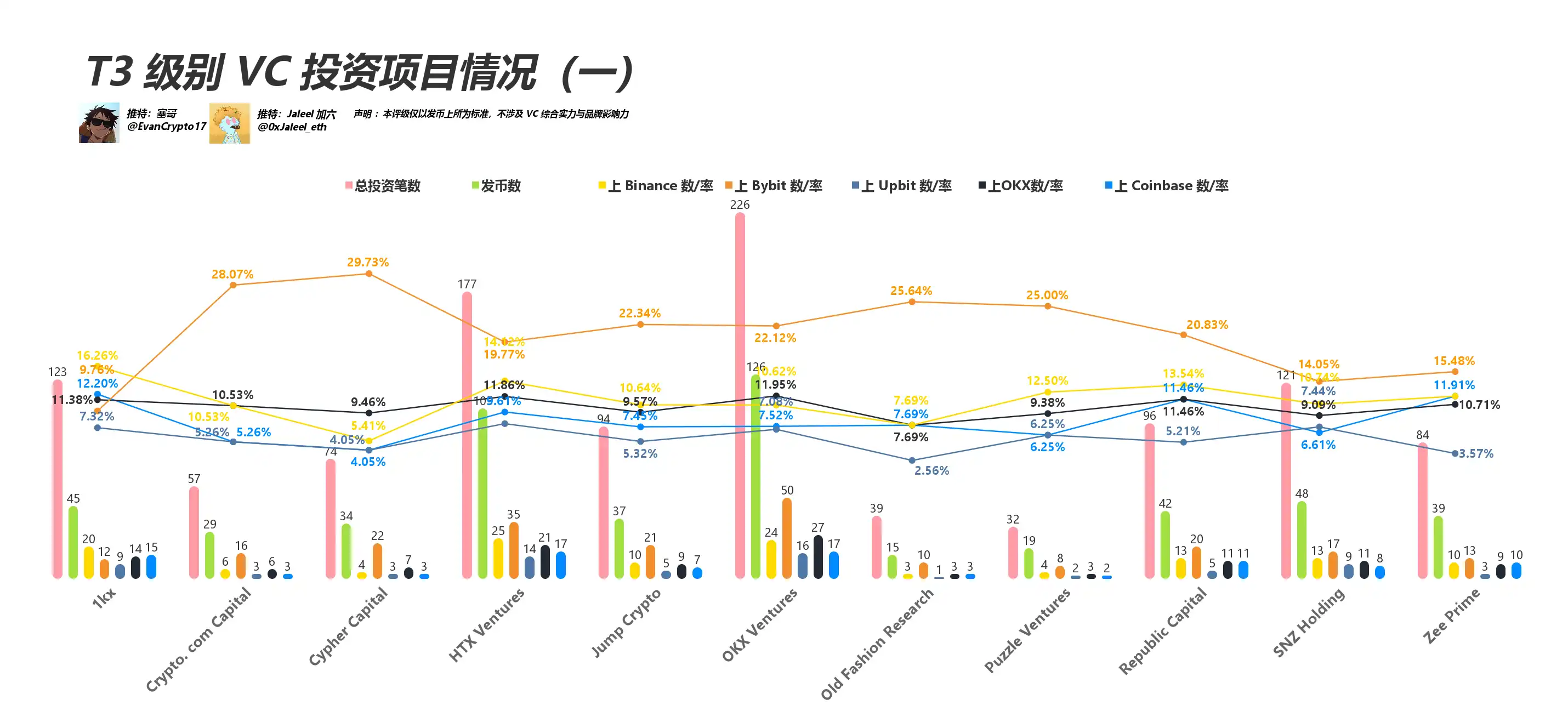
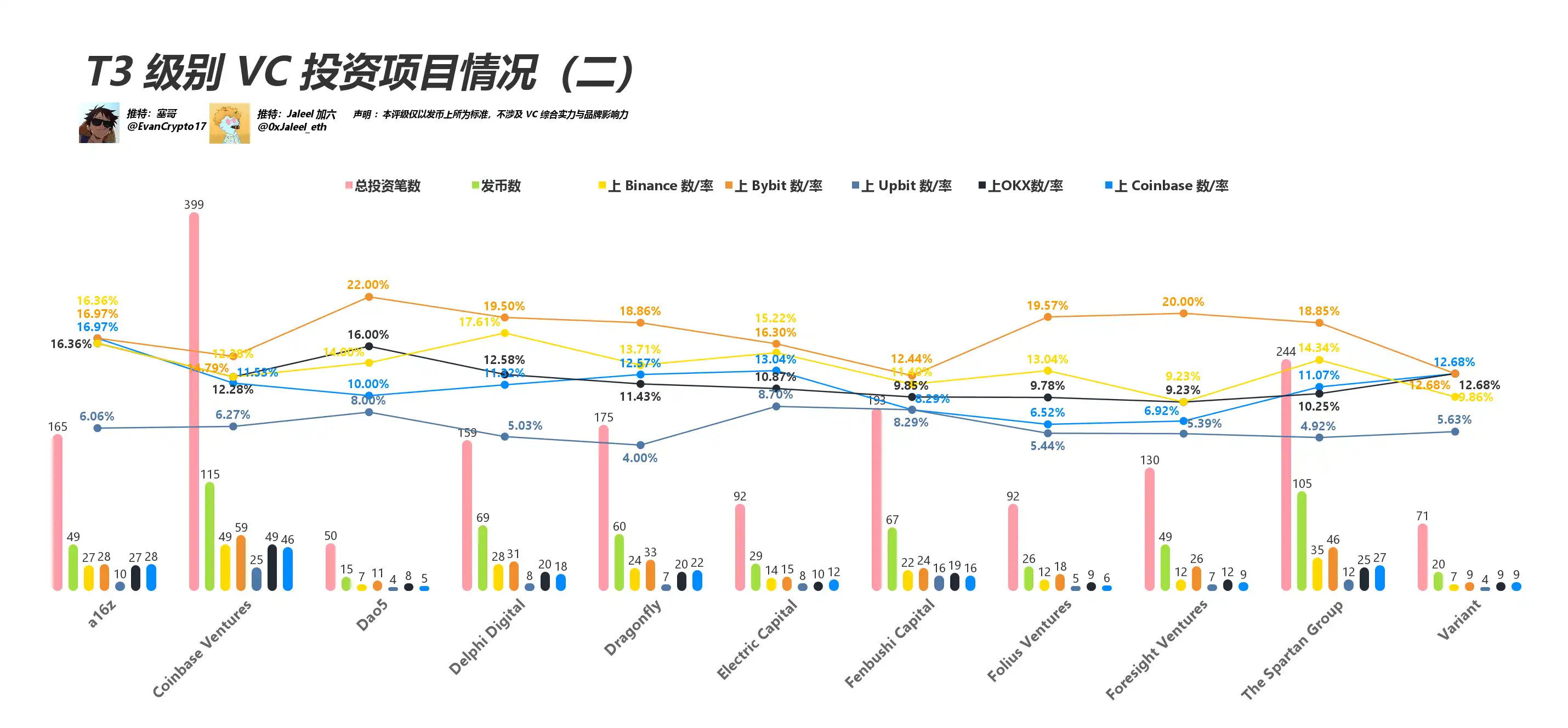
Summary: There are numerous T3 institutions, with the average listing rate mostly ranging from 5-20%. Many of them focus on "early-stage investment" or "building their own ecosystem," rather than making "quick token launches and quick listings" their main strategy.
T4: Composite Score >= 0.3
T4-level VCs often appear mediocre in terms of the "listing efficiency" metric alone, but some institutions have unique advantages in specific sectors or regions:
Animoca: A foundational fund in the GameFi/NFT space, with many of its hundreds of investments not rushing to list, or only being active on DEXs;
LD Capital, GBV: They gained significant exposure in the last bull market but have a rather diversified approach, with an overall listing rate falling in the 5-10% range;
MEXC Ventures: Backed by a trading platform, but this analysis only focuses on third-party projects, so the listing efficiency is naturally lower;
Shima Capital, Arcane Group: More inclined towards an incubation-oriented, regional market layout, with fewer token projects, many of which have not yet reached the CEX listing stage.
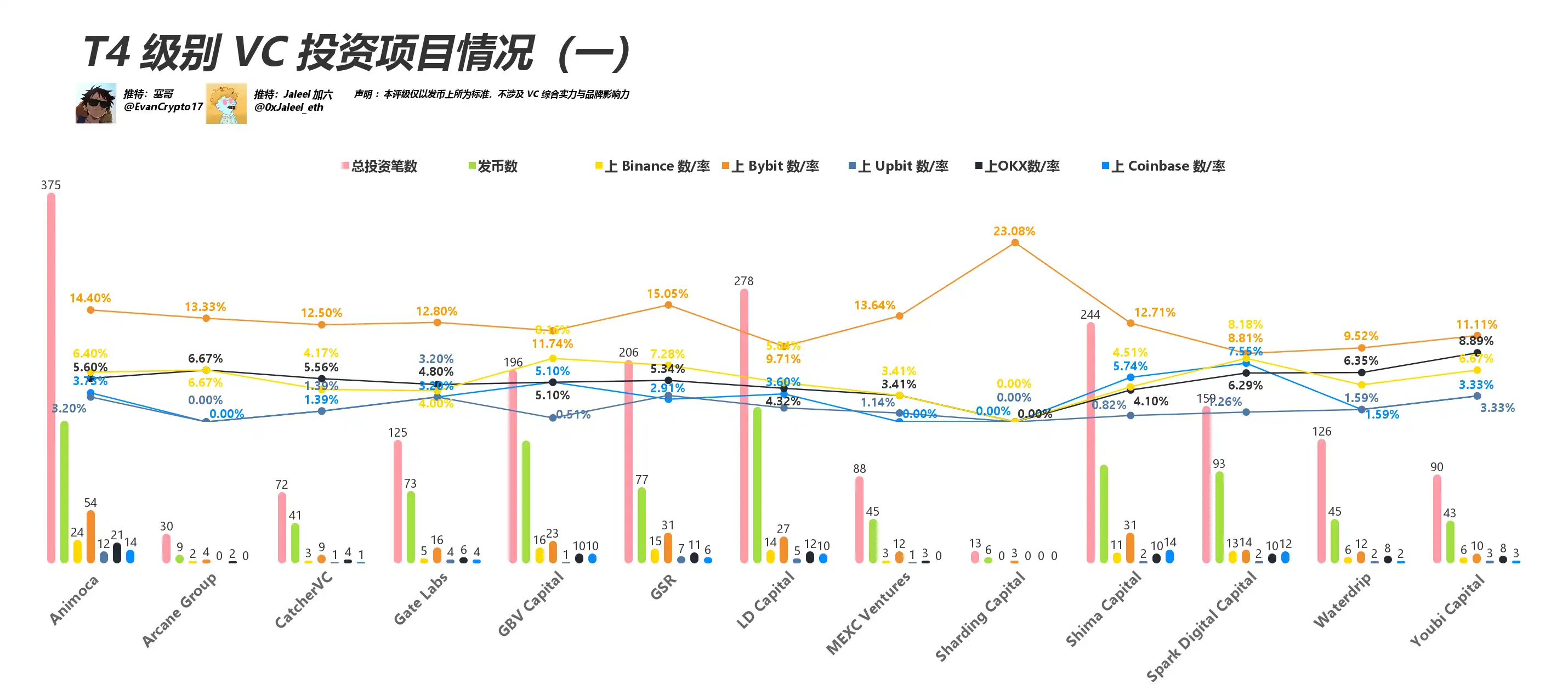
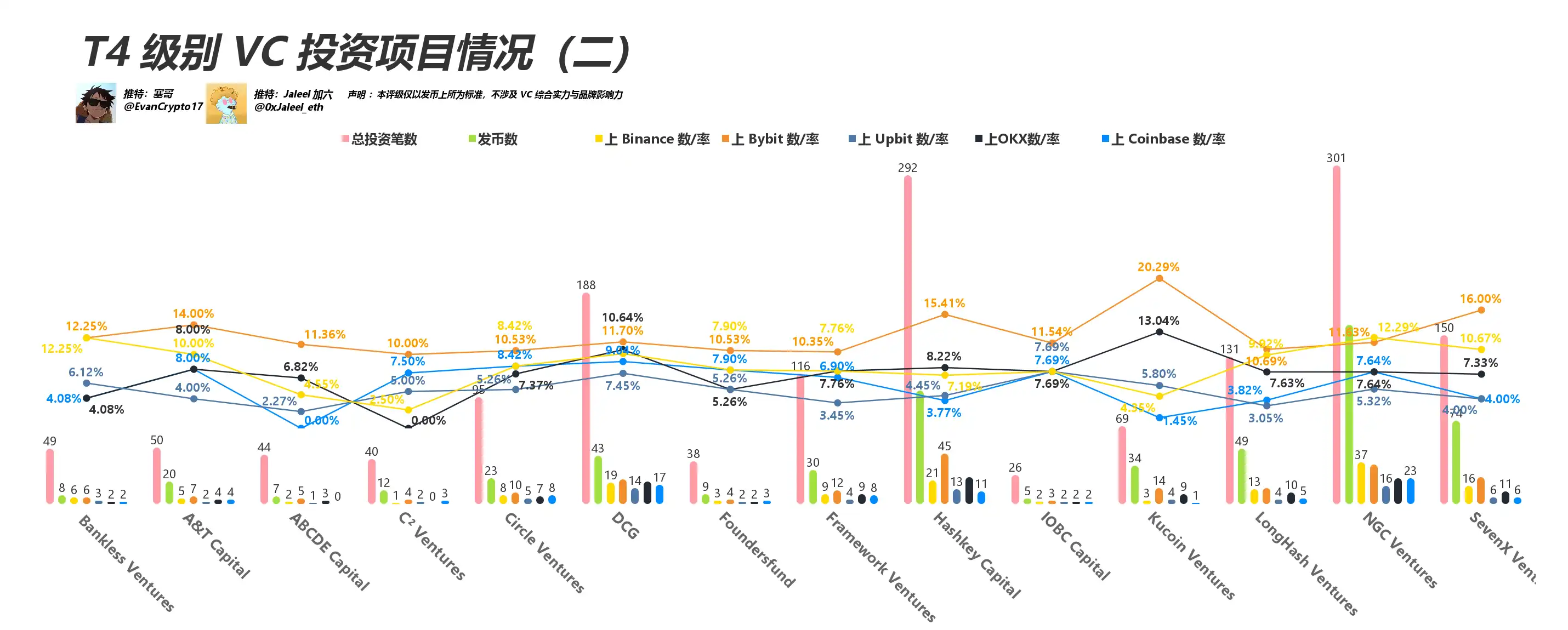
Summary: T4 does not mean lack of value, but rather that their strategies are more diverse, leaning more towards the early stage, or most projects are self-sustaining and do not focus on "token issuance + mainstream exchange" as their core goal. It is precisely because of this that this sector is highly likely to nurture the next wave of dark horses. Once some projects enter the tokenization stage later on and successfully list, it will significantly improve their ranking.
VC Regional Distribution: Who is Making a Global Impact?
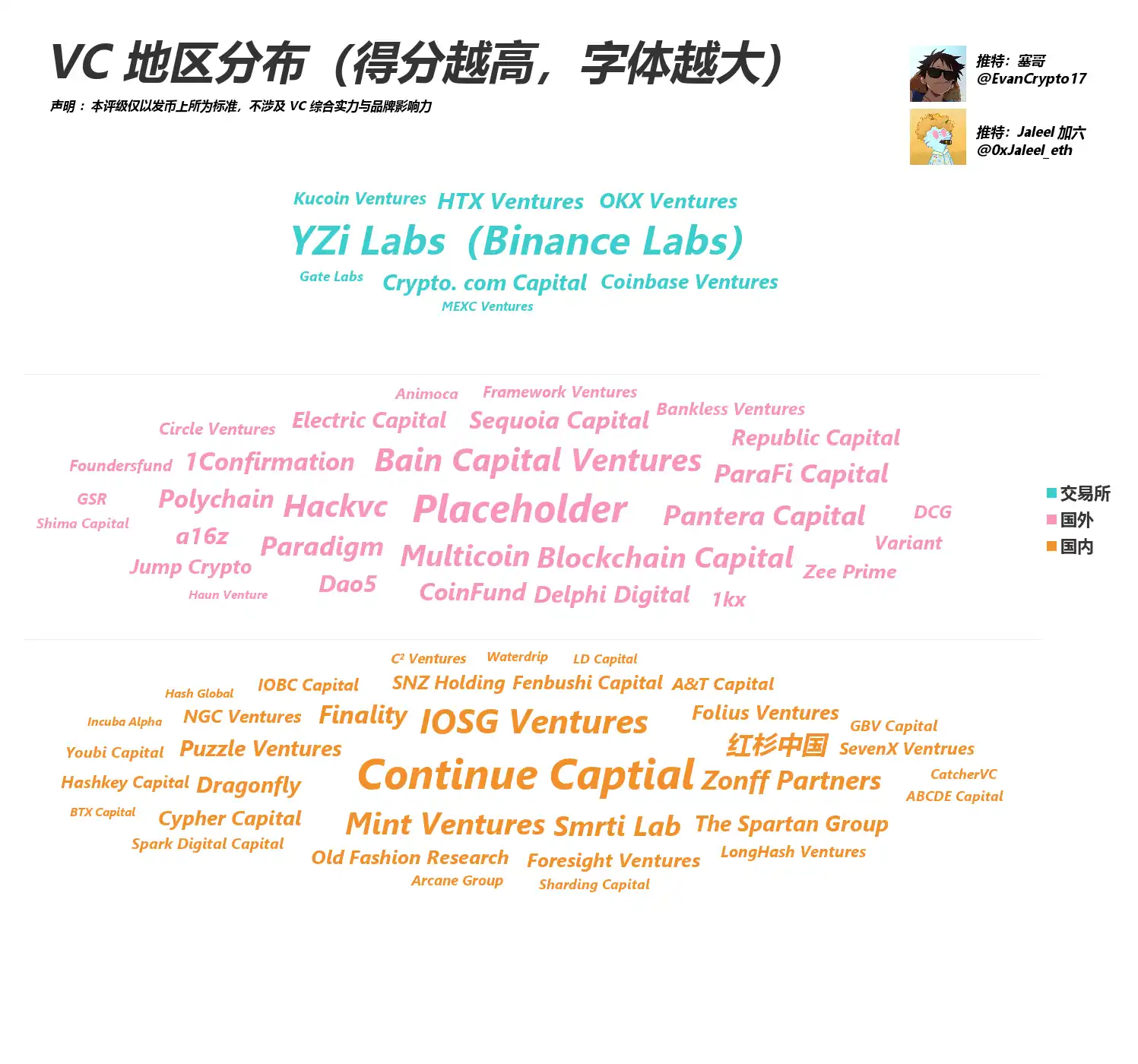
In the new "VC Regional Distribution" chart, we have rearranged the VC lists of the Exchange Camp, Overseas, and Domestic Camps. It can be seen that:
Exchange Camp: BN, HTX, OKX, Cryptocom, and others still occupy prominent positions in the chart, with YZi Labs being the most conspicuous;
Overseas VC: Traditional giants like Sequoia, Multicoin, Paradigm, and Delphi Digital are still concentrated in the Western world, but there are also some "up-and-coming" institutions with cross-regional layouts;
Domestic VC: Continue Capital, IOSG Ventures, Sequoia China, Puzzle Ventures, and others are further breaking through race tracks and boundaries, showing an increasingly clear trend of global collaborative investment.
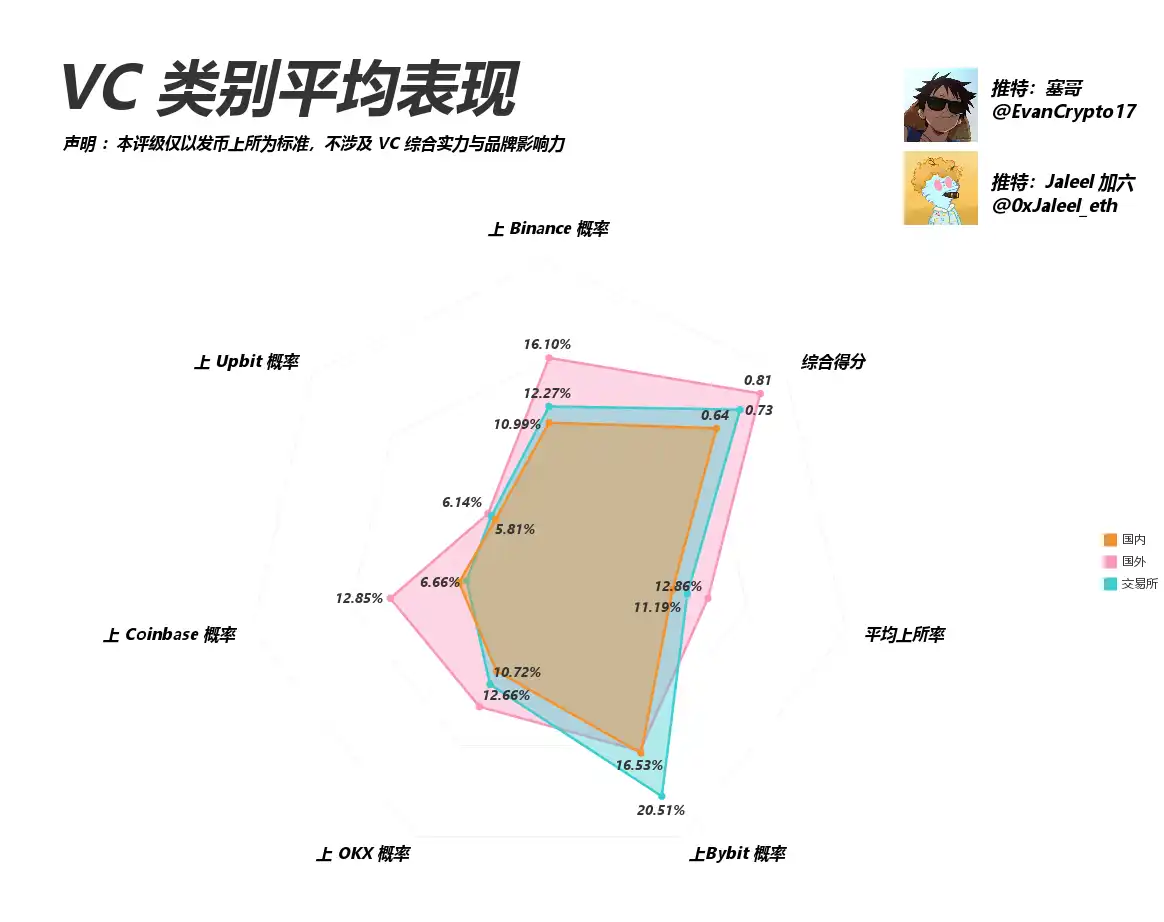
In this round of weighting (Binance 2, Bybit 1.5, Upbit 1, Okx & Coinbase 0.7), domestic and overseas institutions that can quickly list on emerging trading platforms like Bybit and Upbit also have higher scoring flexibility.
If VCs focus on independent public chain ecosystems or tokens backed by physical assets, their value-capturing ability under this metric system will be underestimated.
Therefore, the listing rate does not fully measure the VC level. This analysis still focuses only on the single metric of "listing on exchanges," which does not represent the true quality of a project or its long-term return. Other dimensions, such as project revenue, token liquidity, and project failure, were not reflected in this round of weighted ranking.
You may also like

Latest research from 13 top universities including Cornell University: The current state, challenges, and misconceptions of the fusion of Crypto and AI
Deconstructing Anthropic: The Best AI Company, Possibly Also a Type of Organizational Invention
Apollo and Blackstone Reportedly Back $35 Billion Anthropic Chip Financing as Deal Details Remain Unclear
On June 9, according to currently available news alerts, Apollo and Blackstone Group participated in a $35 billion financing for an Anthropic “chip project.” Based on the original wording of the report, the funding has already been raised, but public information remains limited. The financing structure, use of proceeds, project entity, and whether Apollo and Blackstone participated through equity, debt, or project financing have not yet been disclosed.

Humanity Protocol Security Incident Escalates: More Than $31 Million Stolen From Related Addresses as Attacker Continues Selling H for ETH
On June 9, according to monitoring by Onchain Lens, more than $31 million has been stolen from addresses linked to Humanity Protocol, and the attack is still ongoing, with the hacker continuously swapping H tokens for ETH. Project founder Terence Kwok later confirmed the security incident on X, saying the issue involved a private key leak.

Bloomberg: As Bitcoin Weakens, Stablecoins and RWA Continue to Drive Expansion in Crypto Businesses
In June, Bloomberg reported that despite Bitcoin falling below $60,000 last week, wiping out about $235 billion in market value within seven days, and dropping close to 50% from last year’s peak, some core businesses in the crypto industry are still expanding, mainly in stablecoins, real-world asset tokenization (RWA), payments, and infrastructure. The report also noted that overall altcoin activity has contracted significantly: altcoin market capitalization has fallen from a peak of about $431 billion in November 2021 to around $170 billion, and among the tens of millions of tokens issued in recent years, fewer than 1,700 still maintain meaningful trading activity.

Galaxy Deep Research Report: How Hyperliquid's HIP-4 Upgrade Changes the Landscape of Prediction Markets?
Binance Research: RWA Market Expected to Expand Nearly 6x from Early 2025, with Public Equities and Onchain Payments Heating Up Together
In June, Binance Research said in its monthly market report that the real-world asset (RWA) market is expected to grow by about 589% from the beginning of 2025. Bond- and money market fund-related RWA expanded by about $6.5 billion, up 83% year over year, while publicly traded equity RWAs grew by about 422%. The report also noted that monthly crypto debit card transaction volume exceeded $747 million in May, up 48.6% year to date.

Japan to Assess a Framework for Yen Stablecoins and Crypto ETFs as Asia’s Compliant Payments Narrative Heats Up
Recently, according to the original report, Japan is considering the launch of yen stablecoins and cryptocurrency ETFs. Public information remains limited at this stage, and there is still no complete policy text, regulatory draft, or clear implementation timeline, so this is better characterized as a “policy discussion” rather than formal implementation. The original wording also noted that advancing stablecoin regulation in Asia is driving XRP usage and supporting growth in the XRPL ecosystem. However, based on currently available public information, there is not enough evidence to directly establish a clear causal relationship between this round of discussion in Japan and XRP or XRPL.

ZachXBT: Humanity private key leak and abnormal surge in H token should be viewed separately
On June 9, according to related disclosures, on-chain investigator ZachXBT posted an update on Humanity’s roughly $31 million security incident, saying that after further analyzing fund flows, he currently tends to believe the project team was not involved in an “inside job” or a self-staged attack. According to him, the official explanation about the private key leak was broadly accurate, but before the token unlock, the price of H had been artificially pushed higher, and the hacker later took advantage of that market environment; therefore, the private key leak and the earlier abnormal price pumping should be regarded as two separate and independent events. This reframing has shifted the market’s understanding of the nature of the incident. Earlier discussion around Humanity had focused on whether the team directly participated in the attack or used the security incident to cover up internal operations. ZachXBT’s latest remarks shift the focus from “whether it was self-theft” to “whether there were pre-unlock market structure issues.” He also questioned whether the team may have.

Morning Report | OpenAI has submitted an S-1 registration statement draft to the U.S. SEC; Morpho completes $175 million financing

Morning Report | BitMine increased its holdings by 126,971 ETH last week; trader Eugene announced his exit from the crypto market

Wang Chuan: How can one not feel anxious after the neighbor Old Wang made thirty times profit by investing in storage stocks? (Seven) - A quarter-century cycle
Cryptocurrency CEXs are flocking to sell US stocks, and traditional brokerages are facing an "uninvited guest."
$75 billion in foreign capital has fled, and South Korean retail investors have absorbed it all using leverage

Japan’s Three Megabanks Plan Joint Stablecoin Issuance in Fiscal 2026
MUFG, SMBC, and Mizuho reportedly plan to jointly issue fiat-pegged stablecoins in fiscal 2026, signaling Japan’s growing push into bank-led digital payment infrastructure.

Humanity Discloses H Token Dual-Chain Attack Details, With Losses on Ethereum and BSC Exceeding $36 Million
Humanity said the H token attack across Ethereum and BSC caused more than $36 million in losses after leaked ProxyAdmin keys enabled malicious contract upgrades and token minting.
White House Discusses CLARITY Act With Law Enforcement Ahead of Senate Vote
The White House discussed the CLARITY Act with law enforcement ahead of a Senate vote, focusing on illicit finance risks and developer protections.

Bitcoin Trading Guide 2026: Strategies for Experienced Traders
Latest research from 13 top universities including Cornell University: The current state, challenges, and misconceptions of the fusion of Crypto and AI
Deconstructing Anthropic: The Best AI Company, Possibly Also a Type of Organizational Invention
Apollo and Blackstone Reportedly Back $35 Billion Anthropic Chip Financing as Deal Details Remain Unclear
On June 9, according to currently available news alerts, Apollo and Blackstone Group participated in a $35 billion financing for an Anthropic “chip project.” Based on the original wording of the report, the funding has already been raised, but public information remains limited. The financing structure, use of proceeds, project entity, and whether Apollo and Blackstone participated through equity, debt, or project financing have not yet been disclosed.
Humanity Protocol Security Incident Escalates: More Than $31 Million Stolen From Related Addresses as Attacker Continues Selling H for ETH
On June 9, according to monitoring by Onchain Lens, more than $31 million has been stolen from addresses linked to Humanity Protocol, and the attack is still ongoing, with the hacker continuously swapping H tokens for ETH. Project founder Terence Kwok later confirmed the security incident on X, saying the issue involved a private key leak.
Bloomberg: As Bitcoin Weakens, Stablecoins and RWA Continue to Drive Expansion in Crypto Businesses
In June, Bloomberg reported that despite Bitcoin falling below $60,000 last week, wiping out about $235 billion in market value within seven days, and dropping close to 50% from last year’s peak, some core businesses in the crypto industry are still expanding, mainly in stablecoins, real-world asset tokenization (RWA), payments, and infrastructure. The report also noted that overall altcoin activity has contracted significantly: altcoin market capitalization has fallen from a peak of about $431 billion in November 2021 to around $170 billion, and among the tens of millions of tokens issued in recent years, fewer than 1,700 still maintain meaningful trading activity.
Galaxy Deep Research Report: How Hyperliquid's HIP-4 Upgrade Changes the Landscape of Prediction Markets?


