
ETH Denver Recap and Reflection, Crypto in the Midst of a Structural Shift


Original Article Title: The Last Cycle: An ETH Denver Retrospective
Original Article Author: TraderNoah, Theia Team Member
Original Article Translation: ChatGPT
Editor's Note: ETH Denver reflected the shift in the crypto industry—reduced speculation, increased pragmatism. Market participants can be divided into old-timers, technical builders, newcomers, and speculators, with fewer and fewer actually making money. The crypto industry has entered a new stage, with a clear trend towards institutionalization and a slowdown in pure crypto-native market growth. With regulatory clarity, stablecoins and on-chain finance will see widespread adoption, and the traditional VC exit model is now well recognized. The surge in 2024 was more of a financial game, and after the bubble burst, the industry faces a reality check: either create real business value or continue to wait for the next speculative cycle.
Below is the original content (slightly restructured for ease of comprehension):
There are few new faces, reduced extravagant marketing spending, and a shift in industry trends towards pragmatism. Legacy projects from the past still exist (e.g., lingering infrastructure projects from 2018 or VC firms that have just been overfunded burning cash on marketing), but compared to previous years, this phenomenon has diminished.
Background
Currently, there are primarily two main groups in the industry: the crypto-native group and newcomers.
These can be further subdivided into four subcategories:
Crypto-native Mercenaries
Crypto-native Technocrats
Low-quality Newcomers
High-quality Newcomers
Crypto-native Group
This group is mainly composed of technocrats (VC/investors, VC-backed projects), focusing on significant market opportunities and dedicated to building tangible products. In this event, they accounted for over two-thirds of the crypto-native group, primarily focusing on AI/DeFi and FinTech directions.
The number of mercenaries is significantly lower than in previous years, which could be due to:
· A subdued on-chain market
· Future growth leaning more towards institutionalization
· Most mercenaries have either been liquidated or have earned enough money, leaving few behind, and few are willing to go all-in on this game anymore.
Newcomers
Newcomers can be divided based on their skill level.
Low-Quality Newcomers: Primarily engaged in soft-skill-related work (BD, Growth, Ecosystem, etc.), usually working for a declining L1/L2 project or a well-funded but directionless company. These individuals may be crypto enthusiasts, or they may simply be staying due to the industry's high salaries and low job intensity.
High-Quality Newcomers can be divided into Technocrats and Mercenaries:
· Technocrats mainly come from traditional finance, building in areas such as DeFi, Stablecoins, or are infrastructure experts in AI, DeFi, security, focusing on technologies and capital deployment in early-stage projects with significant market potential.
· Mercenaries are usually young entrepreneurs aged 18-25 who witnessed the wealth accumulation of their predecessors in 2021 and are looking to replicate that success. They are charismatic, intelligent, and even slightly antisocial. This group is not large in size but often garners significant industry attention.
Reassessment Phase
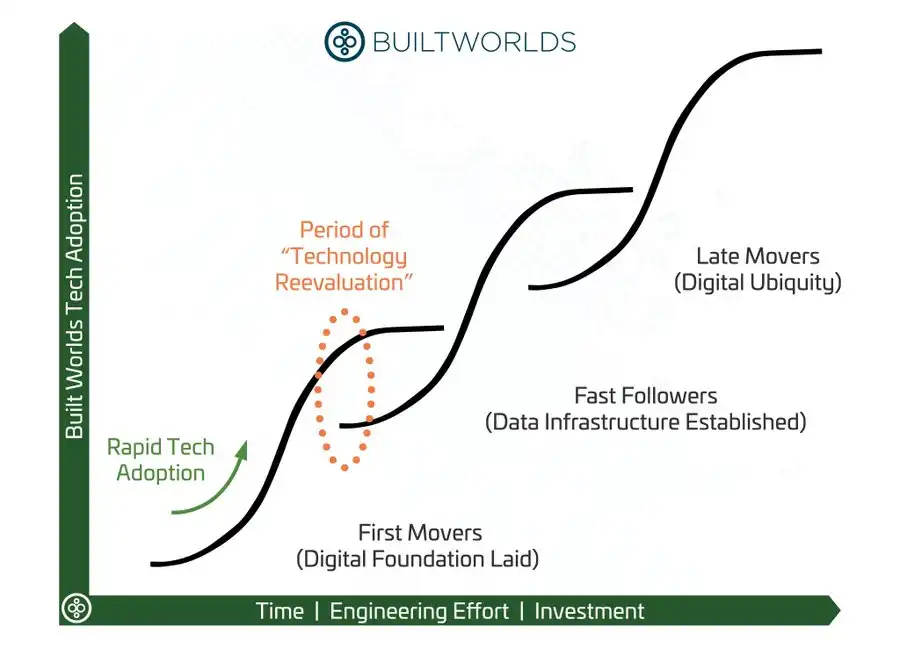
Why is blockchain technology seeing widespread adoption while our token prices are plummeting? Why are some groups remaining optimistic while others are pessimistic? The answer is simple: we are at the end of one S-curve and the beginning of another.
Retrospective of the Crypto Industry
2009-2011: Early Tech Geeks
2011-2016: Dark Web / Gambling Era
2017-2019: Mainstream's First Cycle
2020-2021: DeFi Summer, Mainstream's Second Cycle
2022-2024: Speculators / Vulture Capital, Mainstream's Second/Third Cycle
The above is a highly summarized classification, but I believe it is fundamentally accurate. People who entered the crypto industry early on usually fell into one of three categories: tech geeks, criminals, or just lucky timing.
Those who entered the crypto industry before 2017 can now be roughly divided into three scenarios:
Already financially free, choose to retire
Consider cryptocurrency as a way of life
Still struggling to make money
After the DeFi Summer, a large number of newcomers entered the crypto industry, indicating that those who entered after 2020 are more akin to the general public compared to earlier adopters. Many in this group have seen wealth growth, but extreme wealth accumulation is less common compared to the early adopters.
Their current status can be roughly divided into:
A few have achieved financial freedom and retired
Most are in the middle of the wealth spectrum, holding the power of choice
Some are in a state of "pre-affluence" but are gradually becoming disillusioned with the industry
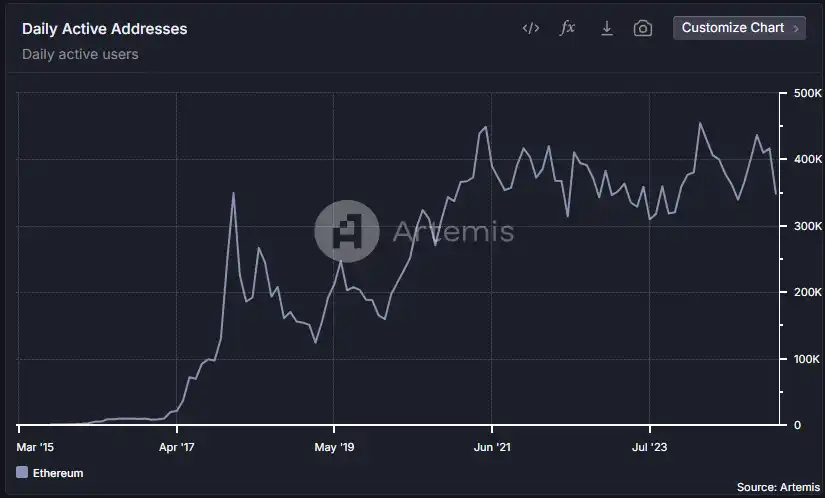
From 2024 onwards, people from all walks of life will come into contact with cryptocurrency, but only those who can identify business opportunities and have exceptional abilities will survive. We may see a large number of executives with traditional finance or Web2 experience entering the space.
Looking back at the participants in the crypto industry, those who are still active can be roughly divided into three categories:
"Pre-affluent" but entered before 2022: In the past 5-10 years, they missed opportunities, and many are disillusioned with the industry.
"Post-affluent" and deeply believe in crypto (like religious believers, e.g., ETH Maximalists, Link Marines): These individuals still consider ETH as "money" but have not been actively involved for years, disconnecting from the market.
Newcomers seeking business opportunities: They have not been influenced by past market fluctuations and remain optimistic.
Among these, the most pessimistic are usually the first category, as they harbor deep jealousy and resentment towards the industry, realizing that their wealth accumulation largely came from luck or shady means.
The second category firmly believe that ETH is still "money." They speak grandiosely on podcasts or work in fund companies but have long been out of touch with market reality.
The third category remain optimistic because they have not been worn down by past market cycles, or they still focus on their beliefs. Today, as regulatory frameworks become clearer, stablecoins see widespread adoption, and the financial markets accelerate towards tokenization.
Future Development Directions?
The entire industry has essentially reached a consensus on the direction in the coming years, but those who cannot benefit from the new landscape often choose to selectively ignore reality. In the future, the marginal new users will pay more attention to how cryptocurrency can create value in their real lives. We may see:
· Significant growth in on-chain financial applications
· More applications of crypto technology in security and reducing backend operational costs
However, the growth of the purely crypto-native market may slow down, which is not very favorable for token fund inflows and may also be one of the reasons for the sluggishness of the liquid market.
The current industry is in a transition period where regulation has not yet been fully established but is imminent. In the future, liquidity may shift towards compliant public market stocks rather than tokenized assets. Additionally, many on-chain financial products may require identity verification to attract institutional clients, leading to a split of the on-chain financial market into gray/black market and compliant market.
Uncertainty implies risk, and although the industry's long-term trend is positive, this may not necessarily benefit everyone's investment portfolio.

ETH Denver: A Wake-Up Call for the Industry
ETH Denver and its surrounding market trends have sounded an alarm for the entire crypto industry. Market participants are now facing a stark choice:
· Shift towards building or investing in real businesses to drive the practical application of blockchain technology;
· Continue to pray for the "crypto casino" to restart, hoping for windfall profits in the next bull run.
As genuinely business valuable projects gradually emerge and the "crypto casino" opportunity relatively diminishes, this choice becomes increasingly clear.
In fact, many industry participants (companies, traders, funds) have long been in decline, merely hesitant to accept reality due to the market's long feedback loop or overcapitalization.
This transformation all began with the Bitcoin ETF in 2024 and culminated with Trump's inauguration in 2025. The market is slowly evolving towards a more rational direction, with less and less room for blind speculation.
In the early cycles (2017, 2021), the "average person" might have willingly immersed themselves in the Ponzi game, pretending ignorance. However, eight years have passed since the first crypto frenzy, and more and more people have come to terms with reality:
VC -> TGE (Token Generation Event) -> Cash Out, the old routine, is fundamentally a funding game. But as long as this path remains profitable, it won't change, yet fewer and fewer people are willing to continue being duped.
The crypto industry is undergoing a structural transformation, and the era of the casino is fading as genuine business models rise.

The 2024 market surge was primarily driven by the wealth effect brought by Bitcoin and the meme coin hype cycle. But this time around, traders are all too aware; they're only participating when there's money to be made, having no faith in any narrative.
Today, the era of free money is over, the gamblers have left the building, and industry participants relying on market liquidity must now reassess the impact on their investment portfolios.
You may also like

Latest research from 13 top universities including Cornell University: The current state, challenges, and misconceptions of the fusion of Crypto and AI
Deconstructing Anthropic: The Best AI Company, Possibly Also a Type of Organizational Invention
Apollo and Blackstone Reportedly Back $35 Billion Anthropic Chip Financing as Deal Details Remain Unclear
On June 9, according to currently available news alerts, Apollo and Blackstone Group participated in a $35 billion financing for an Anthropic “chip project.” Based on the original wording of the report, the funding has already been raised, but public information remains limited. The financing structure, use of proceeds, project entity, and whether Apollo and Blackstone participated through equity, debt, or project financing have not yet been disclosed.

Humanity Protocol Security Incident Escalates: More Than $31 Million Stolen From Related Addresses as Attacker Continues Selling H for ETH
On June 9, according to monitoring by Onchain Lens, more than $31 million has been stolen from addresses linked to Humanity Protocol, and the attack is still ongoing, with the hacker continuously swapping H tokens for ETH. Project founder Terence Kwok later confirmed the security incident on X, saying the issue involved a private key leak.

Bloomberg: As Bitcoin Weakens, Stablecoins and RWA Continue to Drive Expansion in Crypto Businesses
In June, Bloomberg reported that despite Bitcoin falling below $60,000 last week, wiping out about $235 billion in market value within seven days, and dropping close to 50% from last year’s peak, some core businesses in the crypto industry are still expanding, mainly in stablecoins, real-world asset tokenization (RWA), payments, and infrastructure. The report also noted that overall altcoin activity has contracted significantly: altcoin market capitalization has fallen from a peak of about $431 billion in November 2021 to around $170 billion, and among the tens of millions of tokens issued in recent years, fewer than 1,700 still maintain meaningful trading activity.

Galaxy Deep Research Report: How Hyperliquid's HIP-4 Upgrade Changes the Landscape of Prediction Markets?
Binance Research: RWA Market Expected to Expand Nearly 6x from Early 2025, with Public Equities and Onchain Payments Heating Up Together
In June, Binance Research said in its monthly market report that the real-world asset (RWA) market is expected to grow by about 589% from the beginning of 2025. Bond- and money market fund-related RWA expanded by about $6.5 billion, up 83% year over year, while publicly traded equity RWAs grew by about 422%. The report also noted that monthly crypto debit card transaction volume exceeded $747 million in May, up 48.6% year to date.

Japan to Assess a Framework for Yen Stablecoins and Crypto ETFs as Asia’s Compliant Payments Narrative Heats Up
Recently, according to the original report, Japan is considering the launch of yen stablecoins and cryptocurrency ETFs. Public information remains limited at this stage, and there is still no complete policy text, regulatory draft, or clear implementation timeline, so this is better characterized as a “policy discussion” rather than formal implementation. The original wording also noted that advancing stablecoin regulation in Asia is driving XRP usage and supporting growth in the XRPL ecosystem. However, based on currently available public information, there is not enough evidence to directly establish a clear causal relationship between this round of discussion in Japan and XRP or XRPL.

ZachXBT: Humanity private key leak and abnormal surge in H token should be viewed separately
On June 9, according to related disclosures, on-chain investigator ZachXBT posted an update on Humanity’s roughly $31 million security incident, saying that after further analyzing fund flows, he currently tends to believe the project team was not involved in an “inside job” or a self-staged attack. According to him, the official explanation about the private key leak was broadly accurate, but before the token unlock, the price of H had been artificially pushed higher, and the hacker later took advantage of that market environment; therefore, the private key leak and the earlier abnormal price pumping should be regarded as two separate and independent events. This reframing has shifted the market’s understanding of the nature of the incident. Earlier discussion around Humanity had focused on whether the team directly participated in the attack or used the security incident to cover up internal operations. ZachXBT’s latest remarks shift the focus from “whether it was self-theft” to “whether there were pre-unlock market structure issues.” He also questioned whether the team may have.

Morning Report | OpenAI has submitted an S-1 registration statement draft to the U.S. SEC; Morpho completes $175 million financing

Morning Report | BitMine increased its holdings by 126,971 ETH last week; trader Eugene announced his exit from the crypto market

Wang Chuan: How can one not feel anxious after the neighbor Old Wang made thirty times profit by investing in storage stocks? (Seven) - A quarter-century cycle
Cryptocurrency CEXs are flocking to sell US stocks, and traditional brokerages are facing an "uninvited guest."
$75 billion in foreign capital has fled, and South Korean retail investors have absorbed it all using leverage

Japan’s Three Megabanks Plan Joint Stablecoin Issuance in Fiscal 2026
MUFG, SMBC, and Mizuho reportedly plan to jointly issue fiat-pegged stablecoins in fiscal 2026, signaling Japan’s growing push into bank-led digital payment infrastructure.

Humanity Discloses H Token Dual-Chain Attack Details, With Losses on Ethereum and BSC Exceeding $36 Million
Humanity said the H token attack across Ethereum and BSC caused more than $36 million in losses after leaked ProxyAdmin keys enabled malicious contract upgrades and token minting.
White House Discusses CLARITY Act With Law Enforcement Ahead of Senate Vote
The White House discussed the CLARITY Act with law enforcement ahead of a Senate vote, focusing on illicit finance risks and developer protections.

Bitcoin Trading Guide 2026: Strategies for Experienced Traders
Latest research from 13 top universities including Cornell University: The current state, challenges, and misconceptions of the fusion of Crypto and AI
Deconstructing Anthropic: The Best AI Company, Possibly Also a Type of Organizational Invention
Apollo and Blackstone Reportedly Back $35 Billion Anthropic Chip Financing as Deal Details Remain Unclear
On June 9, according to currently available news alerts, Apollo and Blackstone Group participated in a $35 billion financing for an Anthropic “chip project.” Based on the original wording of the report, the funding has already been raised, but public information remains limited. The financing structure, use of proceeds, project entity, and whether Apollo and Blackstone participated through equity, debt, or project financing have not yet been disclosed.
Humanity Protocol Security Incident Escalates: More Than $31 Million Stolen From Related Addresses as Attacker Continues Selling H for ETH
On June 9, according to monitoring by Onchain Lens, more than $31 million has been stolen from addresses linked to Humanity Protocol, and the attack is still ongoing, with the hacker continuously swapping H tokens for ETH. Project founder Terence Kwok later confirmed the security incident on X, saying the issue involved a private key leak.
Bloomberg: As Bitcoin Weakens, Stablecoins and RWA Continue to Drive Expansion in Crypto Businesses
In June, Bloomberg reported that despite Bitcoin falling below $60,000 last week, wiping out about $235 billion in market value within seven days, and dropping close to 50% from last year’s peak, some core businesses in the crypto industry are still expanding, mainly in stablecoins, real-world asset tokenization (RWA), payments, and infrastructure. The report also noted that overall altcoin activity has contracted significantly: altcoin market capitalization has fallen from a peak of about $431 billion in November 2021 to around $170 billion, and among the tens of millions of tokens issued in recent years, fewer than 1,700 still maintain meaningful trading activity.
Galaxy Deep Research Report: How Hyperliquid's HIP-4 Upgrade Changes the Landscape of Prediction Markets?


