
Bybit: Hacker Tactics and Questions Behind the Nearly $1.5 Billion Heist



Original Article Title: "The Hacker Technique and Questions Behind the Nearly $1.5 Billion Bybit Hack"
Original Source: SlowMist Technology
Background
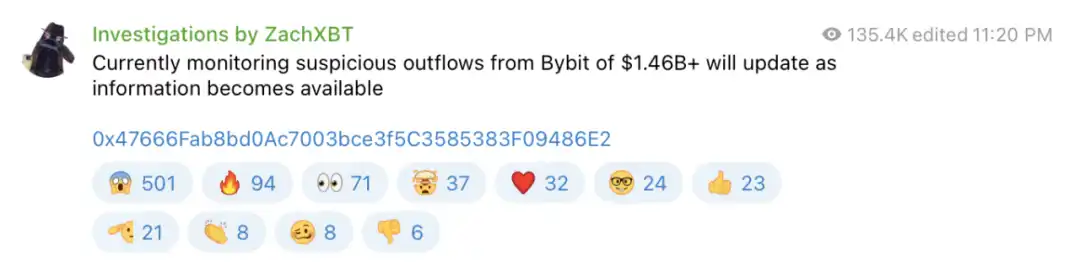
On the evening of February 21, 2025, Beijing time, according to on-chain detective ZachXBT, a large-scale fund outflow occurred on the Bybit platform. This event resulted in over $14.6 billion being stolen, making it the largest cryptocurrency theft in terms of amount lost in recent years.
On-Chain Tracking Analysis
Following the event, the SlowMist security team immediately issued a security alert and conducted tracking analysis on the stolen assets:
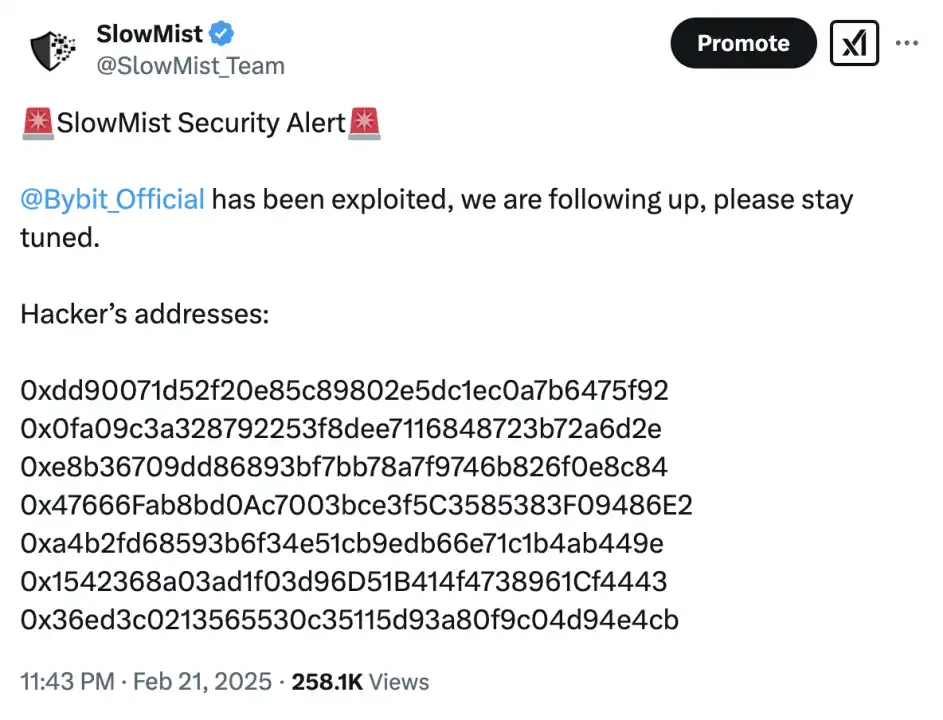
According to the SlowMist security team's analysis, the stolen assets mainly include:
· 401,347 ETH (valued at approximately $10.68 billion)
· 8,000 mETH (valued at approximately $26 million)
· 90,375.5479 stETH (valued at approximately $260 million)
· 15,000 cmETH (valued at approximately $43 million)

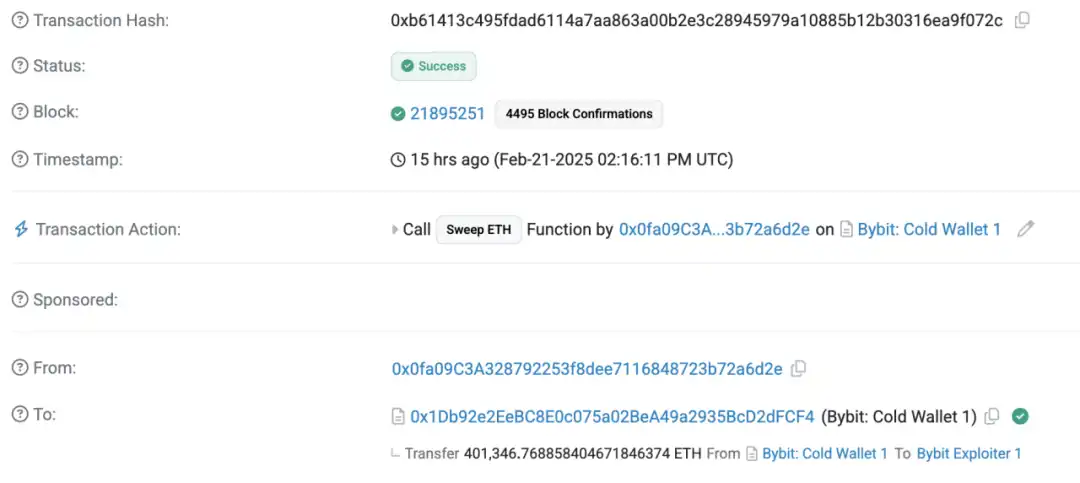
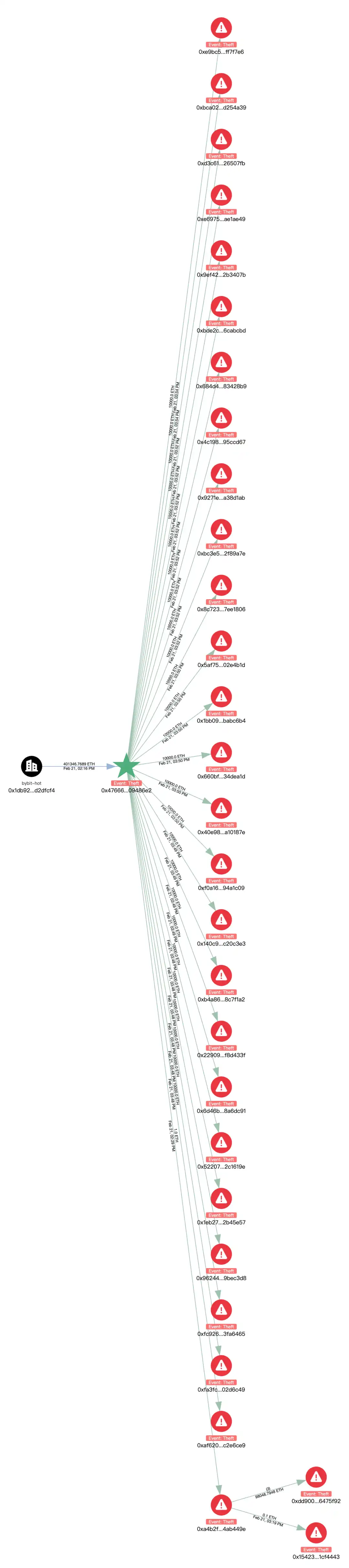
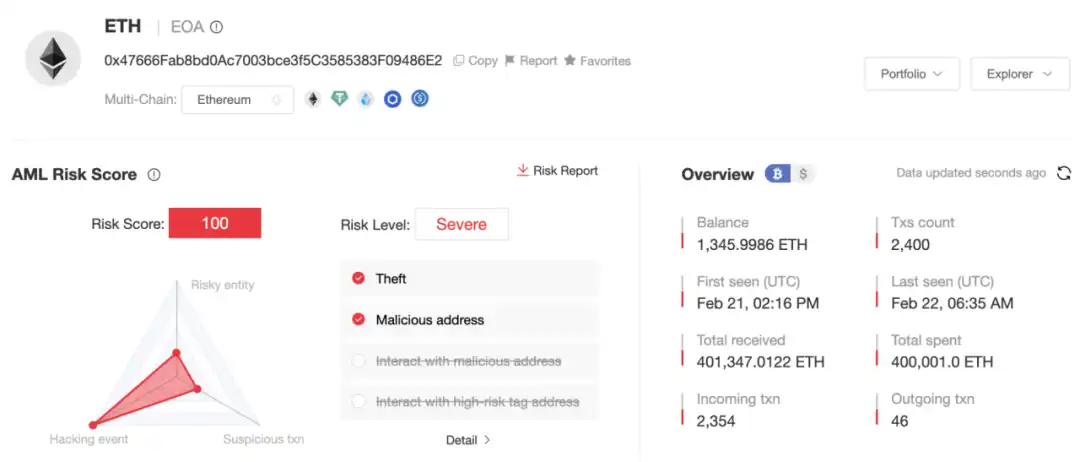
Using on-chain tracking and anti-money laundering tool MistTrack, we analyzed the initial hacker address 0x47666Fab8bd0Ac7003bce3f5C3585383F09486E2 and obtained the following information:
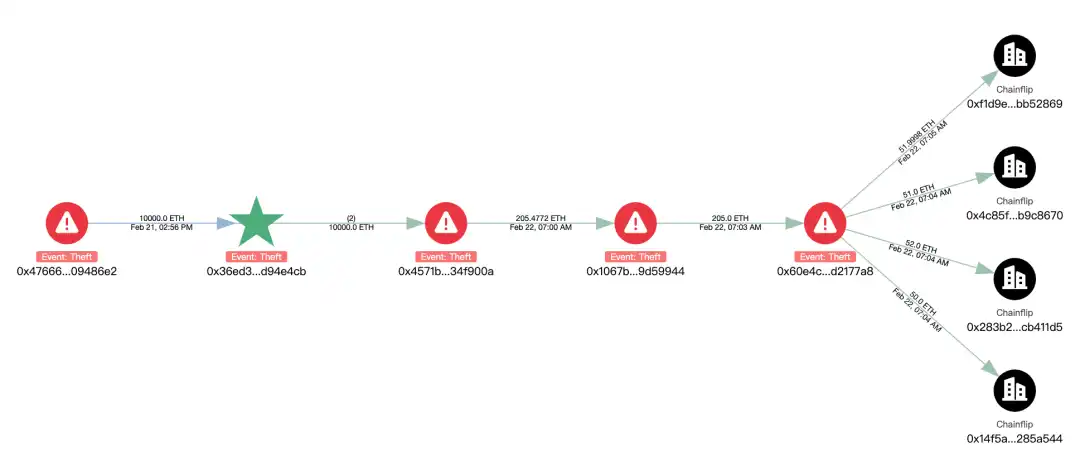
The ETH was dispersed in transfers, with the initial hacker address dispersing 400,000 ETH in increments of 10,000 ETH to 40 addresses and continuing to transfer.
Among them, 205 ETH was swapped to BTC via Chainflip and cross-chain transferred to the address bc1qlu4a33zjspefa3tnq566xszcr0fvwz05ewhqfq.
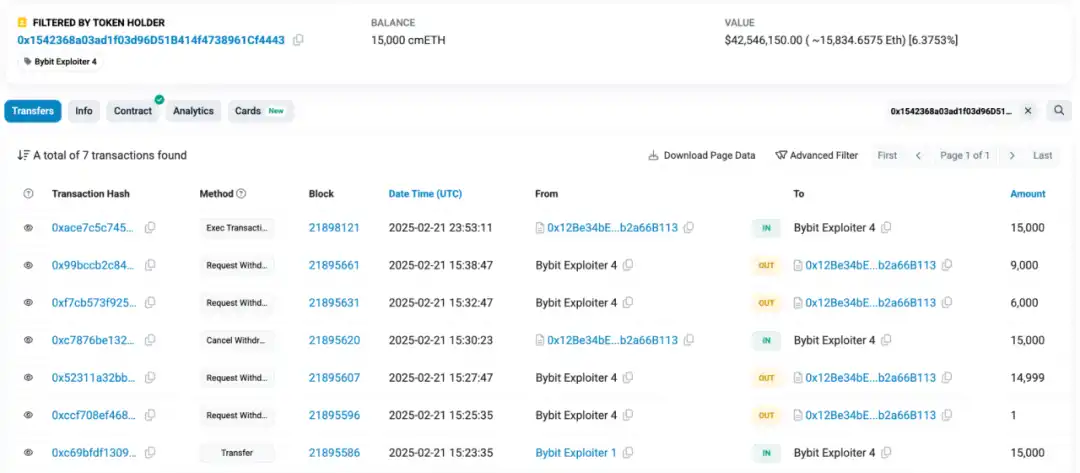
cmETH Destination: 15,000 cmETH was transferred to the address 0x1542368a03ad1f03d96D51B414f4738961Cf4443. It is worth noting that mETH Protocol posted on X, stating that in response to the Bybit security incident, the team promptly suspended cmETH withdrawals, preventing unauthorized withdrawal actions. mETH Protocol successfully reclaimed 15,000 cmETH from the hacker address.
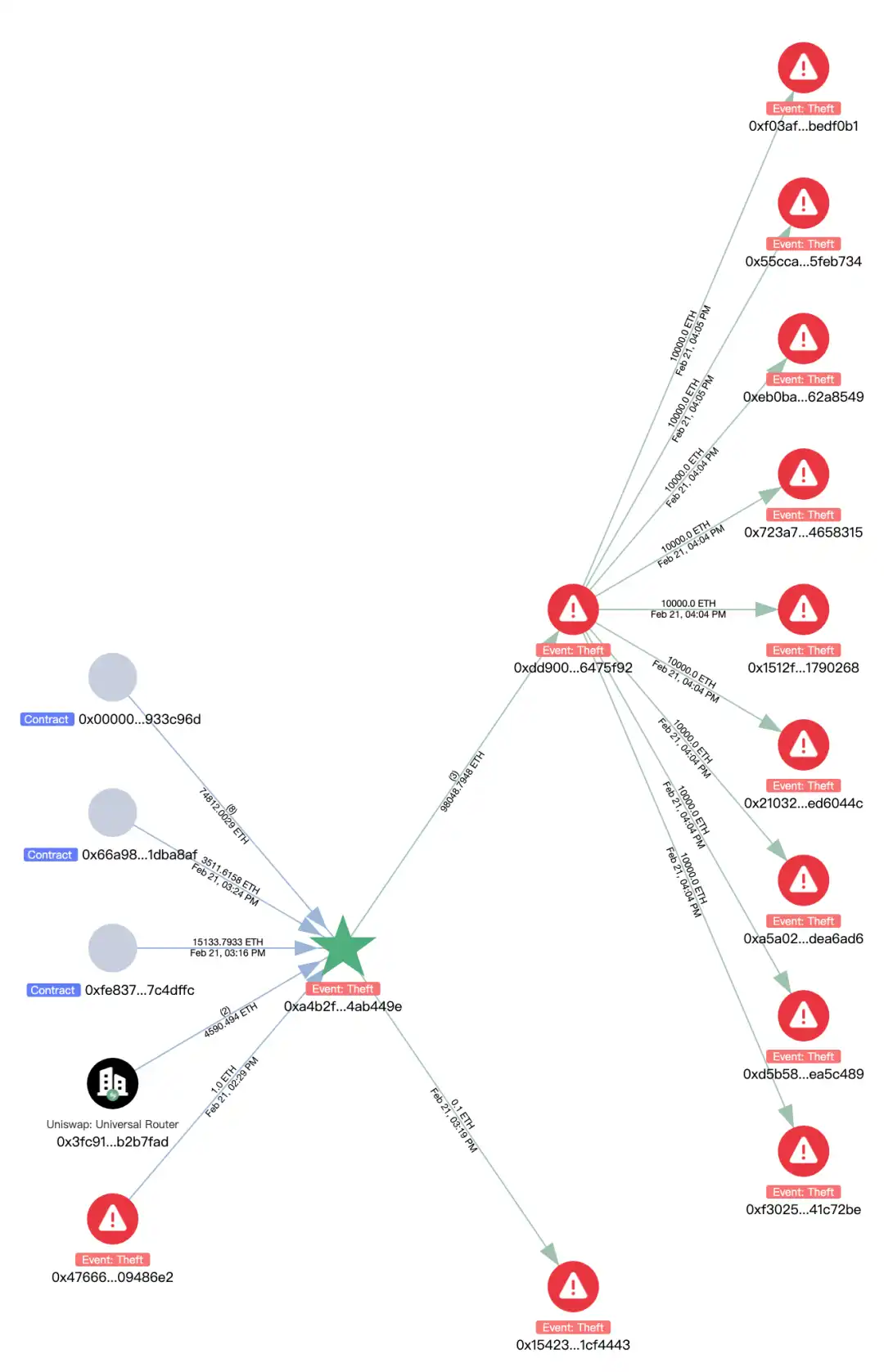
mETH and stETH Transfer: 8,000 mETH and 90,375.5479 stETH were transferred to address 0xA4B2Fd68593B6F34E51cB9eDB66E71c1B4Ab449e. Subsequently, they were exchanged for 98,048 ETH via Uniswap and ParaSwap and then transferred to 0xdd90071d52f20e85c89802e5dc1ec0a7b6475f92. Address 0xdd9 then dispersed the ETH to 9 addresses in 10,000 ETH increments and has not yet made further transfers.
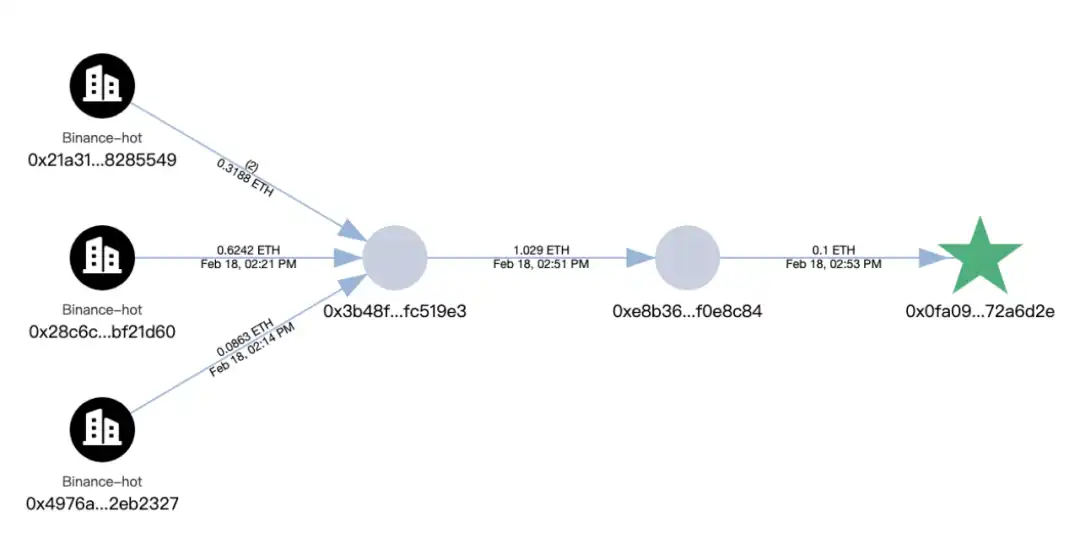
Additionally, tracing back to the address 0x0fa09C3A328792253f8dee7116848723b72a6d2e, which initiated the hack according to the attack methodology analysis section, it was found that the initial funds of that address originated from Binance.
Currently, the initial hacker address 0x47666Fab8bd0Ac7003bce3f5C3585383F09486E2 holds a balance of 1,346 ETH. We will continue to monitor the relevant addresses.
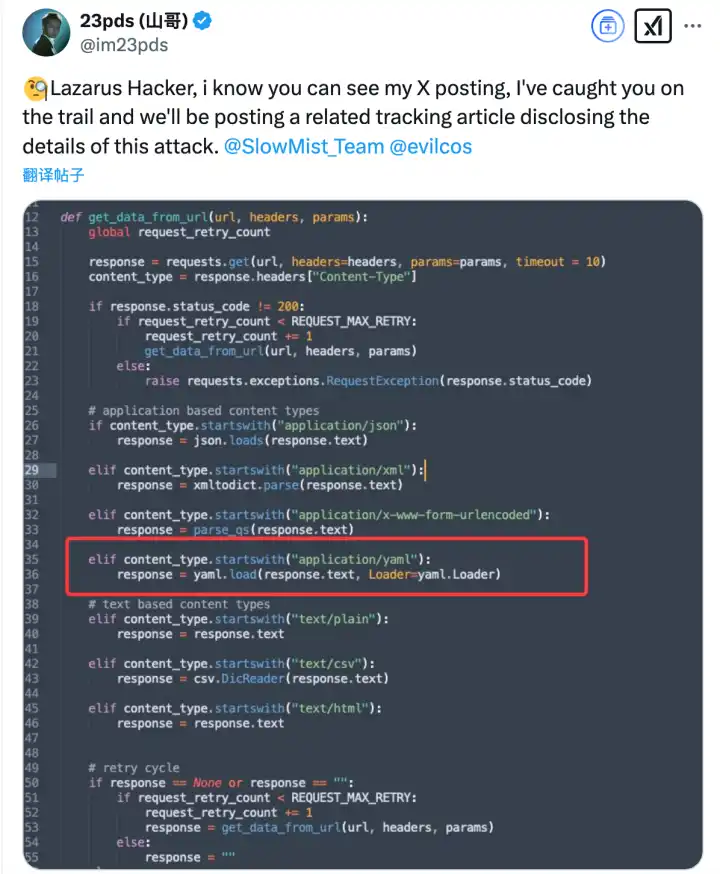
Following the event, SlowMist promptly speculated on the attacker being associated with a North Korean hacker group by analyzing the attacker's acquisition of the Safe multisig and money laundering techniques.

Possible social engineering attack methods that may have been utilized:
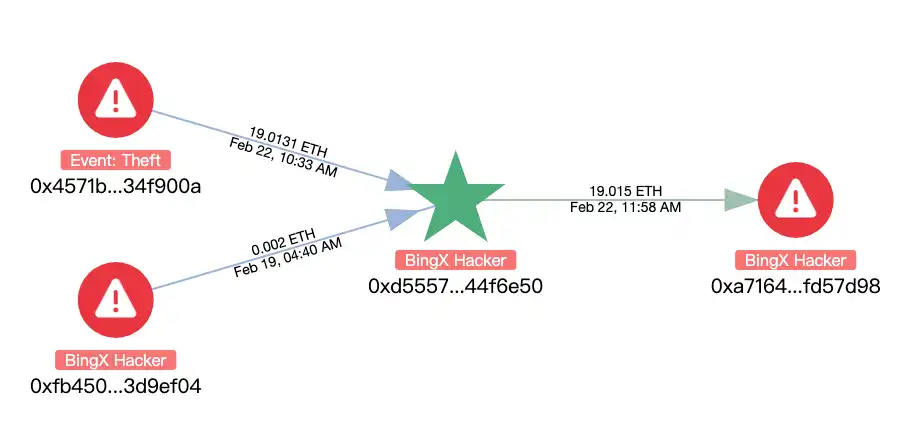
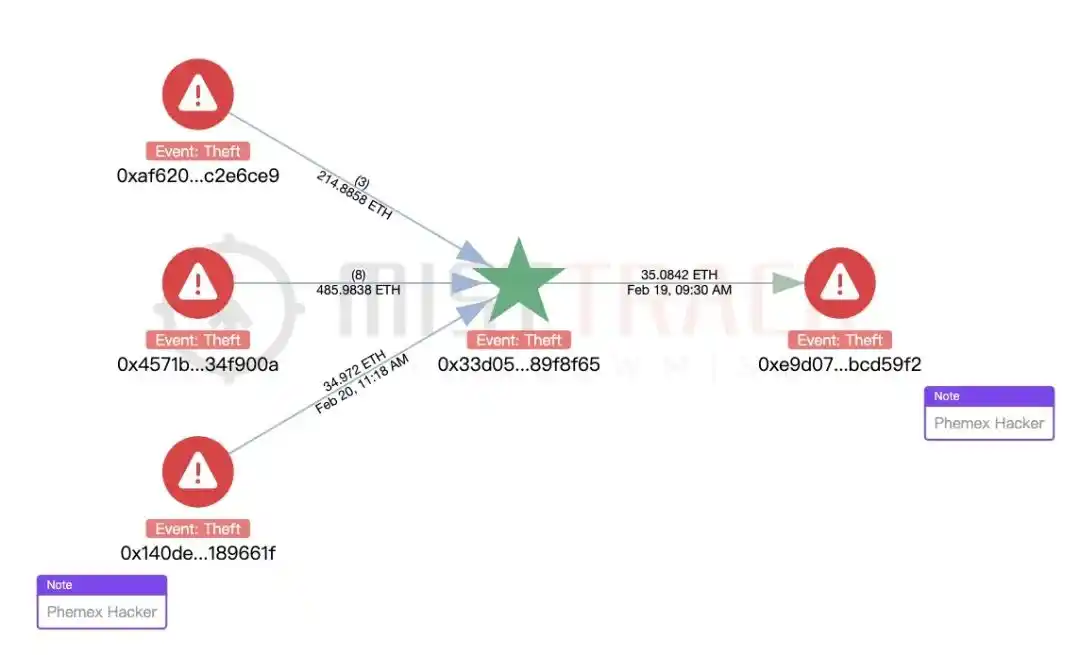
Through MistTrack analysis, it was also discovered that the hacker address in this event is linked to the BingX Hacker and Phemex Hacker addresses.
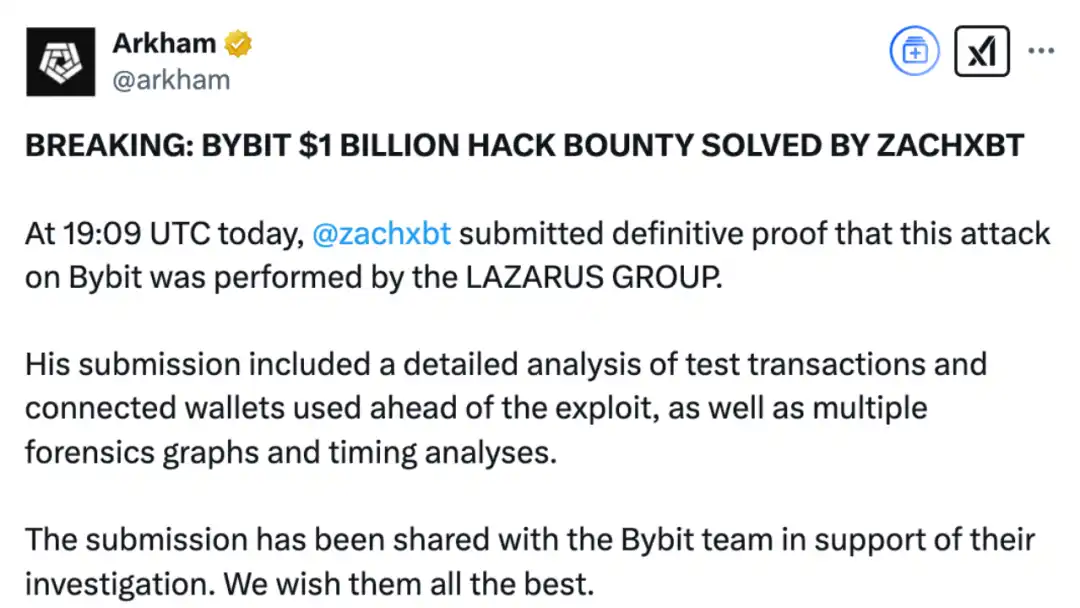
ZachXBT has also confirmed the connection between this attack and the Lazarus Group, a North Korean hacker organization known for conducting international network attacks and cryptocurrency theft. According to ZachXBT's evidence, including test transactions, linked wallets, forensic charts, and time analysis, all demonstrate that the attacker employed common Lazarus Group techniques in multiple operations. Additionally, Arkham stated that all related data has been shared with Bybit to assist the platform in further investigation.
Attack Method Analysis
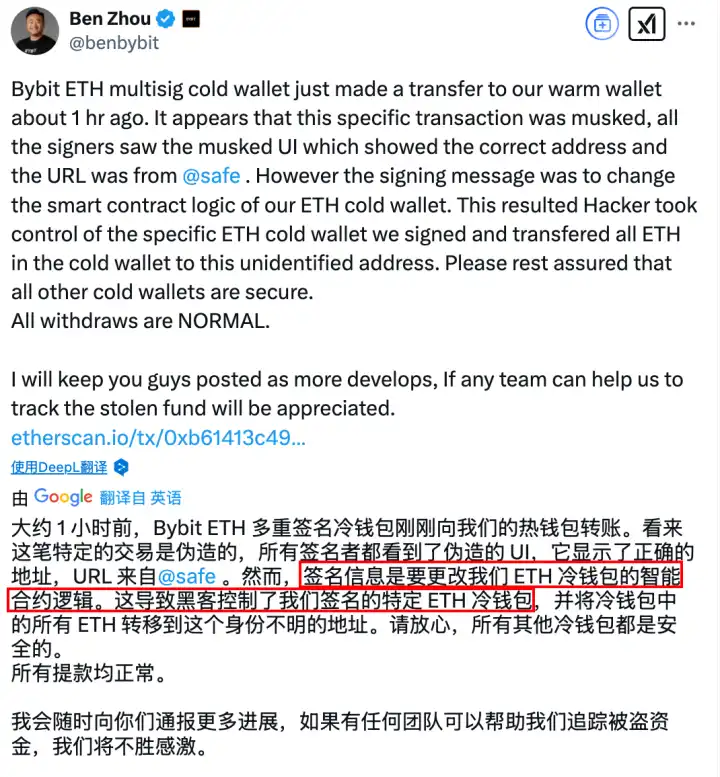
On the night of the incident at 23:44, Bybit CEO Ben Zhou posted a statement on X, explaining in detail the technical details of the attack:
Through on-chain signature analysis, we discovered some traces:
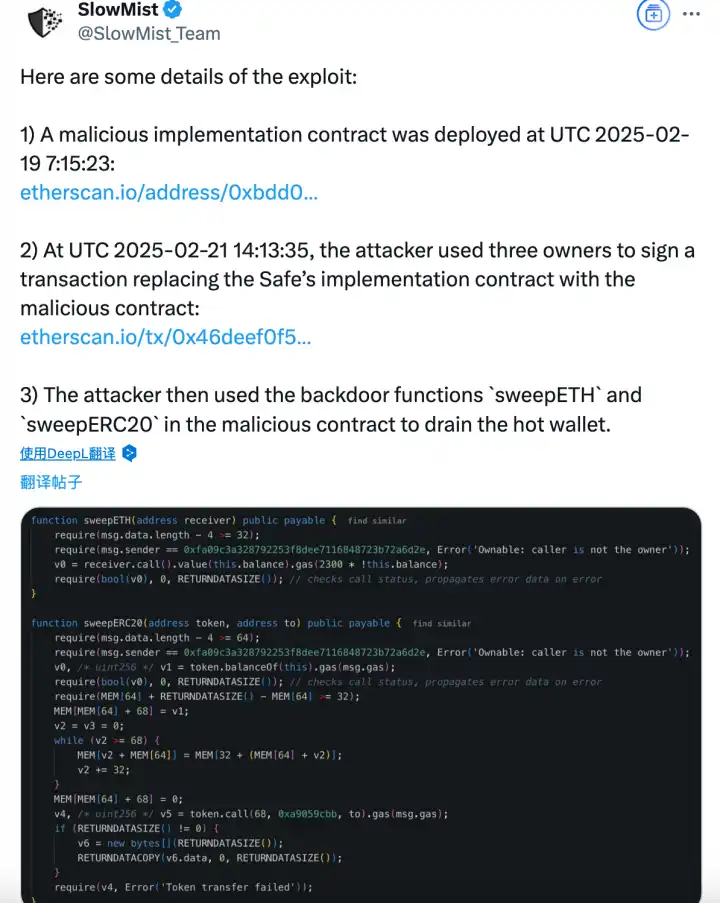
1. Attacker Deploys Malicious Contract: UTC 2025-02-19 07:15:23, deploys a malicious implementation contract 0xbDd077f651EBe7f7b3cE16fe5F2b025BE2969516.
2. Tampering with Safe Contract Logic: UTC 2025-02-21 14:13:35, through transactions signed by three Owners, replaces the Safe contract with a malicious version: 0x46deef0f52e3a983b67abf4714448a41dd7ffd6d32d32da69d62081c68ad7882. This reveals the address 0x0fa09C3A328792253f8dee7116848723b72a6d2e that initiated the initial attack.
3. Embedding Malicious Logic: Uses DELEGATECALL to write the malicious logic contract to STORAGE 0: 0x96221423681A6d52E184D440a8eFCEbB105C7242.
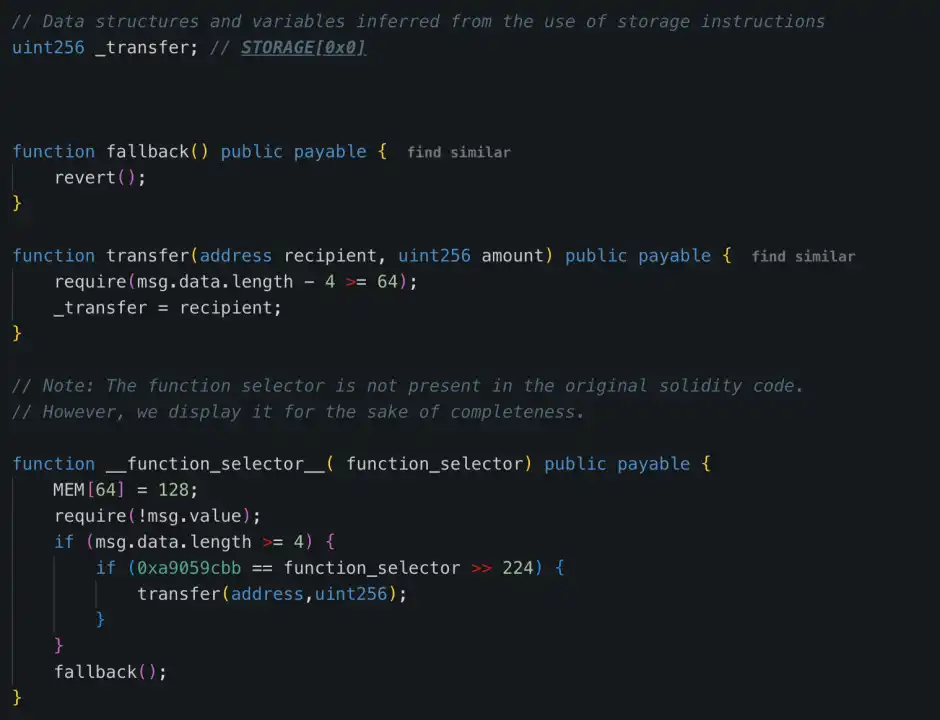

4. Calling Backdoor Function to Move Funds: The attacker uses the sweepETH and sweepERC20 functions in the contract to transfer all 400,000 ETH and stETH from the cold wallet to an unknown address (total value of approximately $1.5 billion).
From the attack methods, the WazirX hack and the Radiant Capital hack share similarities with this attack, as all three targeted Safe multisig wallets. In the WazirX hack, the attacker similarly deployed a malicious implementation contract in advance, replaced the Safe contract with a malicious implementation contract through transactions signed by three Owners, and used DELEGATECALL to write the malicious logic contract to STORAGE 0 to replace the Safe contract with the malicious implementation contract.
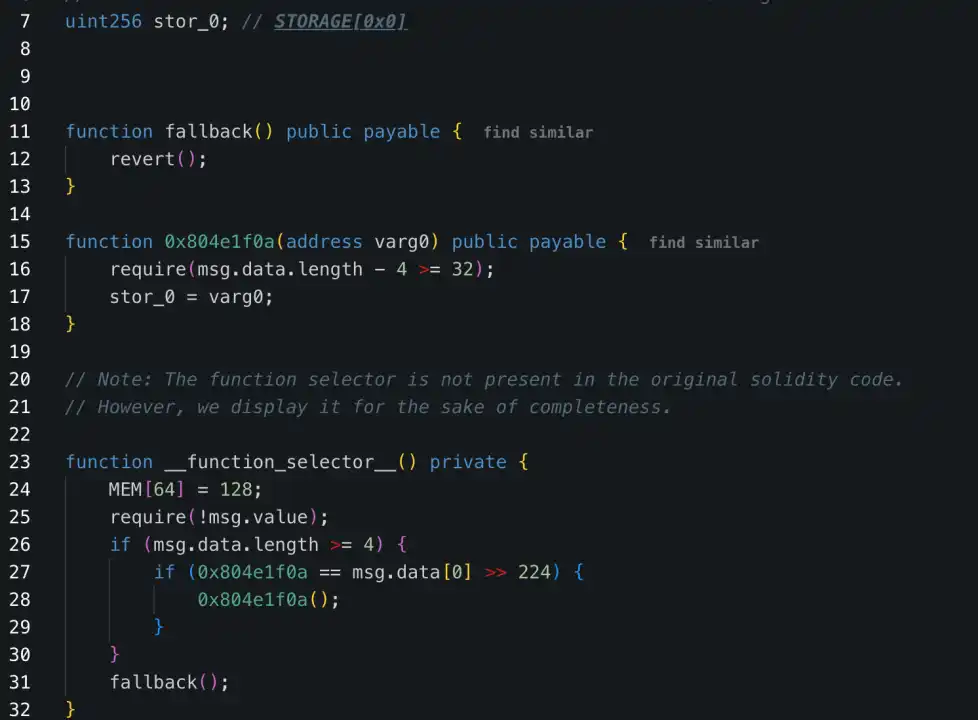

(https://etherscan.io/tx/0x48164d3adbab78c2cb9876f6e17f88e321097fcd14cadd57556866e4ef3e185d)
Regarding the Radiant Capital hack incident, according to official disclosure, the attacker utilized a sophisticated method that caused the signature validator to see a seemingly legitimate transaction on the frontend, similar to the information disclosed in Ben Zhou's tweet.
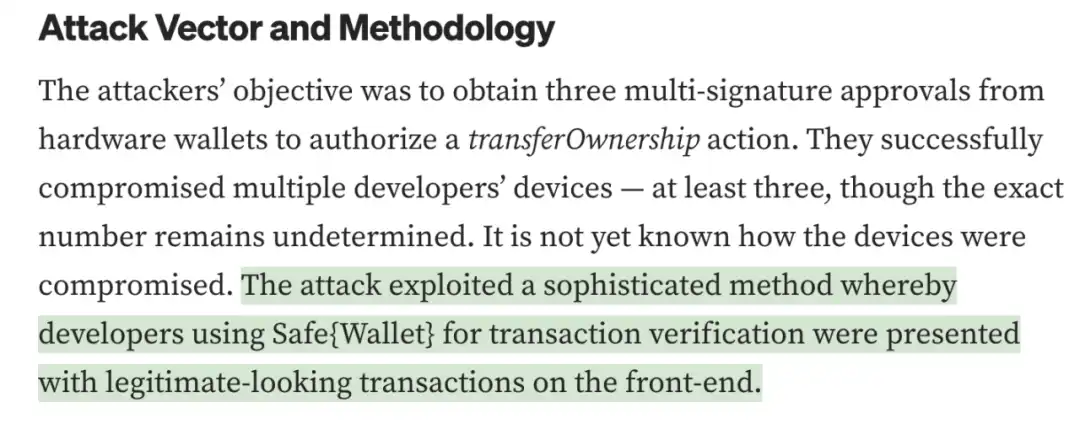
(https://medium.com/@RadiantCapital/radiant-post-mortem-fecd6cd38081)
Furthermore, the permission check method used by the malicious contracts involved in these three incidents was the same, where the owner's address was hardcoded in the contract to check the caller's permissions. The error messages thrown by the permission checks in the Bybit and WazirX hack incidents were also similar.

In this incident, the Safe contract was not the issue; the issue lay in the non-contract part where the frontend was tampered with to achieve a deceptive effect. This is not an isolated case. Last year, North Korean hackers used this method to attack several platforms, such as: WazirX losing $230M involving Safe multisig; Radiant Capital losing $50M involving Safe multisig; DMM Bitcoin losing $305M involving Gonco multisig. This attack method is highly engineered and requires extra caution.
According to the official announcement from Bybit:
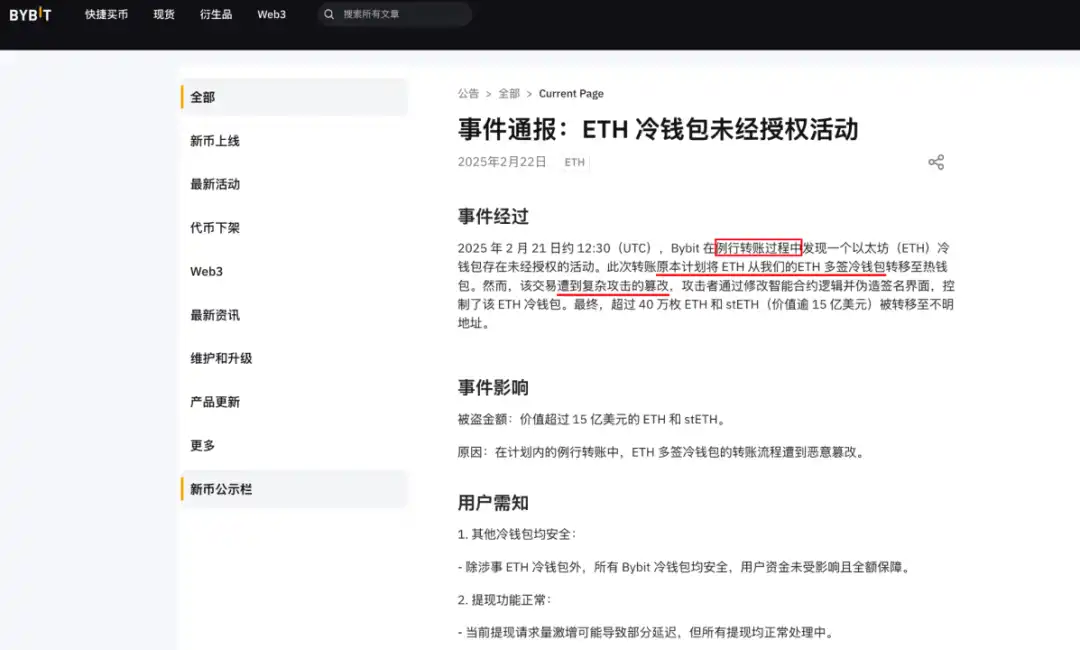
(https://announcements.bybit.com/zh-MY/article/incident-update---eth-cold-wallet-incident-blt292c0454d26e9140)
Combined with Ben Zhou's tweet:
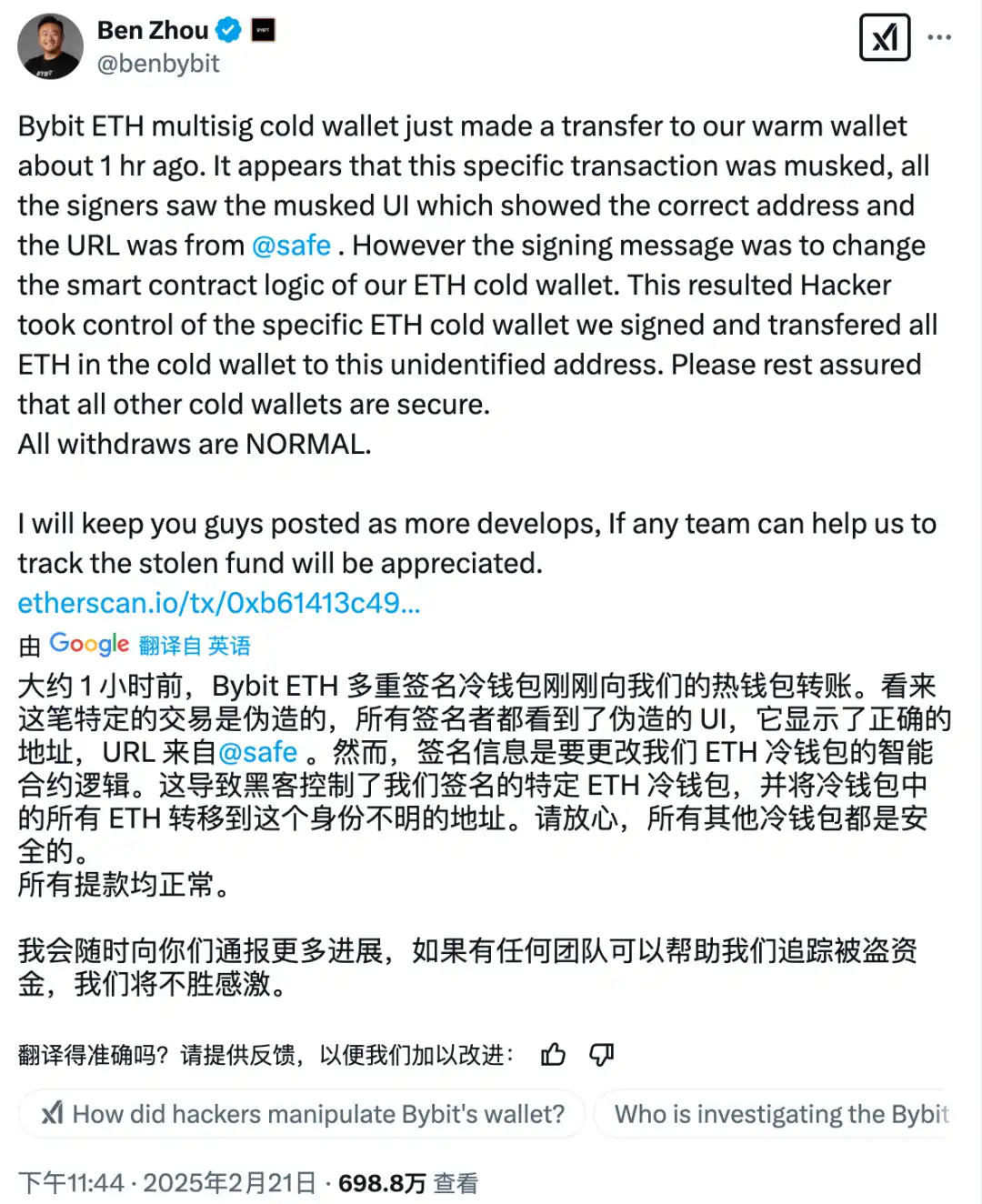
The following questions arise:
1. Routine ETH Transfer
· Did the attacker possibly obtain advance information from Bybit's internal finance team, knowing the timing of the ETH multi-signature cold wallet transfer?
· Did they induce signers through the Safe system to sign a malicious transaction on a forged interface? Was the Safe frontend system hacked and compromised?
2. Safe Contract UI Tampering
· Did signers see the correct address and URL on the Safe interface, but the actual signed transaction data was tampered with?
· The key question is: Who initiated the signature request first? How secure was their device?
With these questions in mind, we look forward to the official disclosure of further investigation results.
Market Impact
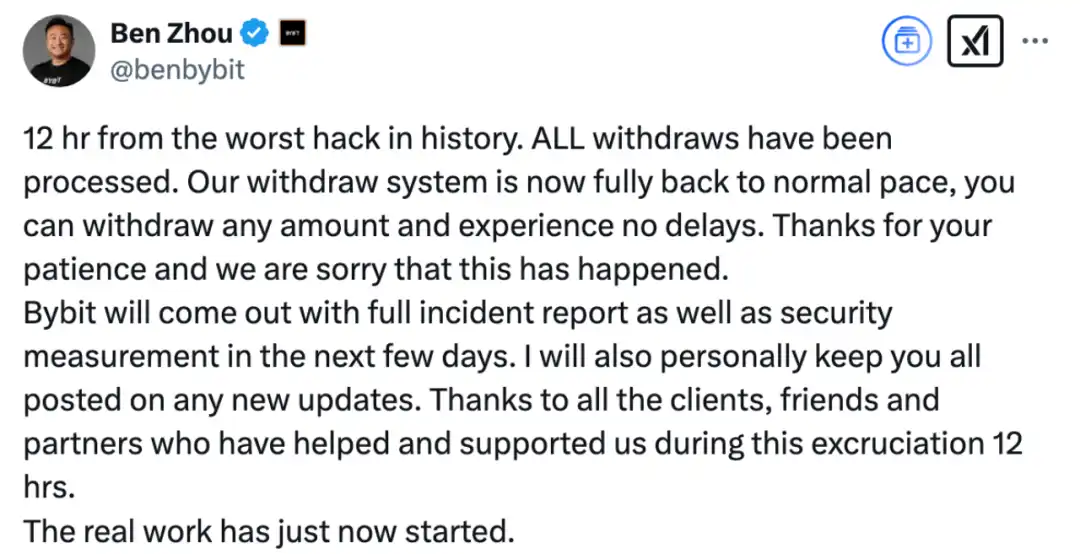
After the incident, Bybit promptly released a statement, ensuring that all customer assets are fully reserved and the platform can absorb this loss. User withdrawals are unaffected.
At 10:51 on February 22, 2025, Bybit CEO Ben Zhou announced that deposits and withdrawals are now back to normal:
Final Thoughts
This theft incident once again highlights the significant security challenges facing the cryptocurrency industry. With the rapid growth of the crypto industry, hacker groups, especially nation-state hackers like the Lazarus Group, are continuously upgrading their attack methods. This event serves as a wake-up call for cryptocurrency exchanges, urging them to further strengthen their security measures through advanced defense mechanisms such as multi-factor authentication, encrypted wallet management, asset monitoring, and risk assessment to safeguard user assets. For individual users, raising security awareness is equally crucial, and it is recommended to prioritize more secure storage methods like hardware wallets to avoid keeping large amounts of funds on exchanges for an extended period. In this evolving field, only by continuously enhancing technological defenses can we ensure the security of digital assets and promote the industry's healthy development.
You may also like

Cryptocurrency CEXs are flocking to sell US stocks, and traditional brokerages are facing an "uninvited guest."

Will the SpaceX IPO Hurt Bitcoin? Here's What Traders Are Watching
Foreign selling in the South Korean stock market accelerates, with cumulative net sales reportedly reaching $75 billion this year
On June 9, The Kobeissi Letter, citing Goldman Sachs data, reported that global investors are selling South Korean stocks at an unusually rapid pace. In the latest trading session, foreign investors sold about $801 million worth of Kospi constituent stocks again; total foreign outflows last week reached about $10 billion, and the market has been in net foreign selling on nearly every trading day over the past month. According to the data cited in the report, foreign investors have sold about $75 billion worth of South Korean stocks so far this year. Meanwhile, South Korean retail and institutional investors together recorded roughly $69 billion in net buying over the same period, suggesting that the market’s main buying support has come from domestic capital rather than returning overseas funds. The information currently disclosed still mainly comes from The Kobeissi Letter’s retelling and Goldman Sachs data summaries, while public details on the statistical period and the specific definition of “selling” remain relatively limited.

Fortune Warns of Strategy’s Financing Structure Risks as Bitcoin Premium Narrows
Fortune warned that Strategy’s Bitcoin treasury model faces growing financing risks as MSTR’s net asset premium narrows and preferred stock dividend pressure increases.

Ferrari Challenge Le Mans: Carl Moon to Dominate in WEEX Livery

Sahara AI Responds to SAHARA’s Sharp Drop: No Contract or Product Security Issues Found, Internal Investigation Underway
Sahara AI responded to SAHARA’s 60% price drop, saying no token contract or product security issues have been found and an internal investigation is underway.

WEEX Deposit/Withdrawal Dynamic Island: Your Asset Status, Always in Sight

Scaling Crypto Derivatives: The Digital Asset Infrastructure Behind High-Volume Trading
In the fast-moving digital asset ecosystem, derivatives platforms face an extreme architectural test. High-leverage futures markets demand more than just standard security—they require absolute operational precision, zero-latency matching engines, and ironclad structural scalability, all while navigating intense market volatility.
As global platforms scale to meet these demands, the industry is shifting away from rigid, monolithic setups toward a more agile, "decoupled" infrastructure philosophy.
The Blueprint for High-Volume Copy TradingFor elite global exchanges like WEEX (founded in 2018), this architectural choice becomes critical when scaling high-volume retail features like social copy trading. When thousands of users automatically mirror the real-time strategies of elite traders simultaneously, it triggers sudden, monumental spikes in concurrent transactional volume.
To prevent execution latency or settlement bottlenecks during these peak volatility events, a platform's primary engine must remain entirely dedicated to risk management, copy-trade synchronization, and order matching.
The Architectural Rule: New-generation platforms must separate front-end user execution engines from heavy backend infrastructural overhead to eliminate operational friction.
By separating these layers, platforms can maintain complete sovereignty over their trading environments and user experiences while strategically aligning with institutional-grade infrastructure ecosystems. This strategic framework allows modern exchanges to leverage advanced Digital Asset Custody infrastructure such as Cobo’s behind the scenes, ensuring that backend wallet management scales elastically alongside trading spikes.
Capitalizing on Market Momentum and 400× LeverageIn a derivatives arena where platforms offer up to 400× leverage on perpetual contracts, capital efficiency and market agility are core business metrics. To capture market momentum, an exchange needs the ability to rapidly expand its asset offerings, supporting everything from legacy crypto assets to sudden, trending altcoins across a massive library of trading pairs.
Adopting a flexible, scalable Wallet-as-a-Service (WaaS) solution such as Cobo’s could completely rewrite the development timeline for high-growth exchanges. Instead of spending months of engineering capital building out custom backend wallet architectures for every new blockchain network, platforms can deploy localized infrastructure in days.
This agility allows platforms to instantly scale their listings to over a thousand trading pairs without compromising security or delaying time-to-market. It mirrors the exact operational advantages seen during high-velocity market events, similar to how advanced wallet infrastructure empowers platforms during sudden asset surges; allowing exchanges to pass that speed and liquidity directly to their global user base.
A Mature Foundation for GrowthThe synergy between trusted infrastructure ecosystems and global trading platforms represents the natural evolution of a maturing crypto market. As WEEX continues to scale its global spot and derivatives offerings for over 6 million users, adopting robust backend paradigms proves that platforms no longer have to compromise between cutting-edge trading velocity and uncompromised structural security.

Morning Report | BitMine increased its holdings by 126,971 ETH last week; trader Eugene announced his exit from the crypto market

Wang Chuan: How can one not feel anxious after the neighbor Old Wang made thirty times profit by investing in storage stocks? (Seven) - A quarter-century cycle

Get Paid to Onboard? Try WEEX’s New Homepage with Rewards for Registration, Deposit & Trade

WEEX Custom Layout: Build Your Perfect Trading Workspace in Seconds

See “Buy Walls” & “Sell Walls” Instantly: WEEX Launches the Depth Chart for Smarter Trades

What Is Quick Trade on WEEX? 2 Ways WEEX Ends Chart-Panel Jumping
Morning News | Five major virtual asset platforms in South Korea have experienced 57 incidents of hacking and system failures in six years; Grayscale submits registration application for Canton ETF

Should we escape the peak? The principle of the tail-end market in the stock market

RootData: May 2026 Cryptocurrency Exchange Transparency Research Report

Founder of Baixing.com: My Experience with Claude Code in Fourteen Points
Cryptocurrency CEXs are flocking to sell US stocks, and traditional brokerages are facing an "uninvited guest."
Will the SpaceX IPO Hurt Bitcoin? Here's What Traders Are Watching
Foreign selling in the South Korean stock market accelerates, with cumulative net sales reportedly reaching $75 billion this year
On June 9, The Kobeissi Letter, citing Goldman Sachs data, reported that global investors are selling South Korean stocks at an unusually rapid pace. In the latest trading session, foreign investors sold about $801 million worth of Kospi constituent stocks again; total foreign outflows last week reached about $10 billion, and the market has been in net foreign selling on nearly every trading day over the past month. According to the data cited in the report, foreign investors have sold about $75 billion worth of South Korean stocks so far this year. Meanwhile, South Korean retail and institutional investors together recorded roughly $69 billion in net buying over the same period, suggesting that the market’s main buying support has come from domestic capital rather than returning overseas funds. The information currently disclosed still mainly comes from The Kobeissi Letter’s retelling and Goldman Sachs data summaries, while public details on the statistical period and the specific definition of “selling” remain relatively limited.
Fortune Warns of Strategy’s Financing Structure Risks as Bitcoin Premium Narrows
Fortune warned that Strategy’s Bitcoin treasury model faces growing financing risks as MSTR’s net asset premium narrows and preferred stock dividend pressure increases.
Ferrari Challenge Le Mans: Carl Moon to Dominate in WEEX Livery
Sahara AI Responds to SAHARA’s Sharp Drop: No Contract or Product Security Issues Found, Internal Investigation Underway
Sahara AI responded to SAHARA’s 60% price drop, saying no token contract or product security issues have been found and an internal investigation is underway.


