
$5 Billion Investment in Bitcoin Reserve, Is Texas Leading the Way in Building a Crypto Utopia?


Original Title: "Is a $5 Billion Investment in Bitcoin Reserve Leading Texas to Build a Crypto Utopia?"
Original Author: Ethan, Odaily Planet Daily
The crypto storm continues to rage over the United States.
On March 7, President Trump signed the executive order "Establishing a Strategic Bitcoin Reserve and a U.S. Digital Asset Reserve"; on March 8, the White House Crypto Summit was held, bringing together government officials and crypto industry leaders; on March 9, a new move in Texas reignited the passion of the entire crypto market — the State Senate formally passed Senate Bill 21 (SB 21), creating the first-ever state-level cryptocurrency fund in U.S. history — the Texas Bitcoin Reserve!
This land of the "Wild West" is now transforming into the "State of Digital Gold," committing to investing $5 billion annually in Bitcoin (BTC) and other top cryptocurrencies. This is not just a "small move" within a state, but a compass for crypto policy across the U.S. and even globally. Is Texas really going to gallop and lead the U.S. to the dominant position of Bitcoin? Odaily Planet Daily takes readers on an exploration.
How is Texas navigating the legal and technical maze of Bitcoin Reserve?
Establishing a Bitcoin Reserve is not as simple as buying a Bitcoin hardware wallet. Texas needs to go through a series of legal, regulatory, and technical steps to ensure this "digital treasury" is securely established.
According to the latest news, the SB 21 bill was passed by the Texas Senate on March 6, 2025, with a vote of 25 to 5. This is good news, but hold on, this is just the beginning. For the successful implementation of the bill, several steps need to be completed:
Step One: First, the legislative proposal needs to be drafted by state legislators or relevant committees and submitted to the state legislature. The bill details the specific goals of the Bitcoin Reserve, funding sources, purchase and management methods, and other details. Once the bill is introduced, it is usually assigned to the state legislature's finance or economic development committee for detailed review and may involve public hearings to gather various opinions.
Step Two: Next, the bill must pass through both houses of the state legislature (if the state operates on a bicameral system). First, the state House of Representatives will discuss and vote on the bill. If it obtains a majority approval, it is then submitted to the Senate for further review and voting, although in some states, the process is the opposite. Once both houses pass the bill, it moves to the final approval stage. Readers should note that all mentions of House and Senate within this article refer to the state's House of Representatives and Senate. Normally, state legislation does not require approval from the federal House and Senate. (Note: Texas has now reached this stage!)
Step Three: After the bill has passed both houses of the state legislature, it will be sent to the Governor for signature. If the Governor agrees and signs, the bill officially becomes law, and the state government can proceed with the implementation of the Bitcoin Strategic Reserve. If the Governor vetoes, the legislature can amend or attempt to override the veto with a higher vote threshold (usually a two-thirds majority).
Step Four: Once the bill takes effect, the state government will designate relevant agencies to execute the reserve plan, typically overseen by the State Treasury Department or a dedicated fund management office. They will need to establish specific purchase strategies, select appropriate custody solutions (such as third-party custody or self-custody), and ensure the security of the reserve funds. Meanwhile, the state government needs to establish a transparent regulatory and auditing framework, regularly reporting on the status of the Bitcoin reserve to the public or the legislative body.
If any of the above steps hit a snag, the Bitcoin Reserve Bill will not pass in that state.
Next up, the bill will face vigorous debate in the House (potentially facing opposition questioning Bitcoin's volatility), and ultimately require the Governor's signature to take effect. However, according to the latest public updates, the bill has been reported as "Engrossed," indicating it has been sent to the House for consideration; there is currently no specific public information on the timing of the House vote.
The House vote may take place in the next 2-4 months (roughly between May and July 2025), but it has not been officially confirmed, and the actual timing depends on House committee schedules and priorities. If more specific official timing is announced, it is usually updated on the Texas Legislature website (capitol.texas.gov) or in relevant news.
Additionally, at a technical level, the Texas government plans for the State Comptroller to oversee this fund, protecting the Bitcoin through cold storage (similar to locking gold bars in a vault, offline storage to prevent hacking threats); on the investment side, planning to purchase up to $500 million in Bitcoin annually. The entire process is akin to building a digital version of Fort Knox, complex yet full of potential. Furthermore, Texas plans to mitigate risks from Bitcoin price volatility or threats to public funds through an advisory council and rigorous audits (submitting reports to the legislature every two years).
Why Did Texas Take the Lead?
Firstly, Texas has a strong advantage in terms of economic size and policy environment. Texas is the second-largest economy in the United States, ranking second in GDP nationwide and even making it to the global top ten. The strong economic foundation has led Texas to adopt a relatively open-minded and adventurous attitude towards new things, especially in high-risk, high-reward areas such as cryptocurrency. Furthermore, Texas's long-standing policy of "low regulation, high freedom" has attracted numerous innovative businesses, particularly in the blockchain and cryptocurrency industry. The previous passage of the "HB 4474 Bill" in Texas in 2021 already integrated virtual currency into the commercial law framework, laying a policy foundation for the subsequent crypto industry.
Moreover, Texas's energy resources and industrial structure also provide powerful support for the crypto mining industry. Cryptocurrency mining consumes a staggering amount of electricity, and Texas has abundant wind, solar, and natural gas resources, relatively inexpensive electricity prices, and a high degree of grid independence (the ERCOT system is largely independent), making it highly attractive to mining companies. Many Bitcoin mining enterprises, such as Riot Blockchain, have long been established in Texas. If the "SB 21 Bill" is indeed passed, Texas could even directly invest public funds in cryptocurrency, further enhancing its energy advantage and attracting more players to enter the market.
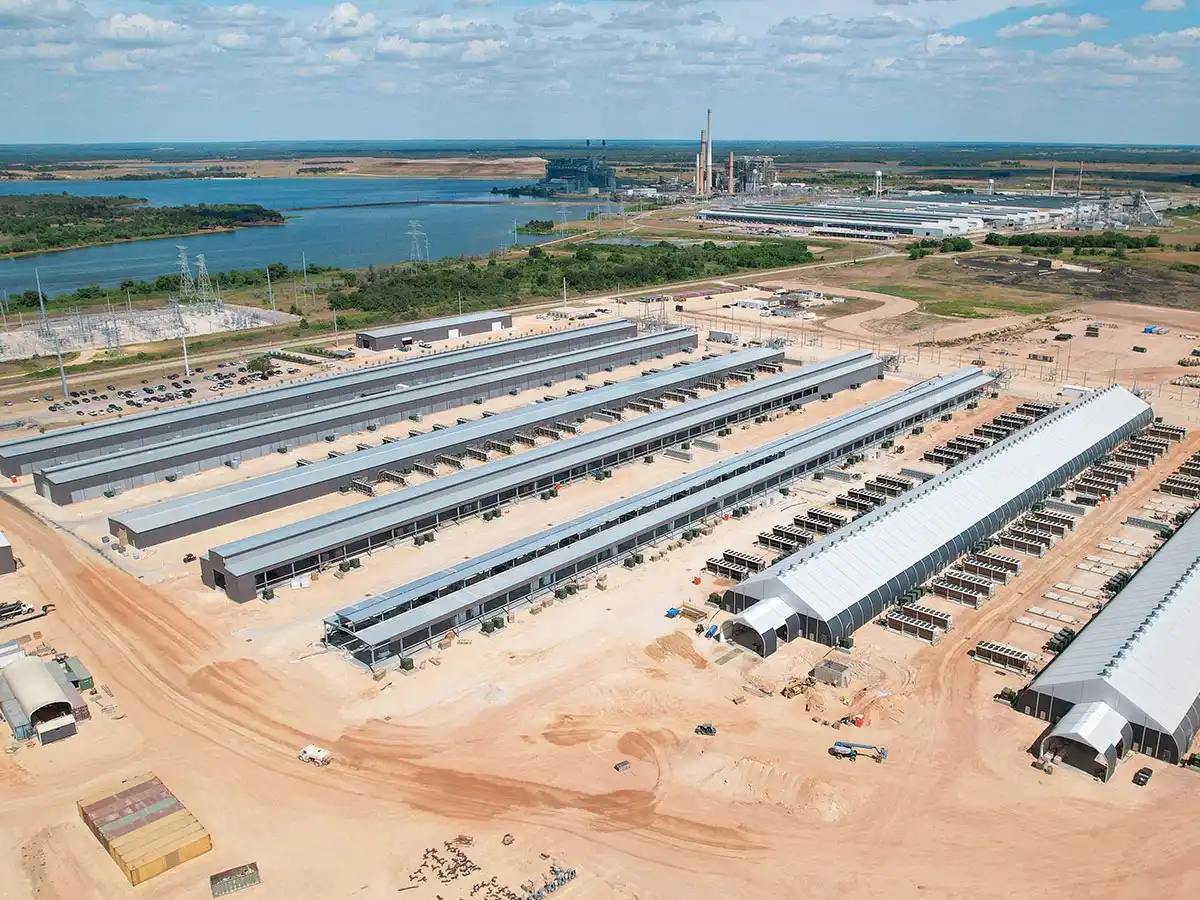
Riot Blockchain's Bitcoin mining facility in Texas
Thirdly, the political climate and the attitude of the leadership have also played a catalyzing role. The current Texas Governor, Greg Abbott, has always maintained an open attitude towards cryptocurrency and has even publicly expressed support for related legislation. The initiator of the "SB 21 Bill," Senator Charles Schwertner, has also prioritized this bill, with backing from industry organizations such as the Texas Blockchain Council. Everyone shares the same goal of making Texas a "testing ground" for crypto reserves, racing ahead of other states to set rules and capture market share.
Lastly, Texas's culture and history also deserve some credit. The people here have always liked novelty, emphasized independence, and engaging in "counter-mainstream" activities is not uncommon. Moreover, Texas has previously taken a similar path with its gold reserves (Texas Bullion Depository), establishing the first state-level bullion depository in the U.S. in 2015. Now, implementing a Bitcoin reserve is in line with its consistent style.
The outcome of Texas's crypto reserve is still uncertain. If it does succeed, Texas is likely to further distance itself from other states, becoming a "flag-bearer" in the cryptocurrency field. However, there are risks involved, especially considering the volatility of cryptocurrencies. Whether Texas's move is a bold innovation or a pitfall remains to be seen over time.
American Crypto Map: States' (Partial) Wild Adventures in the Cryptocurrency Field
Why Are States Suddenly Interested in Crypto Reserves?
The enthusiasm of U.S. states for cryptocurrency is not unfounded. Over the past few years, the prices of cryptocurrency investment targets such as Bitcoin and Ethereum have skyrocketed, leaving people envious. In 2021, El Salvador directly adopted Bitcoin as legal tender, and in 2024, Trump called for the U.S. to become the "Global Capital of Cryptocurrency" at the Nashville Bitcoin Conference, proposing the establishment of a "Strategic Bitcoin Reserve." All of these have injected a dose of adrenaline into state governments.
In addition to the overall economic environment in the United States—high inflation, the questioning of the U.S. dollar's hegemony, and the growing popularity of decentralized finance—states have begun to consider whether they can innovate with cryptocurrency to attract investment and demonstrate their "avant-garde" nature. Moreover, state governments have always been in fierce competition, and whoever seizes the opportunity first may gain an advantage, whether economically or politically.
"Wild Adventures" in Some States
Texas: The "Cowboy" Leading the Pack
Texas has always made bold moves in the cryptocurrency field. As mentioned earlier, their Senate just passed the SB 21 bill, aiming to establish the "Texas Strategic Bitcoin Reserve" and allowing public funds to directly invest in cryptocurrency.
New Hampshire: Highly Promising
New Hampshire's key move in cryptocurrency reserves is the House Bill 302 (HB302), also known as their "Bitcoin Reserve Act." This bill was proposed by Republican legislator Keith Ammon on January 10, 2025, and received support from some Democratic members, making it a bipartisan small-scale attempt.
Utah: Low-Key but Not Falling Behind
Utah is also working on a Bitcoin reserve, being a member of the "actively supportive" camp. They have a unique feature in their bill: an investment can only be made in cryptocurrencies with a market value exceeding $500 billion, which currently only applies to Bitcoin. Utah's approach is more cautious and may also be an attempt to stimulate technology investment through cryptocurrency (as they already have a bit of a "Silicon Valley branch" vibe).
Arizona: Following Closely
Arizona is also pushing a Bitcoin Reserve Act, with progress just behind Utah. They are moving quickly, perhaps aiming to take the lead in the Southwest region. Arizona's crypto community is already active, and the state government also wants to attract more blockchain companies to settle in. However, the details of their bill have not been fully disclosed yet.
Opposition: Five States Directly Say "No"
Not all states are on board. It is said that five states (Montana, South Dakota, North Dakota, Pennsylvania, and Wyoming) explicitly oppose the idea of a Bitcoin reserve, primarily focusing on the volatility and fiscal compatibility concerns. After all, state governments don't have money falling from the sky, and they have witnessed cryptocurrency plummeting by 30% overnight. The opposition mainly comes from "red states" (Republican strongholds), which is quite surprising. It was originally thought that Trump's support would bring all red states on board, but the actual situation depends on specific fiscal conditions and voter attitudes.
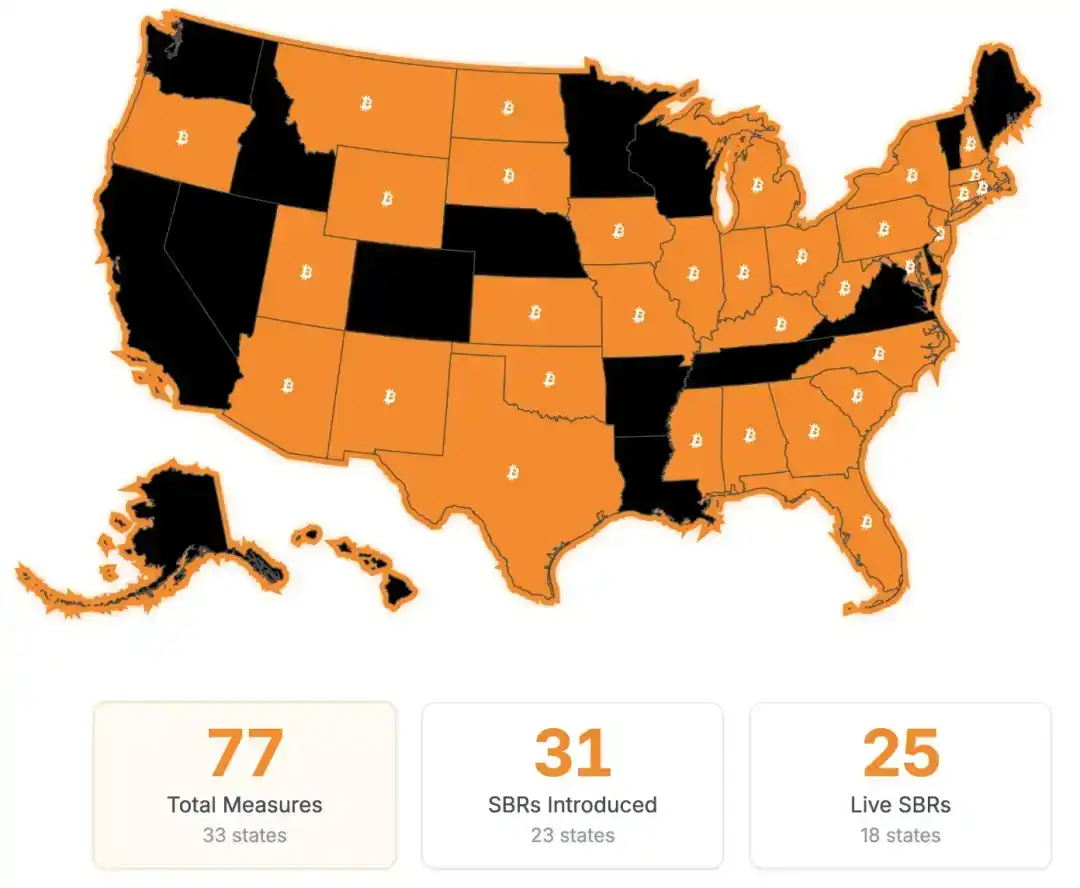
The current status of the legislative process for the Strategic Bitcoin Reserve Act (Bitcoin reserve fund) actively promoted by various state governments in the United States (yellow indicates support, black indicates opposition)
Conclusion: Who Will Be the Next Bitcoin Reserve Champion?
Texas' Bitcoin reserve fund plan has ignited crypto enthusiasm across America. Who will be next? Here is a bold prediction from the author: New Hampshire is the most promising! This "Live Free or Die" state is known for its crypto-friendly policies, and state legislators have already introduced a similar reserve proposal, with the local community showing a strong enthusiasm for Bitcoin. Another possibility is Utah, with its blockchain innovation and economic strength making it a potential contender.
Of course, the complexity of the cryptocurrency market cannot be ignored. Whether it is the steep price fluctuations or regulatory uncertainties, they could all become stumbling blocks on the road to crypto reserves. If other regions want to follow suit, they not only need to learn from Texas' policy framework but also need to combine with their own economic structure to develop more robust strategies.
Looking ahead, the potential of cryptocurrency goes far beyond reserves. For regions aspiring to delve deep into the digital economy, supporting innovations in areas such as cryptocurrency retail and startup incubation may be the key step to truly unlocking the potential of the Bitcoin market. Who will be the next leader in the Bitcoin market? Let's wait and see!
You may also like

Pantera Capital Partner: How Tokenization is Restructuring the Private Equity and Early Investment Ecosystem?

New York Proposes Stricter Stablecoin Issuer Rules Aligned With Federal GENIUS Act
NYDFS proposed stricter stablecoin issuer rules aligned with the GENIUS Act, covering reserves, custody, redemption timelines, audits, and capital buffers.
Every exchange is a "Universal Exchange."

The counterattack of traditional finance: Alliance chains are quietly reviving

CryptoQuant Says Bitcoin Profitable Supply Is Near 45% Pressure Zone as On-Chain Data Points to Market Repricing
CryptoQuant said Bitcoin’s profitable supply is nearing the 45% pressure zone, signaling rising market stress, unrealized losses, and a possible on-chain repricing phase.

Bitcoin Falls Below 200-Week Moving Average as On-Chain Data Shows Over Half of Supply in Loss
Bitcoin dropped below its 200-week moving average as on-chain data showed over 50% of circulating supply is now in loss, signaling rising market stress.

CFTC Reportedly Plans New Prediction Market Rules Focused on Manipulation Risk and Public Interest Review
The CFTC is reportedly preparing new prediction market rules focused on manipulation risk, public interest review, and retail trader protections.

Meet the new WEEX trial fund—your gateway to greater profits

WEEX Labs Lands at Dutch Blockchain Week: A Disruptive Crypto × AI Conversation Sets Sail in Amsterdam

SK Hynix Reportedly Plans U.S. ADR Listing as Early as August, With SEC Approval Possible in Late June
SK Hynix may pursue a U.S. ADR listing as early as August, with SEC approval reportedly possible in late June amid strong AI chip supply chain demand.

SpaceX vs Tesla vs xAI: Which Elon Musk Trade Has the Biggest Upside in 2026?
OpenAI Reveals It Has Confidentially Submitted an S-1 to the SEC, Keeping the Door Open for a Future IPO
On June 9, according to an OpenAI announcement, the company recently confidentially submitted a draft S-1 registration statement to the U.S. Securities and Exchange Commission (SEC), beginning the preliminary compliance process for a potential initial public offering. OpenAI said it chose to disclose this proactively because it expected the news might leak; however, the company has not yet set a specific listing timeline, and related arrangements may still take some time.

Latest research from 13 top universities including Cornell University: The current state, challenges, and misconceptions of the fusion of Crypto and AI
Deconstructing Anthropic: The Best AI Company, Possibly Also a Type of Organizational Invention
Apollo and Blackstone Reportedly Back $35 Billion Anthropic Chip Financing as Deal Details Remain Unclear
On June 9, according to currently available news alerts, Apollo and Blackstone Group participated in a $35 billion financing for an Anthropic “chip project.” Based on the original wording of the report, the funding has already been raised, but public information remains limited. The financing structure, use of proceeds, project entity, and whether Apollo and Blackstone participated through equity, debt, or project financing have not yet been disclosed.

Humanity Protocol Security Incident Escalates: More Than $31 Million Stolen From Related Addresses as Attacker Continues Selling H for ETH
On June 9, according to monitoring by Onchain Lens, more than $31 million has been stolen from addresses linked to Humanity Protocol, and the attack is still ongoing, with the hacker continuously swapping H tokens for ETH. Project founder Terence Kwok later confirmed the security incident on X, saying the issue involved a private key leak.

Bloomberg: As Bitcoin Weakens, Stablecoins and RWA Continue to Drive Expansion in Crypto Businesses
In June, Bloomberg reported that despite Bitcoin falling below $60,000 last week, wiping out about $235 billion in market value within seven days, and dropping close to 50% from last year’s peak, some core businesses in the crypto industry are still expanding, mainly in stablecoins, real-world asset tokenization (RWA), payments, and infrastructure. The report also noted that overall altcoin activity has contracted significantly: altcoin market capitalization has fallen from a peak of about $431 billion in November 2021 to around $170 billion, and among the tens of millions of tokens issued in recent years, fewer than 1,700 still maintain meaningful trading activity.

Galaxy Deep Research Report: How Hyperliquid's HIP-4 Upgrade Changes the Landscape of Prediction Markets?
Pantera Capital Partner: How Tokenization is Restructuring the Private Equity and Early Investment Ecosystem?
New York Proposes Stricter Stablecoin Issuer Rules Aligned With Federal GENIUS Act
NYDFS proposed stricter stablecoin issuer rules aligned with the GENIUS Act, covering reserves, custody, redemption timelines, audits, and capital buffers.
Every exchange is a "Universal Exchange."
The counterattack of traditional finance: Alliance chains are quietly reviving
CryptoQuant Says Bitcoin Profitable Supply Is Near 45% Pressure Zone as On-Chain Data Points to Market Repricing
CryptoQuant said Bitcoin’s profitable supply is nearing the 45% pressure zone, signaling rising market stress, unrealized losses, and a possible on-chain repricing phase.
Bitcoin Falls Below 200-Week Moving Average as On-Chain Data Shows Over Half of Supply in Loss
Bitcoin dropped below its 200-week moving average as on-chain data showed over 50% of circulating supply is now in loss, signaling rising market stress.


